

Home Blog Page 7

Practical Money Skills: Supercharge Your Savings

0

Saving money isn’t just for a lucky few. Everyday choices can add up to big savings. In this guide, we share simple steps to help you track your spending, save a little bit regularly, and manage debt wisely.

Imagine if small changes, like saving an extra dollar each day, could boost your bank balance over time. Ready to take control of your money? Try this: write down your top expenses and set a small savings goal for this week.

Now, let’s explore clear, practical techniques that can boost your savings and improve your financial future.

Mastering Practical Money Skills: Actionable Strategies for Better Finances

Start by boosting your everyday money skills in four key areas: budgeting, saving, spending wisely, and controlling debt. Budgeting means planning how you use your money each month. For example, if you earn $3,000, list fixed bills like rent and add variable expenses like groceries. Try this: download a printable budget worksheet, note every expense, and compare it to your income.

Saving is a must-have habit. Even small amounts, like setting aside $50 each month, can grow into a healthy nest egg. Use savings tools to see how regular contributions multiply over time. Here’s a tip: set a daily reminder to transfer a little money into your savings account, think of it as a payment to yourself.

Spending wisely means knowing the difference between needs and wants. Use a budget tracker to keep an eye on where each dollar goes. This clear view helps you make smarter spending choices every day.

Controlling debt is all about having a plan. Use a loan calculator to understand your monthly payments and decide whether the avalanche method (paying off the highest interest rate first) or the snowball method (paying off the smallest balance first) fits your situation best.

Your next step: Choose a budget tracker from the available tools and set up a simple plan today to monitor your income and expenses. Then, write down one change you can make in your spending habits and get started right away.

Practical Money Skills for Budgeting: Planning Your Income and Expenses

img-1.jpg

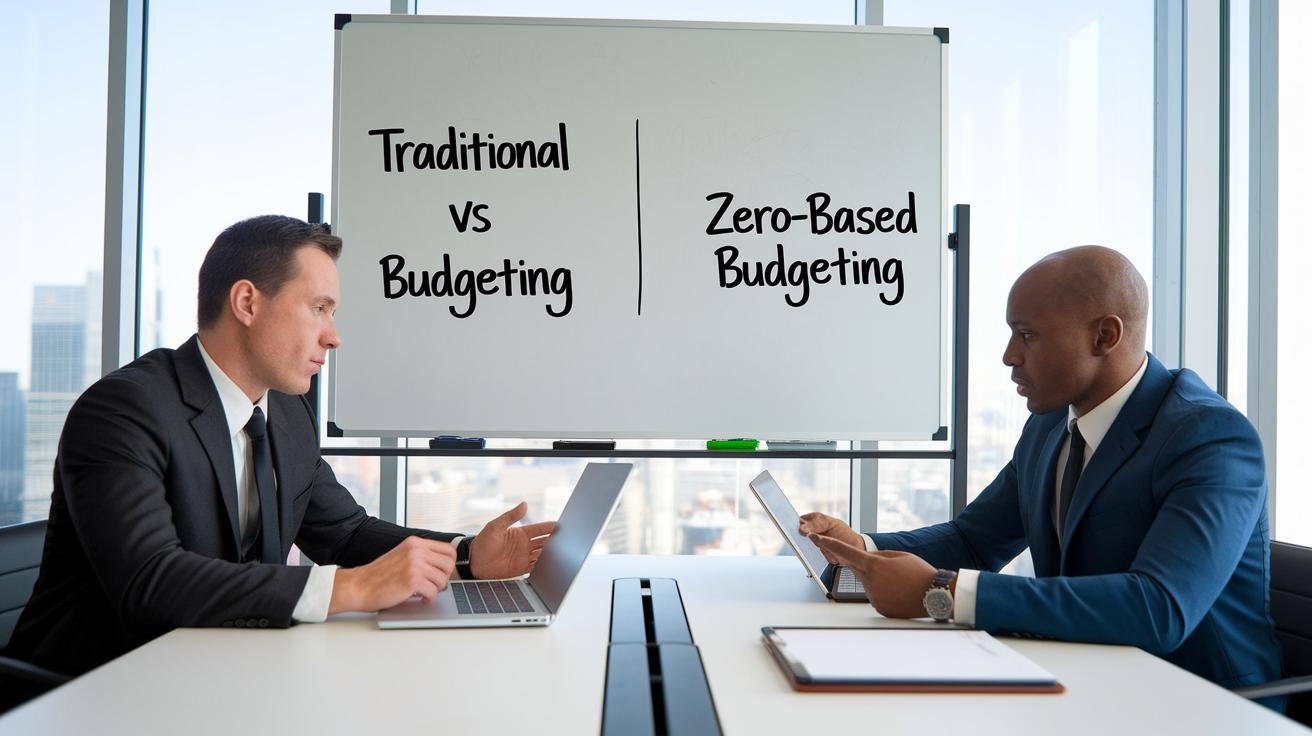
Zero-Based Budgeting

Zero-based budgeting gives every dollar a job. Start by checking your monthly take-home pay. Then list every cost you face – even the small ones. For example, if you take home $2,500, plan out how much goes to rent, groceries, and savings until every dollar is assigned. It’s like planning a road trip where every mile is mapped out, so you know exactly where your money is going.

50/30/20 Rule

The 50/30/20 rule splits your income into three clear parts. Use 50% for essentials, 30% for fun stuff, and 20% for savings or paying off debt. For instance, with a net income of $3,200, you might allocate $1,600 to needs, $960 to wants, and $640 to building your safety net. This simple method helps keep spending balanced while still planning for the future.

Envelope System

The envelope system means dividing your money into separate funds for different expenses. Decide on set amounts for items like dining, entertainment, or transportation and only spend from those funds. For example, if you set aside $300 for dining, try not to spend more than that. This tactic helps you see exactly how much you have for each category and prevents overspending.

Budget Type Key Features Best For
Zero-Based Budgeting Assigns every dollar a role; tracks every cost Detail-oriented planners
50/30/20 Rule Splits income into needs, wants, and savings or debt repayment Beginners looking for balanced spending
Envelope System Uses separate funds for different spending areas to set clear limits Anyone needing help controlling spending

Practical Money Skills for Saving and Investing: Building Wealth Over Time

Building wealth starts by planning how you save and invest. One simple way is to set up automatic transfers from your paycheck into your savings account. For example, you could move $100 from each paycheck into savings. This habit helps you build an emergency fund and sets money aside for future investments.

Compound interest is a powerful tool. It means your money earns interest, and then that interest earns more interest. Try using the rule of 72, a quick way to see how long it takes for an investment to double. At a 6% return, 72 divided by 6 shows your money might double in about 12 years. So if you invest $1,000 today, it could become $2,000 over time.

Remember, money today is worth more than money later because it can grow. Use a compound interest calculator or a savings simulator to see how regular deposits and reinvested earnings work in your favor.

Try these steps:

  • Set up automatic transfers to make saving easy.
  • Build an emergency fund that covers at least a few months of expenses.
  • Experiment with a compound interest calculator to see different growth scenarios.

Your next step: Pick one of these actions, start small, and watch your wealth grow.

Practical Money Skills for Credit and Debt Management: Minimizing Borrowing Costs

img-2.jpg

Calculating True Cost of Credit

To really grasp how much credit costs, look beyond just the APR. You need to add up all fees and use the effective annual cost to see the full picture. For example, imagine you take a $10,000 auto loan for 60 months. With a 5% APR, your monthly payment will be lower than with a 7% APR. Here's what to do:
• First, convert the yearly rate to a monthly rate and apply it to your loan balance.
• Next, multiply this rate by the number of months and add any extra fees.
Try a loan calculator like the Loan Affordability Estimator to see how even small changes in APR can add up over time. This clear breakdown helps you decide if a deal is smart for you.

Strategies to Reduce and Manage Debt

Once you know the real cost of your credit, you can take simple steps to lower your debt. Two proven methods are the snowball and the avalanche approaches. The snowball method focuses on quickly clearing your smallest debts, giving you a boost, while the avalanche method targets debts with the highest interest rates to cut long-term costs.

You can also consider balance transfers to combine several debts into one lower-rate payment or call your lender to ask for a lower rate on high-interest balances. These steps give you better control over your money and help reduce borrowing costs over time.

Your next step: Use a trusted loan calculator, input your numbers, and see how small percentage differences can make a big impact.

Practical Money Skills for Tracking Spending: Tools and Techniques

Tracking your spending as it happens can really help you manage your money day-to-day. When you see where every dollar goes, you can quickly make changes to stick to your budget. Many banks now offer budget tools that automatically sort your expenses, giving you clear visuals and alerts so nothing slips by.

Digital money tracking apps make it easier to record your purchases and check them against your budget. These apps let you set spending goals, tag transactions, and give you a heads up when you’re close to your limits. This approach builds solid habits over time and stops unexpected costs from derailing your plans.

Your next step: Open your bank’s app or download a budgeting app (like Mint) to start monitoring your spending today.

Here are some top methods to choose from:

  • Bank’s mobile app with auto-categorization
  • Free budgeting app (e.g., Mint)
  • Zero-based tracking spreadsheet template
  • Envelope-style digital wallet apps
  • Interactive expense journal worksheets

Try one of these tools now to take control of your spending and make smarter money choices.

Practical Money Skills: Supercharge Your Savings

img-3.jpg

Saving money is easier when you break it down into simple steps. We offer interactive tools and easy-to-print worksheets that turn abstract money ideas into actions you can follow today.

Try our interactive lesson plans to learn how to build an emergency fund, calculate compound interest (earning interest on your interest), or set clear savings goals. A printable worksheet can help you list your monthly targets and track each deposit step by step.

You can also use our budget calculator to map out your income and expenses. This tool shows how every dollar you spend today impacts your savings tomorrow. And if you prefer a fun approach, try a free online money game that simulates real-life challenges and turns learning into a hands-on exercise.

Your key resources include:

Resource Type Description
Interactive Lesson Plans Learn essential skills like emergency fund building and compound interest
Printable Worksheets Set and track your monthly savings targets
Budget Calculators Plan your income and expenses to boost your savings
Expense Journal Templates Keep track of spending and manage your money better

Try one of these tools right now. Download a worksheet, play a money game, or use a budget calculator. Small steps today can lead to big savings tomorrow.

Final Words

In the action, you're now equipped to tackle budgeting, saving, managing credit, and tracking spending with clear steps in hand. The guide broke down practical methods, from zero-based budgeting to calculating true credit costs, and introduced tools to simplify everyday money management. Use these insights and templates to drive your daily decisions. Apply these practical money skills and see progress week by week. Take a moment today to pick one tool or strategy and try it out, you’re on the path to better financial control. Keep moving forward and celebrate every step.

FAQ

What resources does Practical Money Skills provide?

The Practical Money Skills program offers tools like calculators, worksheets, interactive games, and lesson plans to help you plan budgets, track spending, and improve everyday money decisions.

What money skills are important?

The key money skills include budgeting, saving, spending wisely, credit management, and debt control that empower you to take charge of your financial life.

What does the 70/20/10 rule in money mean?

The 70/20/10 rule means you allocate 70% of your income for spending, 20% for saving, and 10% for paying debt or investing to balance your finances.

What are the 3 M’s of money?

The 3 M’s of money refer to making money, managing money, and multiplying money by earning, budgeting wisely, and investing for future growth.

How can I be practical with money?

Being practical with money means planning your income and expenses, tracking spending with available tools, and adjusting your habits regularly to meet your financial goals.

What are Visa Practical Money Skills and Canada Peter Pig?

Visa Practical Money Skills and Canada Peter Pig are variations of the program that offer engaging, region-specific financial education tools designed to help learners of all ages improve money management skills.


Preparing For Retirement: Bright Path Ahead

0

Are you ready for a retirement that's safe and comfortable? It doesn’t have to feel overwhelming. Break it down into small, clear steps, and you’ll start winning along the way.

Here’s a simple plan: write down your main retirement goals, review your numbers, and set clear targets that mix growth with caution. Your next step: grab a notepad, list one key goal, and note your current savings. Each small win moves you closer to a relaxed retirement.

Step-by-Step Guide to Preparing for Retirement

Planning for retirement can feel less daunting when you break it into simple, clear steps. By tackling one task at a time, you turn a big job into a series of small wins that build toward your goal.

Link your retirement goals with a balanced mix of growth and safety. As you near retirement, spreading your investments and gradually reducing risk helps protect your savings. Every choice you make, from creating a budget to choosing investments, supports your future comfort. Try this structured plan to get started on your retirement journey.

Your next step: Write down your retirement goals and a rough timeline for when you want to achieve them.

  1. Check your current net worth and cash flow.
  2. Set clear retirement goals and deadlines.
  3. Build a detailed budget and savings plan.
  4. Develop an investment strategy that fits your goals.
  5. Plan for multiple income sources like pensions, Social Security, and annuities.
  6. Research your healthcare and insurance needs.
  7. Organize your legal and estate documents.

Tools like retirement calculators let you see if you’re on track quickly. Deciding between a Traditional or Roth IRA can also help lower your taxes. Review your numbers often and adjust your savings as needed. With this practical approach, you’re ready to balance growth opportunities with smart risk management.

Building a Retirement Budget and Saving Strategy

img-1.jpg

Creating a clear retirement budget gives you a practical plan for a secure future. When you work out how much money comes in and goes out each month, you can better handle rising healthcare bills and everyday costs. Try using tools like cash flow management strategies to see exactly where your money is going and adjust your spending to meet your long-term goals.

Online calculators make setting savings goals simple. They give you quick estimates of how much you need for retirement. Tools like retirement savings, tax impact, and college-cost calculators show you if your current savings plan meets your future needs. With these insights, you can change your budget and contributions so you’re not surprised by future expenses.

Here’s what you can do right away:

  • Set up automatic contributions to your retirement accounts.
  • Start making catch-up contributions if you’re over 50.
  • Spread your savings among different types of accounts.
  • Cut back on non-essential spending to boost your savings.
  • Keep an emergency fund for unexpected bills.

Using a retirement savings calculator helps you map out clear goals. It shows how much you should set aside each year based on your income and expenses. This gives you a steady way to move closer to your ideal retirement lifestyle. Try one today to get a realistic annual target and take a solid next step toward your future.

Investment Planning for Retirement: Balancing Growth and Risk

Retirees must have clear plans that protect their money while also letting it grow. Retirement investment strategies balance the need for growth with the importance of steady income. You can choose a self-managed approach or get guidance, so you decide how much control to take. This mix helps smooth out market fluctuations and keep pace with rising prices.

Equity Investments

Stocks and ETFs are smart choices for those aiming for long-term growth. Investing in a range of companies lets you benefit from market gains. ETFs bundle many stocks into one purchase, which keeps risk in check while still offering growth potential. They also make it easy to track performance on your phone.

Fixed Income and Bonds

Bonds, annuities, and money market funds offer regular income and reduce overall volatility. These fixed income choices work like a safety net by providing reliable returns, even when market conditions change. They add stability, ensuring you have steady cash flow for essential expenses in retirement.

Diversified Funds

Mutual funds and target-date funds spread your risk across multiple asset types in one package. These funds adjust over time to match your retirement timeline. By combining stocks, bonds, and cash, they help you maintain a balanced investment approach with minimal effort.

As you move through different retirement stages, review your asset mix regularly. Gradually shifting from growth-focused investments to steadier income sources can protect your savings while still letting you benefit from growth opportunities.

Your Next Step: Take a moment today to review your current portfolio. Identify one area to learn more about and consider making a small change that aligns with your retirement timeline.

Planning Retirement Income and Applying for Benefits

img-2.jpg

Mixing your income streams helps build a steady financial base for retirement. Relying on just one source can leave you vulnerable if circumstances change. By adding benefits like Social Security, pension income, annuities, and funds from 401(k) rollovers, you can cover everyday costs while enjoying your retirement. Mapping out these sources lets you easily adjust your income when expenses or market conditions shift. Tools such as tax calculators can show you how different income choices might affect your tax bill. Try this: get a simple plan in place to keep your income steady and predictable.

Consider these key points:

Action Step Benefit
Determine the best age to claim Social Security Maximizes your monthly benefit
Use a rollover tool for your 401(k) funds Simplifies managing your savings
Review your pension payout choices Ensures a consistent cash flow
Know how withdrawals are taxed Helps avoid surprises at tax time

Once you have your income sources in place, focus on when to apply for benefits. Start by applying for Social Security as soon as you’re eligible and when it makes sense for your overall income plan. Use a 401(k) rollover tool to combine your savings into one account, making future withdrawals easier. Then, compare different pension payout options to secure a regular income. Lastly, understand the tax rules for each type of distribution so you can plan correctly. Your next step: Outline your benefit application timeline today, and keep track of deadlines to avoid delays.

Healthcare, Insurance, and Long-Term Care in Retirement

Rising health expenses can take a toll on your retirement savings. It pays to plan now so that unexpected costs don’t force you to cut back on the lifestyle you’ve worked hard for. A simple next step is to review your budget and make small adjustments today.

Medicare enrollment for Parts A and B comes with fixed deadlines and penalties. Your first chance to sign up is when you turn 65, known as the Initial Enrollment Period. If you miss that window, you must wait for the General Enrollment Period and may face higher fees. Knowing these deadlines can help you avoid extra costs and keep your coverage steady.

Supplemental insurance, also called Medigap, helps cover costs like copays and deductibles that Medicare doesn’t pay. Taking a look at these plans can fill in the gaps of your basic coverage. Another option to consider is long-term care insurance, which can assist with costs for nursing home care or support at home. Make sure to review any waiting periods and specific rules before choosing a policy.

Finally, building a reserve for out-of-pocket expenses is a smart move. Set aside a bit of money each month to cover deductibles, copays, and other costs not covered by insurance. This extra cushion gives you peace of mind and helps protect your retirement goals.

Essential Estate Planning and Retirement Documents

img-3.jpg

Planning your estate is a smart move that sets you up for a smoother retirement. When you get your legal documents in order now, you cut down on future stress and make your wishes clear to your family and loved ones. This simple step can protect your legacy and make sure your money and medical choices are respected.

Here's a quick list of must-haves:

  • Last will and testament
  • Durable power of attorney
  • Healthcare directive (living will)
  • Beneficiary designation forms for IRAs and 401(k)s
  • Trust documents (if needed)
  • List of digital accounts, assets, and passwords

Your next step: Spend a little time now to check that everything is in place. Set aside 15 to 20 minutes every six months to review these documents. Remember, major life changes, like getting married, divorced, or experiencing a shift in your finances, mean it’s time to update your plan.

By keeping your records current, you'll have peace of mind knowing that your retirement and estate plans are working exactly as they should.

Tools, Checklists, and Resources for Preparing for Retirement

Using a mix of planning tools improves your retirement plan. When you use online calculators and easy-to-print worksheets, you can check your numbers and adjust your strategy as your situation changes. These tools let you estimate how much income you'll need, combine your accounts, figure out taxes, and track everyday spending. Gathering data from several sources helps you plan with confidence and make updates as life moves on. This full-picture approach gives you the clarity to make smart financial choices.

Tool Name Purpose Link
Personal Retirement Calculator Project retirement income needs investment calculator with compound interest
401(k) Rollover Tool Consolidate accounts without tax penalties Link to rollover tool
Tax Impact Calculator Estimate tax on distributions Link to tax calculator
Budget Worksheet Track retirement income and expenses Link to downloadable PDF

Grab a free, printable retirement checklist to keep your plan on track. This handy list covers every key step and tool so you never miss an important detail. Whether you want to fine-tune your savings plan, book a review with your advisor, or simply tick off completed tasks, this checklist is a practical guide. Make it a habit to update your tools and documents as your money situation changes. Try these resources today to set up a clear, flexible plan for your future.

Final Words

In the action of outlining a clear, seven-step plan, addressing retirement income, managing healthcare, and organizing essential documents, this guide brings a practical roadmap into view.

It covers balanced investment planning, detailed budgeting, and useful tools to track progress.

These actionable steps help you build confidence and move forward with preparing for retirement. Keep using the resources provided and take one step at a time toward a financially secure future.

FAQ

What should be included in a retirement checklist?

The retirement checklist covers assessing your finances, setting clear goals, and outlining budgeting steps. It provides a roadmap to organize tasks, from calculating net worth to reviewing legal documents.

How can I prepare emotionally for retirement?

Emotional preparation for retirement means planning for changes in your daily routine, adjusting expectations, and ensuring you have supportive social connections for a smooth transition.

What is a retirement calculator and how does it help?

A retirement calculator predicts your future income needs by considering savings, investments, and expected expenses, giving you clear targets to adjust your plans and bridge any gaps.

How can I prepare financially for retirement?

Financial preparation involves creating a solid budget, saving regularly, and diversifying investments to cover living costs, healthcare, and unexpected expenses once you retire.

How do I start the retirement process and what is the first thing to do before retiring?

Starting the retirement process begins with a clear assessment of your current finances and a list of retirement goals, which helps establish priorities and set a practical roadmap.

What should I do 6 months before retirement?

Six months before retirement, review and finalize income plans, check healthcare options, and update key legal documents to ensure a smooth transition into retirement.

Where can I find a retirement planning guide PDF?

A retirement planning guide PDF is available from trusted financial websites, providing a step-by-step checklist, budgeting tips, and investment strategies in an easy-to-follow format.

What is the best retirement advice from retirees?

Retirees advise planning early, staying flexible with your strategy, and regularly using tools to track income and expenses to manage the balance between growth and stability.

What is the $1000 a month rule for retirement?

The $1000 a month rule refers to planning to generate or save an extra $1,000 every month to cover essential expenses and create a cushion that supports a stable retirement lifestyle.

What are the 7 rule and 3 rule for retirement?

The 7 rule suggests saving enough to cover seven times your annual expenses, while the 3 rule recommends having three different income sources during retirement for added financial security.

3: Amount Needed To Retire, Live Well

Ever wonder if your savings will let you live comfortably in retirement? You might be surprised to learn that most people need to save 10 to 12 times their annual income to cover expenses once they stop working. Your retirement savings not only help cover everyday costs but also serve as a buffer for unexpected bills, rising healthcare costs, inflation, and local cost differences. Try this: Use a simple savings calculator to figure out your target and start planning for a secure future today.

Calculating Your Amount Needed to Retire

Your nest egg is simply the savings you need to cover your living expenses when you retire. Many experts suggest saving about 10 to 12 times your current salary by the time you hit 67. This fund is meant to fill the gap between what you need and what other income sources, like Social Security, will provide.

Start by figuring out your yearly expenses after retirement. Then, multiply that amount by the number of years you expect to be retired, often 20 years or more. This gives you a rough savings target. For instance, if you make $80,000 a year, the 10× rule points to around $800,000. Rounding up to $1 million can give you extra cushion for unexpected costs or market ups and downs.

To build your nest egg, aim to set aside about 15% of your income each year, though that percentage can vary based on your situation. Don’t forget to adjust your target for inflation and rising costs like healthcare. That way, your savings keep pace with your lifestyle needs.

Your next step: Review your current expenses and use a simple budget template to plan how much you need each year in retirement. If you need personalized advice, consider scheduling a consultation with a Retirement Plan Advisor.

Factors Impacting the Amount Needed to Retire

img-1.jpg

Your retirement savings target depends on a few important factors. One key factor is inflation. On average, prices go up 2% to 3% each year. Over 30 years, this steady rise means your money loses value, so you’ll need more saved to keep the same buying power.

Another factor is where you plan to retire. Costs can vary widely by region, sometimes by as much as 30% to 50%. For example, in one spot your grocery bill might be 40% higher than in another. This means your retirement fund might need to be larger to cover those extra costs.

Healthcare costs are also significant. They can make up more than 15% of your spending when you retire. As many people live well past 65 (often over 20 years), medical expenses and insurance premiums can put extra strain on your budget. In addition, nearly half of boomers in 2024 expected a recession, which adds to the financial uncertainty.

Try this: List these factors in your retirement plan and adjust your savings goal to give you a safe buffer.

Rules of Thumb for Determining the Amount Needed to Retire

One popular guideline is known as the 4% rule. This rule means you take 4% of your savings in your first year of retirement, then adjust that amount each year for inflation over 30 years. For instance, if you have $1,000,000 saved, you could expect about $40,000 in your first year. This gives you a clear target for building a comfortable retirement fund.

Some people prefer a more cautious approach and choose a withdrawal rate between 3% and 5%. This can ease worries about covering living expenses, especially in uncertain times. Even among those with high savings, many still feel uneasy about having enough money for retirement. These numbers serve as an easy gauge to help you decide if your savings meet your retirement goals.

Try this: If you plan to spend $35,000 annually, aim to have a nest egg of about $875,000. Use these simple guidelines to see if your current savings line up with the security you need for a comfortable retirement.

Using Retirement Calculators to Pinpoint the Amount Needed to Retire

img-2.jpg

Online retirement calculators show you how close you are to a comfortable retirement. They usually ask for details like your current savings balance, how much you add each year, the growth rate you expect (often between 5% and 7%), assumptions for rising prices, and when you plan to retire. With this info, the calculator figures out how your savings will grow over time. For example, the Investment Calculator with Inflation adjusts for rising prices so you can see the true impact of inflation on your nest egg.

A good calculator will typically ask for these details:

  • Age: Your current age and the age you plan to retire.
  • Savings: The total amount already in your retirement account.
  • Contributions: How much money you add each year.
  • Return rate: The average annual increase you expect from your investments.
  • Horizon: The number of years your savings will need to last.

Try this: Picture yourself at 35 with $50,000 saved. If you add $6,000 a year and expect a 6% annual return, a calculator might show you could have nearly $1.2 million by age 67. Keep in mind that many calculators do not factor in Social Security benefits. You may need another tool, like the Financial Calculator, to add those figures.

Your next step: Use a retirement calculator today to adjust your savings plan. It will help you see if you’re on track and show you real steps to reach your retirement goal.

Age-Based Savings Benchmarks for Amount Needed to Retire

Age-based savings targets help you know if you're on track for retirement. The idea is simple. By saving a multiple of your salary by different ages, you can see how close you are to your goal. For example, if you earn $60,000 a year, try aiming for about $60,000 saved by age 30, around $180,000 by age 40, roughly $360,000 by age 50, about $480,000 by age 60, and near $600,000 by age 67.

Age Salary Multiple
30
40
50
60
67 10×

If you’re falling behind these targets, it’s important to boost your savings. Many folks, especially in Gen X, show extra caution as only 46% feel ready for retirement. This means adding catch-up contributions might be necessary.

Here are some steps to help speed up your savings, especially in your 40s and 50s:

  • Look over your spending and cut nonessential costs.
  • Increase your automatic contributions to your retirement accounts.
  • Review your investments and adjust them for steady growth.

Try this: Take a close look at your savings. If you haven’t reached about 3× your salary by age 40, consider raising your contributions today. Taking these steps now can help you secure a comfortable retirement.

Adjusting Your Amount Needed to Retire for Inflation and Lifestyle Goals

img-3.jpg

Planning for retirement means more than just saving your current costs. With a steady 2.5% inflation rate, the money you set aside today will lose value over time. In fact, in 30 years, what costs you $40,000 now could be close to $80,000. To see this, multiply your current expense by (1.025)^30. Try using an online inflation calculator to check your numbers.

Your lifestyle choices also play a big role in what you will need later. If you plan a simple life with few luxuries and modest travel, your annual spending stays lower. On the other hand, if you envision international travel, frequent dining out, and premium hobbies, you might need an extra $10,000 or more each year. In other words, a basic lifestyle costing $40,000 today might need $50,000 or more in the future to feel comfortable.

Remember to add a safety net of 10% to 20% for unexpected costs like sudden healthcare bills or market changes. For example, if you expect to need about $80,000 a year after inflation, adding an extra 15% can give you a much-needed cushion.

Withdrawal Strategies for the Amount Needed to Retire

Turn your retirement savings into a steady income stream by using a simple bucket strategy. Start by splitting your savings into three portions. Keep enough cash to cover 2-3 years of living expenses first. This cash reserve stops you from selling investments during market lows.

Next, set aside money in medium-term bonds. These bonds provide steady income and add stability to your finances. Finally, invest in long-term stocks to boost growth and help your savings stay ahead of inflation.

Begin with a 4% initial withdrawal rate to ease into a sustainable income. For example, if you have $1,000,000 saved, take out $40,000 in your first year. Then, adjust this amount each year for inflation so you keep your purchasing power intact. Keep in mind that market ups and downs can affect your plan. Early market drops can create a risk of depleting your funds if you’re not careful.

Make it a habit to rebalance your buckets every year. This keeps everything on track with your financial goals. If you see the market dipping, try lowering your withdrawal rate for a short period. For instance, reducing the rate from 4% to 3.5% can help protect your long-term investments while still allowing your portfolio to recover.

Try this: Take a moment each year to review your buckets, then tweak your contributions or withdrawals as needed. For more insights, visit Cash Flow Management Strategies (https://teafinance.com?p=1940).

Final Words

In the action, you learned how to calculate the amount needed to retire using clear benchmarks and real numbers. We broke down the steps, from setting your savings goal based on your income multiple to adjusting for inflation and future lifestyle costs. You also saw how retirement calculators and safe withdrawal strategies can guide your plan. Each step offers a practical move that can build your retirement savings and boost financial confidence. Keep working with a clear focus, and take one small step today toward your secure future.

FAQ

How much money do you need to retire with a $100,000, $200,000, or $50,000 a year income?

The needed nest egg is often calculated by multiplying the desired annual income by 25. This means about $2.5 million for a $100,000 income, $5 million for $200,000, and $1.25 million for $50,000, adjusting for personal needs.

How does your retirement age affect how much you need to save?

The retirement age influences your nest egg because retiring earlier, such as at 40 or 50, requires more savings to cover a longer retirement, while retiring at 65 may need less due to a shorter spending period.

What does retiring comfortably mean and how much is needed?

Retiring comfortably means having enough funds to cover living costs without financial stress. Experts often suggest saving 10–12 times your annual income, while factoring in inflation, healthcare, and extra expenses.

Can you retire comfortably on $1.5 million?

The idea of retiring comfortably with $1.5 million depends on lifestyle and additional income. For moderate spending and some extra income, this nest egg can work well, but careful planning is needed.

How many people have $1,000,000 in retirement savings?

The statistic on $1,000,000 in retirement savings varies, with many people working toward that goal, though a significant portion of retirees falls below this benchmark, indicating room for more saving.

How long will $2 million last in retirement?

Using a common 4% withdrawal rate, $2 million will typically support around 25 years of income, although this duration can vary with spending habits, market returns, and unexpected expenses.

Financial Calculator App – Smart, Easy Finance

0

Quick win: Manage all your money math in one go.

This handy app puts five vital tools in one space. It calculates your money's present worth, payment amounts, rates, time periods, and future value, all without switching apps. It even saves your data so you can easily compare different scenarios.

Ready to simplify your budgeting? Try the app now and see how fast you can get clear, reliable money numbers.

Key Features of a Financial Calculator App

This app puts five useful calculators in one simple tool. You can quickly work out present value (PV), payment amounts, rates, periods, and future value without jumping between different apps. It’s designed to give helpful, accurate results whether you’re new to this or have done it before.

The app saves your data across four tabs (Calc 1–Calc 4), so you can test different scenarios side by side without retyping your numbers. This feature can really speed up your process when you need to adjust savings or loan plans. For clear instructions on how to use the PV, rate, and period features, check out this guide: how to use a financial calculator.

  • Present Value (PV)
  • Payment
  • Rate
  • Periods
  • Future Value

By using the same data for every calculation, the app helps you avoid mistakes like rounding errors and saves you time. The rate calculator even lets you copy your numbers for extra accuracy. Whether you’re working on a mortgage payment plan or estimating how long it will take to hit a savings goal, having all your calculations linked makes planning straightforward and dependable.

Try stepping into the app now by entering your first set of numbers.

Comparing Top Financial Calculator Apps on Mobile Devices

img-1.jpg

These apps pack versatile tools right into your phone. They mix old-school calculation methods with a fresh, modern twist, making complex number crunching easier and faster. Whether you're checking a budget, planning a loan, or mapping out investments, there's an app here that fits your needs.

App Name Platform Key Feature
BA Financial Calculator Plus iOS & Android Classic techniques with a modern look
RPN-70 HD iOS Accurate simulation of the 1974 HP-70
Official HP 12c App iOS Touchscreen accuracy inspired by the hardware version
Compoundee iPhone Focused compound interest calculations
Finance Calculator Pro / HiCalc iPad Printable reports and user-friendly menus

Each app shines in its own way. BA Financial Calculator Plus blends traditional methods with simple, digital ease. RPN-70 HD gives you a bit of nostalgia while keeping performance strong. The Official HP 12c app offers clear, sharp touchscreen precision. If you need solid compound interest tools, Compoundee is a top pick. Meanwhile, Finance Calculator Pro paired with HiCalc delivers clear reports you can print and easy navigation.

Your next step: Choose the app that best meets your financial needs and start making numbers work for you today.

Budget Calculation Software in a Financial Calculator App

This budgeting tool makes it simple to split your income into clear categories using the 50/30/20 rule. That means you plan to spend 50% on essentials (like rent and groceries), 30% on extras, and 20% on saving or paying off debt. The app even links to interest rate and future value functions so it automatically adjusts your savings targets as conditions change. Auto-updating fields show the latest numbers whenever rates or investment settings shift.

Setting up your monthly budget is straightforward with built-in trackers and interactive worksheets. Start by entering your take-home pay and assigning percentages to needs, fun spending, and savings. As you tweak your numbers, the app instantly recalculates everything, keeping your plan up to date. This easy-to-use finance helper cuts out manual math and gives you clear, step-by-step guidance to manage your money better.

Your next step: Open the app, plug in your last month’s take-home pay, and watch as each change makes your budget adjust in real time.

Investment Analysis in a Financial Calculator App: IRR, NPV, and Compound Interest

img-2.jpg

This tool lets you quickly check if an investment is worth your time. Use the IRR module to measure the return by comparing your cash inflows and outflows. Next, the NPV module calculates the current value of future cash flows using discount rates. For example, if you’re considering a new business, this feature shows clear numbers based on expected cash flows over the years.

Try this: Enter your cash-flow data into the IRR and NPV modules to see real numbers that guide your decision.

Another handy feature is the compound interest planner. It shows how an investment like $100,000 could grow over 20 years at 6%. This clear picture of long-term gains can help you understand the power of steady returns. There’s also an investment return analyzer that lets you compare different return scenarios side by side. Plus, a simple copy function transfers interest-rate details across modules, saving you time and reducing errors.

Your next step: Try using these modules to compare two different investment options and see which one fits your goals best.

Loan and Mortgage Computation Tools in a Financial Calculator App

Use our payment calculator to quickly figure out your monthly costs for a mortgage, auto loan, or personal loan. Simply enter your loan amount and term to see what you'll pay each month. This mobile tool is your go-to finance helper for checking affordability and planning your next step.

The app also creates a complete mortgage schedule that shows how each payment splits between principal and interest. This clear breakdown lets you see how your balance shrinks over time. If you're checking out an adjustable rate mortgage, try our rate analyzer to see how different rate changes might affect your payments. Enter a few future rate options and compare how your monthly budget might shift.

Here’s what you can do:

Feature Description
Payment calculator Estimates monthly payments for mortgages, auto loans, and personal loans
Mortgage schedule Breaks down each payment into principal and interest
Adjustable-rate analyzer Compares different rate scenarios for ARMs
Rate calculator Finds the exact interest rate needed for your target payment
Four-tab data persistence Lets you compare multiple loan scenarios side by side

With data saved across four tabs, comparing various loan options becomes a breeze. This practical tool not only speeds up your calculations but also keeps all your numbers ready for instant review. Try it now to take a clear next step in your financial planning.

Pricing, Platform Compatibility, and User Feedback for Financial Calculator Apps

img-3.jpg

These apps usually start off free, giving you the basic tools you need to manage your finances. If you want extra features, many offer in-app purchases or single payments between $9.99 and $19.99. You can also opt for a subscription with access to premium tools, costing around $4.99 to $9.99 each month. This way, you can choose a plan that fits your budget and needs.

They work on many devices including iOS, Android, Windows, and even tablets. This means you can use them at home or while you’re on the move. Reviews are mostly positive. Users love the real-time calculations, accuracy, and simple interface. They find it quick to enter your data and see results, which makes planning your finances easier.

Your next step: If you’re looking for a smart financial tool, try downloading one of these apps and see how its pricing and features match your needs.

Selecting the Best Financial Calculator App for Your Goals

When choosing a financial calculator app, start by figuring out what you need most, whether it’s budgeting, investing, or managing loans. Look for an app that can handle several calculations at once and saves your data so you don’t have to re-enter information every time.

Here are a few things to check:

  • Know your main goal (budgeting, investing, or loan management).
  • Make sure the app offers multiple calculator options and keeps your data safe.
  • Pick one with a clear, simple design and easy input fields.
  • Confirm it works on all your devices.
  • Compare the cost to the features it offers and what you can gain from using it.

Match your personal financial goals with the app’s features. If you need clear calculations for planning a mortgage or weighing investment options, choose an app that is easy to use and fits your style. Check the price and device compatibility to make a smart decision today, download a trial if you can and test it out.

Final Words

In the action, this guide broke down the features of a financial calculator app designed for budgeting, debt repayment, and investment analysis. We covered how each tool, from present value to future value calculators, works together with data persistence to simplify comparisons and save time.

Take a moment to test out a financial calculator app that fits your needs. Let your new insights boost your confidence and help you build a smarter money management routine.

FAQ

What is a financial calculator online?

The financial calculator online helps you compute key financial values such as present value, payments, interest rates, periods, and future value to assist with budgeting and loan analysis quickly.

What is a free financial calculator app?

The free financial calculator app lets you perform money computations, including budgeting, loan estimates, and investment forecasts without any cost, making managing your finances easier.

What features does a financial calculator app for iPhone offer?

The financial calculator app for iPhone provides tools for calculating present value, payments, interest rates, periods, and future values with data persistence that allows for side-by-side comparisons.

How can I download a free financial calculator app?

Downloading a free financial calculator app gives you access to versatile money management tools, including budgeting and investment calculations, directly from your device’s app store at no cost.

Is there a financial calculator online for free?

The financial calculator online free option offers crucial functions like rate calculation, period estimation, and future value projections, letting you perform detailed computations without paying any fees.

What does a financial calculator app for Windows do?

The financial calculator app for Windows delivers comprehensive financial computations, including budgeting, loan comparisons, and investment evaluations, designed to work seamlessly on desktop or tablet devices.

What features does a financial calculator app for Android include?

The financial calculator app for Android supplies budgeting tools, loan estimators, and investment calculators with easy data entry and side-by-side comparisons to help simplify your financial decisions.

Which is the best financial calculator app?

The best financial calculator app integrates multiple tools—like present value, payment, rate, periods, and future value calculations—with data persistence and an intuitive interface for reliable financial insights.

Which online financial calculator is best?

The best online financial calculator offers accurate calculations across present value, payment, rate, periods, and future value functions, paired with an easy-to-use design and data-saving features for clear comparisons.

Is there a financial calculator on iPhone?

The financial calculator available on iPhone includes comprehensive tools for budgeting, loan, and investment analyses, featuring multi-tool integration and data persistence to simplify your financial planning.

Are online financial calculators free?

Online financial calculators free options provide essential money computation tools like payment estimation and investment analysis without charges, making it accessible for users to manage their finances effectively.

Is there a free calculator app available?

The free calculator app offers basic financial computation tools at no cost, enabling you to estimate budgets, loans, and investments without incurring additional fees.

Money Goal Tracker: Elevate Your Finances Today

0

Do you sometimes feel lost when managing your money? A money goal tracker can help you see your progress in clear, simple steps. Think of your budget as a thermometer that rises as you hit your targets, whether you’re reducing debt or saving for something big. This tool gives you real-time updates and easy-to-read visuals that turn confusing numbers into actionable steps. Try setting up a tracker today and start taking control of your finances.

How Money Goal Trackers Help You Achieve Your Financial Targets

Money goal trackers are handy digital tools that help you plan your budget, save for future needs, and cut down debt. They work like a personal finance dashboard, putting all your financial info into simple visuals. Many trackers use a thermometer-style bar to show your progress at a glance. This clear view lets you see exactly where you stand, whether you're paying off debt, building an emergency fund, or saving for a big goal.

Your next step: Spend 5 minutes today browsing a free money goal tracker and see how it can simplify your finances.

Many trackers combine essential features into one neat package. They update your info in real time, whether you access them on your browser or through a mobile app. By linking your bank or credit card accounts, these tools keep your balance current. Free versions cover the basics, while paid plans offer more detailed analytics and even team collaboration. Plus, ready-made templates let you set up your tracker without any extra design or coding work, and you can even customize the progress bars to match your style.

Money goal trackers also give you a strong dose of motivation. With fun, gamified elements like real-time feedback and customizable progress bars, they turn abstract financial goals into clear steps you can see and measure. Watching that bar fill up gives you a real sense of achievement every time you hit a milestone.

Your next step: Try a money goal tracker today. Update your info, watch your progress, and let that clear view of your numbers drive you to even greater financial wins.

Setting Up Your Money Goal Tracker: A Step-by-Step Guide

img-1.jpg

Choosing Your Tracker Type
Pick a tool that suits your style. If you want quick setup and automatic updates, a dedicated app is great. Spreadsheets let you update figures by hand for full control. A web portal gives you a mix of both, letting you update online with extra features if needed. Try this: if you hate entering numbers repeatedly, go with an app.

Defining Clear Savings or Debt Goals
Write down what you want to reach. List a clear amount to save or pay down and set a deadline. Break this large goal into small steps. For example, save $100 a month until you hit $1,200. This way, you can check your progress easily with every mini-goal reached.

Linking Accounts or Manual Entry
Decide if you want your tracker to update by itself or if you prefer to input your own numbers. Linking your bank and credit card accounts means automatic updates. If you enjoy tracking every detail personally, manual entry might be better. Either option gives you a digital budgeting planner that works for you.

Customizing Alerts and Visuals
Make your tracker feel like your own. Adjust the layout, choose the progress-bar colors, and set up alerts when you hit a target. You could even add your logo or get real-time notifications on your phone. Imagine this: a quick text alert when you save an extra $50. It makes the whole experience fun and rewarding.

Your next step: Choose a tracker type and set a small goal for this week to test how it works.

Comparing Top Money Goal Tracker Tools and Apps

When you want to track your money goals, there are plenty of tools to choose from. Basic free tools give you a simple view with progress meters so you can quickly see how much closer you are to reaching your savings or debt goals. They’re perfect if you need a quick, clear picture of your progress.

With freemium and paid versions, you get extra features like advanced charts, real-time alerts, and support for multiple users. Some tools work directly in your browser with no download needed, while mobile apps even send push notifications to keep you informed wherever you go. If you like having full control over your data, a spreadsheet template might suit you, though it does require manual updates. Hybrid tools mix auto-sync features with colorful visuals like line charts and progress bars, giving you an easy and engaging overview.

Try this next step: choose one tool that matches how often you check your progress and the level of detail you need.

Tool Name Type Price Key Features
SaveBud app free auto-sync, alerts, visuals
MoneyMeter portal freemium real-time updates, customizable visuals
BudgetPro spreadsheet free manual input, full control, basic charts
TrackMyFunds hybrid paid advanced charts, multiuser support, historical analytics
SmartSavings app freemium push notifications, gamified progress, auto-sync

Each option has its own benefits. Browser-based tools are simple and work on any device, while mobile apps give you timely notifications. A spreadsheet lets you personalize every detail, even if it takes more effort. And hybrid tools bring automated syncing with clear, engaging visuals. Think about what fits your lifestyle and money management habits best, and start tracking your progress today.

Best Practices for Maximizing Money Goal Trackers

img-2.jpg

Keeping your money goal tracker active helps you stay on top of your finances. Check your numbers often, daily or weekly, so your tracker always shows your current money situation. Splitting big money targets into 10% to 20% chunks makes the goals easier to manage and gives you quick wins along the way. Personalize your charts and progress bars to spotlight important milestones, which can boost your confidence as you see progress. Sharing a quick screenshot with a trusted friend or group can also keep you motivated and committed.

Consider these best practices:

  • Update your tracker daily or weekly for accurate numbers.
  • Break down large goals into 10-20% parts for steady progress.
  • Set up mobile or email alerts to mark milestone wins.
  • Customize your visuals to highlight key savings or debt targets.
  • Schedule regular check-ins to adjust your plan as needed.
  • Share your progress with an accountability partner or group.
  • Review your metrics often for a clear view of your financial plan.

Your next step: Take 10 minutes today to review your tracker and set up one alert for your next milestone. For more ideas on managing cash flow, check out our extra resource.

Money Goal Tracker FAQs: Answers to Your Common Questions

What Is a Money Goal Tracker?

A money goal tracker is a tool that shows your progress toward financial targets with charts or progress bars. For example, when saving for a house down payment, you can set a target and watch a progress bar fill up as you save. This makes your goal feel real and clear.

How Do I Track Money Saved?

You can track your savings in two ways. One option is to let the tracker sync automatically with your bank account. The other is to update it manually. If your income isn't steady, for instance, if you get monthly bonuses, manually entering each amount can keep your record accurate.

Which Features Matter Most?

Focus on what helps you stay on track. Custom alerts can remind you when you’re near a milestone, and clear visuals let you see your progress quickly. Some trackers even offer tips like, "Review your savings when you reach 75% of your goal," giving you a helpful nudge.

Are Money Goal Tracker Apps Free?

Many money goal trackers have free basic versions. These usually let you update manually and offer simple charts and alerts. If you need more detailed reports, options for multiple users, or extra integrations, a premium version might be better, especially if you’re tracking a joint goal.

How Often Should I Update My Tracker?

You should update your tracker regularly to keep your data accurate. If your income or spending changes often, update daily. If things are more stable, weekly updates can work fine. Try this: Spend 5 minutes at the end of each day reviewing your entries to catch any mistakes before they add up.

Final Words

In the action, you learned how a money goal tracker can jumpstart progress in budgeting, saving, and paying off debt. We covered key features like visual progress bars, auto-sync options, and easy-to-use templates that fit different needs. You now see how free tools and premium options can serve as practical aids in reaching your money milestones.

Try setting up your tracker today and watch your financial picture become clearer. Every small step brings you closer to real financial control.

FAQ

What types of money goal trackers are available?

Money goal trackers come in various forms such as apps, online platforms, Excel spreadsheets, calculators, and templates featuring thermometer-style visuals. These tools include both free and premium versions to suit your needs.

What is the 70/20/10 rule in money management?

The 70/20/10 rule means you spend 70% on essentials, save 20% for financial goals, and use 10% for personal spending. It’s a simple way to allocate your income for balanced budgeting.

How do I track money goals effectively?

Tracking money goals effectively involves using tools that allow automatic bank sync or manual updates, setting clear milestones, and receiving alerts when goals are met. This approach keeps your progress visible and actionable.

How much do I need to save monthly to reach $10,000?

Saving $10,000 depends on your timeline. For example, saving within 12 months means setting aside about $833 per month. Adjust your savings plan based on your specific financial schedule.

How can I save $10,000 in 3 months?

Saving $10,000 in 3 months requires a monthly savings target of approximately $3,334. This goal may necessitate a detailed review of your budget, higher income sources, or significant expense cuts.

How To Create A Zero Based Budget: Thrive

0

Ever wonder if you could give every dollar a job? With zero-based budgeting, you assign a task to each dollar right when you get paid. You decide how much goes toward bills, savings, or paying down debt. This simple plan shows exactly where your money goes each month and helps you feel more in control. Ready to put every dollar to work? Try setting up a zero-based budget today.

Step-by-Step Zero-Based Budget Overview

Zero-based budgeting means giving every dollar a role. You decide where each dollar goes, whether it's for spending, saving, or paying off debt, so that by the end of the month, nothing is left unassigned. Learn more about what is zero based budgeting.

Follow these four steps to get started:

  • First, add up all your regular income sources. For example, if you earn $3,000 a month, that’s your starting point.
  • Next, put some money toward savings like an emergency fund or retirement. Also, cover any debt payments, such as credit cards or loans.
  • Then, pay for basics like rent, utilities, and groceries before spending on extras like dining out or entertainment.
  • Finally, compare your planned expenses with your income. If you’re spending too much, look for areas to cut back. If you have extra money left, boost your savings or put more toward debt.

This approach gives you a clear plan and shows progress toward your goals. It might take a bit of time to set up and update regularly, but the visible results can really keep you motivated.

Your next step: Grab a notepad or download our free budgeting template. Write down your monthly income and list out your expenses to see how every dollar works for you.

Estimating Your Monthly Income for a Zero-Based Budget

img-1.jpg

Begin by writing down every source of income you have. If you earn a yearly salary, simply divide that number by 12 to get a monthly amount. For example, if you earn $36,000 per year, your basic monthly income is around $3,000.

Next, add any extra money you get from freelance projects, bonuses, or side gigs. If your earnings vary from month to month, consider using last month’s net income as a guide. A simple Excel or Google Sheets tracker is a great tool to record each source of income.

List each income stream on its own and then add them together. This approach will give you a clear picture of your total monthly income, which is essential for a successful zero-based budget.

Try updating your income tracker every month, especially if your earnings are not steady. With an accurate record, you can quickly adjust your plan and keep your budget on track. Remember, keeping a detailed tracker is the key to reaching your budgeting goals.

Allocating Every Dollar: Planning Expenses in Your Zero-Based Budget

Every dollar you earn should have a job. Start by writing down your monthly income. Then decide how much goes to each spending category. Here’s a simple order to follow:

• First, put money into savings. This might be for emergencies or retirement.
• Next, set aside funds for debt payments like credit cards or loans.
• Then, cover your fixed bills such as rent, mortgage, utilities, and insurance.
• After that, take care of variable needs like groceries and transportation.
• Finally, use what’s left for fun activities, dining out, or other discretionary expenses.

For example, if you earn $3,000 each month, you could plan like this:

Category Percentage Dollar Amount
Savings 20% $600
Debt Payments 15% $450
Fixed Necessities 30% $900
Variable Essentials 25% $750
Discretionary Spending 10% $300

This method helps you plan every dollar in a clear and organized way. Try this: Download our free financial planning template and enter your latest income. It takes less than 10 minutes and gives you a clear picture of your spending.

By using simple percentages, you can keep your spending in check and move closer to your financial goals.

Balancing and Adjusting Your Zero-Based Budget

img-2.jpg

Start by listing your monthly income along with every planned expense. Check if your expenses are more than what you earn. If they are, look for easy ways to trim your costs. For example, if you budget $500 for leisure, consider lowering it by $100.

If your income exceeds your expenses, put your extra money to good use. You might add it to your emergency fund or pay down high-interest credit card debt. For instance, if you have an extra $200, consider moving it to savings or debt repayment.

At the end of each month, take a few minutes to review your budget. This quick check helps you spot mistakes early and adjust your spending before the next month starts. While tracking your spending weekly, notice any surprise costs that push you over budget. When that happens, move money to cover your essential needs.

Each month, go over your budget template with these steps:

  1. Compare your total expenses to your income.
  2. Cut back on non-essential spending if needed.
  3. Use any leftover cash to meet your financial goals.

Tracking and Tweaking Your Zero-Based Budget for Ongoing Success

Keep a close eye on your spending. Set a daily or weekly check-in to record your transactions as they happen. For example, review your receipts after dinner. Use simple tools like budgeting apps or spreadsheet functions (like SUM and SUMIF) to quickly add up your expenses.

Set up either a digital or paper tracker and update it regularly. Try this: each week, review your spending to catch surprises like an unexpected medical bill or an annual fee. When you see an unusual expense, adjust your budget categories right away to keep things accurate.

Here are some handy tips to make budgeting work for you:

  • List irregular or annual costs and spread the expense evenly each month.
  • Change your spending categories on the fly if you notice new trends.
  • Record every transaction as soon as possible, even if it’s just a quick note on your phone.

Pick a day each month to compare what you planned to spend with what you actually spent. This keeps your budget balanced and helps you make timely changes.

Your next step: Set a recurring calendar reminder to review your budget on the same day every month.

Final Words

In the action, we broke down setting up a zero-based budget. We reviewed how to estimate your income, assign every dollar to savings, debt, and expenses, then balance and track the numbers. Each part helps you plan money that truly works for you through clear steps and regular check-ins.

Try this: review your spending and adjust your plan regularly. With determination, managing your money becomes simpler and more rewarding as you learn how to create a zero based budget.

FAQ

How do I create a zero-based budget template using Excel, Google Sheets, or a PDF?

Creating a zero-based budget template means mapping every income dollar to specific expenses. You can build one in Excel, Google Sheets, or download a ready-to-use PDF and customize categories accordingly.

What does a zero-based budgeting example look like?

A zero-based budgeting example assigns every dollar to savings, debt, or needed expenses. For example, with a $3,000 monthly income, you might split funds into essentials, debt payments, savings, and discretionary spending.

How do I create a zero-based budget for a business?

Creating a zero-based budget for a business involves allocating every income dollar to operating costs, growth investments, and savings. Use clear expense categories and track spending to ensure all funds are purposefully assigned.

What are the 5 steps in creating a zero-based budget?

The five steps include: estimating monthly income; listing all expense categories; assigning every dollar to savings, debt, or expenses; balancing income with outgo; and tracking and adjusting the budget regularly.

How can I save $10,000 in 3 months using this method?

Saving $10,000 in 3 months with a zero-based budget involves cutting non-essential spending, setting a clear savings goal, tracking every expense, and possibly increasing your income with side gigs or extra work.

What makes a zero-based budget the best option for my finances?

A zero-based budget is effective when it fits your financial habits and goals. It forces careful tracking of every dollar, ensuring that income is purposefully assigned to cover expenses, savings, and debt.

Financial Calculator Online: Fast & Accurate Results

0

Are you overwhelmed by money decisions? Try an online financial calculator to cut through the confusion. In just a few clicks, you can get clear answers about loans, saving money, or paying your mortgage, all based on the latest 2026 guidelines. With 15 years of expert work behind it, this tool turns tricky math into simple insights for your everyday finances. Today, we show you how to get quick, reliable results so you can take a smart step with your money right away.

Essential Capabilities of an Online Financial Calculator Tool

Imagine having over 400 calculators ready to help you tackle everything from loans and mortgages to savings, credit cards, and even tax calculations. This free digital tool means you get quick answers without signing up or facing hidden fees. Over 15 years of expert work ensure that every calculation uses updated 2026 rules so you can trust the results.

The platform is built for everyone, from beginners to those who know their way around finances. Its simple, interactive design delivers accurate numbers fast. Need to figure out your monthly mortgage payment or compare different loans? It takes just a few clicks to get reliable answers.

Every calculation, whether for auto loans, investment returns, or emergency fund planning, is handled with care. The tool simplifies complex money math, giving you practical insights for everyday decisions.

Your next step: Try the online calculator today and experience hassle-free money management.

Understanding Key Variables in Your Online Financial Calculator

img-1.jpg

Present Value (PV)
Present value is the amount you start with. If you are just beginning, it can be zero. If you owe money on a loan, the number will be positive. If you are adding funds through a deposit, the value is shown as negative. For example, starting with a $1,000 deposit means you understand how your base amount can grow.

Future Value (FV)
Future value tells you what your balance will be after a fixed number of periods. It shows the end result of your investments or loan calculations. In simple terms, it predicts your account balance after you make deposits or payments for a while. For example, with steady savings, FV gives you a clear picture of your projected total.

Number of Periods (NP)
The number of periods is usually measured in months. It defines how long your money grows or how long your loan lasts. For example, planning for 120 months means you are considering 10 years of growth or payments. This ensures your timeline is clear in every calculation.

Payment (PMT)
Payment is usually shown as a negative number to indicate money you spend or deposit. It represents regular deposits or loan repayments that lower your balance. For instance, making a monthly deposit of -$100 gradually builds your savings or pays down your debt.

Interest Rate (IR)
Interest rate is the rate applied for each period. It is important for understanding how compound growth works. Even in more complex cases that need extra steps to solve, knowing your interest rate helps you see how much extra money will build up over time.

Example Scenario Using an Online Financial Calculator

Imagine you start with nothing and add $100 at the end of every month. With a 12% annual interest rate broken down to 1% each month, the calculator shows that after 10 years (120 months) your balance grows to $23,003.87.

Here’s why: every month, your new deposit earns 1% interest, and the interest builds on your previous savings. The tool blends your regular deposits with the interest earned to show how compound interest works. Even if you use a slightly different calculator that estimates the growing rate in steps, the process stays the same.

This example proves that small, regular contributions can add up over time. Try this calculation for yourself. Use an online financial calculator, plug in your numbers, and see how steady saving and compound interest can boost your balance quickly.

Calculation Categories in an Online Financial Calculator

img-2.jpg

Online financial calculators are handy tools that let you quickly check different parts of your financial picture. They work like a mortgage payoff calculator, a debt reduction tool, a budget checker, an investment evaluator, or even a ratio analyzer. You can find options for Auto Loan, Banking, Debt, Credit Card, Home & Mortgage, Insurance, Personal Finance, Personal Loan, Retirement & Investment, Small Business, Student Loan, and Tax needs.

For example, Home & Mortgage calculators help you work out a down payment, list closing costs, set up monthly payment plans, and even review refinance options. Savings calculators show you how much a CD earns over periods like 3, 6, or 60 months while also outlining compound interest and emergency fund growth. Business tools cover things like SBA loan planning, startup cash flow, and break-even points.

Personal Finance calculators double as budget checkers, giving you quick insights into cash flow and debt progress. Investment tools, like those for retirement planning or NPV/IRR, help you track long-term growth. Tax calculators simplify the process for federal income tax, capital gains, withholdings, and refunds for 2023–2024. Pick the tool that fits your situation best and get fast, reliable results.

Category Example Tool
Auto Loan Auto Loan Payment Calculator
Mortgage Mortgage Amortization Calculator
Savings CD Rate & Compound Interest Calculator
Investment Retirement & NPV/IRR Evaluator
Business SBA Loan & Break-Even Analyzer
Tax Federal Income Tax Estimator

Best Practices for Accurate Results with an Online Financial Calculator

Start by double-checking every number when you use a cloud-based finance calculator. Make sure all your entries are right, a mistyped value or a negative interest rate can throw off your results. The calculator’s clean design will warn you if you accidentally enter something that's not a number. Next, decide if your payments happen at the beginning or the end of each period; this step helps the tool mimic your cash flow accurately.

Here are some quick tips for better results:

  • Check each entry to avoid mistakes.
  • Pick the right payment timing to match your real transactions.
  • Rely on the calculator’s updated 2026 formulas and current rules.
  • Use the tool’s step-by-step methods to get precise interest rate estimates.

Your next step: Open the calculator, update your values, and see how even a small change in payment timing can impact your results. For detailed instructions, visit https://thefreshfinance.com?p=1238.

Final Words

In the action, we broke down what makes a financial calculator online a trusted tool, from its reliable formulas and clear variable explanations to real-life examples and best practices. We showed how over 400 calculators, updated formulas, and a user-friendly design can guide your decisions step-by-step. Try the free tool today to see your personal or small-business finance in sharp focus. Stay positive and take that next step toward managing money with ease.

FAQ

Financial Calculator online free

The free online financial calculator gives you over 400 tools for loans, mortgages, investments, savings, and more. It’s updated with the latest rules and costs nothing or requires any registration.

Financial calculator online BA II Plus and BA financial calculator online free

The BA II Plus online option replicates the advanced functions of the BA II Plus calculator. It handles TVM, IRR, and cash flow calculations with a user-friendly interface and zero cost.

Financial Calculator app

The financial calculator app delivers quick, reliable financial computations on your mobile device. It offers easy access to loan, savings, and investment calculations, ensuring you get results in minutes.

HP 10bII+ Financial Calculator online

The HP 10bII+ online version provides the well-known financial functions such as cash flow analysis, TVM, and IRR. It mimics the features of the physical model, allowing convenient, accurate online calculations.

Financial Calculator online TVM

The online TVM tool calculates the time value of money by processing present value, future value, interest rate, and number of periods. It simplifies complex cash flow problems into clear, actionable solutions.

Financial calculator online IRR

The online IRR feature estimates the internal rate of return using iterative methods for cash flow data. This tool helps you quickly determine investment performance and compare various financial scenarios.

Financial Calculator Amazon

The financial calculator on Amazon typically refers to physical or digital models available for purchase. These devices or apps offer reliable functions for TVM, IRR, and a range of other financial computations.

Investor Pitch Tips For Startup Financing: Score Big

0

Ever wonder why some startup pitches grab investor interest while others fall short? Your pitch might be your secret weapon for landing funding.

In this guide, we share clear, practical tips to help you find the right investor and tell a story that backs up your data. When you pair solid numbers with real examples, investors can see your startup’s true promise.

Try these steps today to turn your pitch into a winning asset and boost your chance of getting the funds you need.

Essential Investor Pitch Tips to Secure Startup Financing

Want to grab an investor’s attention? Here are clear steps you can take now to make your pitch shine:

  1. Start by finding the right investor. Do your homework to pick backers who get your vision and match your growth ideas. For instance, try mapping out those who have supported similar ventures before reaching out.

  2. Create a short slide deck of 15 to 20 slides. Include your value proposition, market size, business model, team, and key financials. Keep your slides neat and your data spot-on. One founder found that an 18-slide deck helped keep everyone focused on the main points.

  3. Build a story that sparks interest. Share a real-life example that shows a customer problem and how your solution fixes it. This approach makes investors curious and engaged from the start.

  4. Clearly explain your business basics. Show numbers for your pricing, customer acquisition, and revenue. Use charts or simple visuals to highlight steady growth and rising customer numbers.

  5. Clearly state the funding you need, how much ownership is offered, and how every dollar will drive your growth. For example, you might say, “We’re asking for $500,000 to boost production and marketing.”

  6. Practice potential Q&A sessions. Prepare answers for common investor questions so you can confidently handle any concerns that come your way.

Your next step? Pick one of these tips today and start planning your pitch with confidence.

Persuasive Storytelling Tips for Your Investor Pitch

img-1.jpg

Storytelling turns raw data into a clear picture of your startup’s promise. A strong story grabs attention immediately and shows investors the real challenge you’re solving. It goes beyond numbers to highlight customer struggles, early wins, and a clear future plan.

Try this: Outline your pitch by following these steps:

  • Point out the main problem your customers face. Share a real example, like a customer who finally found a solution with your product.
  • Explain your unique solution and show how it fixes that problem.
  • Mention early wins, like first sales or positive user feedback, to show your idea works.
  • Share your long-term vision using simple language that links everyday challenges with your startup’s impact.
  • Focus your story on what investors want to see, growth, market demand, and scalability.

Your next step: Use this structure to craft your pitch. Keep it simple and relatable to make your message stick with investors.

Financial Forecasting Tips for Your Startup Investor Pitch

Start by showing clear, realistic numbers that help build investor trust. When you share your forecasts, include profit-and-loss estimates, cash-flow details, and balance-sheet outlines for the next 3 to 5 years. Let your numbers come from careful research and real-world data.

Explain your assumptions clearly. For example, note how you arrived at your pricing, customer costs, and operating expenses. This helps investors see your runway and know when you might break even.

Detailed financial projections show you can manage your startup’s money and plan for long-term growth. Make sure you back every number with solid reasoning, whether from past data or industry benchmarks. Update your forecasts regularly as market trends change.

Metric Description Example (Yr 1–3)
Profit & Loss Net earnings after expenses $50K, $120K, $200K
Cash Flow Money available for daily operations $30K, $80K, $150K
Balance Sheet Comparison of assets and liabilities $200K/$100K, $350K/$150K, $500K/$200K

Your next step: Review your financial models and check if every assumption is clearly explained. Use a simple spreadsheet or financial tool to keep your projections up to date and easy to understand.

Market Analysis Tips in Your Startup Financing Pitch

img-2.jpg

When you show market numbers backed by data, investors see that you understand your audience. Start by estimating your Total Addressable Market (TAM) , the full revenue opportunity. Then work out your Served Addressable Market (SAM), which is the portion you can realistically serve, and finish with your Share of Market (SOM), the slice you expect to capture soon. These clear numbers tell investors you have done your homework and set a plan for future growth.

Next, use a side-by-side comparison to show what makes you different from competitors. Create a simple table or list that shows both direct rivals and other market options. Include each competitor’s market focus, target customers, and what sets you apart. For example:

Competitor Market Focus Target Customers Your Advantage
Company A General consumers Young adults More affordable options
Company B Premium segment Professionals Better value for money

Identify your ideal customer profiles using your own market research. List expected growth rates and note any barriers in the market. Use simple numbers to explain how factors like pricing and service models might affect your market share.

Finally, present your market data using clear visuals. Graphs, charts, or infographics that label numbers and time frames can simplify complex details and guide investors through your plan. These visuals build trust and open the door for a strong discussion on future growth.

Your next step: Gather your market estimates and competitor information, make a simple comparison table, and prepare easy-to-read visuals. This quick setup will help you talk confidently about your growth plan.

Team & Traction Tips to Strengthen Your Investor Pitch

Investors back teams, not just ideas. They want to see founders with a solid record and a plan that shows clear steps for growth. When you highlight experienced leaders and impressive early results, you build trust instantly.

Try this: Update your team slide by including these clear points:

  • Founders’ Background: Show proven experience in starting companies or working in key industries.
  • Key Team Skills: Highlight technical know-how, operations, and sales abilities.
  • Traction Indicators: List simple numbers like monthly active users, revenue goals reached, or pilot deals in place.
  • Early Market Validation: Share customer feedback, initial sales, or pre-sale commitments to prove market interest.
  • Strategic Roles: Explain who does what to keep growth on track.

When you connect your team’s skills with real progress, investors gain confidence in your startup. Your next step is to review and update your pitch with these details, showing that your team is ready to tackle challenges and drive growth.

Visual & Structural Tips for a Compelling Investor Pitch Deck

img-3.jpg

Start by making your pitch deck easy to follow. Use simple, clear fonts in at least 24-point size and choose only two or three font types. Stick to one color scheme on every slide so investors can quickly understand your story.

Aim for 15 to 20 slides and label them clearly. Use headings like Problem, Solution, Market, Model, Financials, Team, and Ask. This order guides viewers smoothly from the challenge to your solution and financial projections.

Keep your style uniform. Use the same font sizes, colors, and layout throughout. When you finish, export your deck as a PDF to lock in the design.

Your next step: review your slides now and ensure they follow these guidelines. This simple approach will help you impress investors every time.

Handling Investor Q&A and Follow-Up in Your Pitch

A solid Q&A session shows investors you’re ready to answer tough questions and have done your homework. Taking time to practice your responses keeps you calm and clear when you speak, which builds trust. In this guide, we break down common investor questions and how you can reply with confidence.

  • What assumptions back your financial projections?
    Share a brief list of the main research points and key numbers that support your estimates.

  • How will you handle market risks?
    Describe your plan in simple terms, highlighting practical steps you’ll take.

  • What are your customer acquisition cost estimates?
    Give clear figures and tie them to current market trends so investors can see the logic.

  • How will you use the funds raised?
    Walk through a step-by-step plan that shows exactly how every dollar will be put to work.

  • When do you expect to hit break-even?
    Provide a realistic timeline, backed up by your data, so investors know what to expect.

Your next step: After answering these questions, send a follow-up email that includes extra supporting documents and outlines clear, actionable next steps. This keeps the conversation open and shows you’re fully committed and transparent.

Final Words

In the action, you learned investor pitch tips for startup financing that sharpen your approach. You explored crafting a clear narrative, presenting solid financial forecasts, and breaking down market data. Short, focused slides paired with a strong team story and ready answers for tough questions form the backbone of a compelling pitch.

Keep these steps in mind as you prepare your next pitch deck. Use them to build confidence and set a solid foundation for successful funding discussions.

FAQ

Investor pitch tips for startup financing reddit

The investor pitch tips for startup financing reddit suggest focusing on a clear value proposition, a solid team background, concise financial projections, and a visually engaging deck to capture investor interest quickly.

Investor pitch deck examples

The investor pitch deck examples highlight key slides such as the problem, solution, market opportunity, business model, and team strengths, providing clear guidance on how to showcase your startup’s value to potential investors.

Investor pitch deck PDF

The investor pitch deck PDF offers a downloadable format of your slide presentation that maintains design consistency and ensures your key points about business fundamentals are shared professionally with investors.

VC fund pitch deck PDF

The VC fund pitch deck PDF features a structured slide format, covering market analysis, financial metrics, and leadership qualifications, which is tailored to meet the specific expectations and standards of venture capital investors.

Investor pitch deck template

The investor pitch deck template gives you a ready-made framework with suggested slide topics like value proposition, market analysis, business model, and financial projections to streamline your pitch creation process.

Funding pitch deck

The funding pitch deck lays out your startup’s vision, market potential, business strategy, and financial needs in a clear and organized series of slides, aimed at effectively engaging potential investors.

Private equity pitch deck PDF

The private equity pitch deck PDF is a formatted document that details your business’s strategic insights, financial performance, and growth plans, tailored specifically to address the criteria of private equity investors.

How to create an investor pitch deck

The how to create an investor pitch deck approach involves outlining your vision, market opportunity, business model, and financial forecasts, then using design tools to build a concise presentation that appeals to investors.

How to pitch for startup funding?

The how to pitch for startup funding method involves clearly presenting your value proposition, market data, business model, and funding requirements while engaging investors with a well-prepared, confident narrative.

What is the 10/20/30 rule for pitch decks?

The what is the 10/20/30 rule for pitch decks recommendation advises using 10 slides, keeping your presentation under 20 minutes, and using a 30-point font, ensuring clarity and simplicity for your investors.

Is 1% equity in a startup good?

The is 1% equity in a startup good evaluation depends on factors like the stage of the startup and growth potential, typically representing a modest stake that could grow significantly in value if the business succeeds.

What is a reasonable exit strategy for an angel investor who invests $500,000 in a startup business?

The what is a reasonable exit strategy for an angel investor who invests $500,000 in a startup business usually includes options such as acquisition, IPO, or buyback, with the goal of achieving a substantial return over time.

3 Money Organizer Picks For Effortless Budgeting

0

Budgeting can feel confusing, like trying to navigate a maze. It may seem overwhelming to track every dollar and plan for the future. But there’s good news: simple tools now mix classic envelope methods with modern digital ease to help you stay on track. In this post, we share three top money organizers that make budgeting a snap. Try one of these tools today and start taking control of your spending with just a few easy setup steps.

Key Money Organizer Strategies That Simplify Cash Management

Envelope budgeting is a simple, proven method to manage your money. You divide your cash into labeled envelopes for items like groceries, bills, and fun. This old-school way keeps your spending in check. Today’s digital twist lets you use virtual envelopes instead. These apps let you move funds between categories easily while keeping spending limits clear.

Digital tools pull data from over 17,000 sources to give you one complete view of your money. For example, PocketGuard shows your net worth, bills, subscriptions, and daily spending in real time. With updates that sync across your devices, you never miss a beat. Over 1 million users in the US, UK, and Canada use these tools to manage both household and personal expenses simply and effectively.

These modern organizers do even more. They help you see your total cash flow, track irregular income, and manage bills automatically. Features like bill negotiations and spending alerts have helped users save over $825,754 by canceling unwanted subscriptions and lowering bills. By merging the old envelope system with today’s digital tools, you gain a smarter, easier way to stay on top of your money.

Your next step: Choose a budgeting app and try setting up virtual envelopes for your key spending areas today.

Comparing Money Organizer Solutions: Apps, Binders, and Envelope Systems

img-1.jpg

There are three types of money organizers that help you keep track of your spending, each with its own pros and cons. Traditional budget binders and envelope systems let you set aside cash in different categories using physical envelopes or dedicated sections in a binder. This method gives you a real feel for your money, but it does mean more hands-on updating and tracking.

On the other hand, digital organizer apps provide real-time updates by syncing your bank data from thousands of sources. They let you set up custom spending categories, roll funds over, and even use built-in calculators. App notifications for upcoming bills and fees make it easier to stay on top of your finances.

Virtual envelope platforms mix the best of both worlds by combining the familiar organization of envelopes with modern tech. You can swipe to confirm transactions while the system automatically matches your imported data. This gives you the control of a traditional envelope method along with the ease of digital efficiency.

Want more details on each tool? Check out the money management checklist for extra tips. In the end, every system has its strengths and trade-offs. Whether you prefer the tactile feel of cash control, the speed of digital updates, or a hybrid approach, there's a solution that fits your needs.

Solution Type Key Benefits Potential Drawbacks
Physical Binders & Envelopes Hands-on budgeting; tangible cash control Manual updates; limited automated tracking
Digital Organizer Apps Real-time tracking; syncing; custom categories; rollovers Software reliance; learning curve
Virtual Envelope Platforms Swipe confirmations; automatic matching; mobile access Less tactile feel; possible subscription fees

How to Set Up a Budget Envelope System with a Money Organizer Binder

Think of this as your personal budget bootcamp. Grab a binder and create a simple template by drawing or printing one. Divide your binder into sections like bills, groceries, savings, and spending money. Each section acts like its own envelope for the cash or funds you set aside. This makes your spending plan visual and easy to manage.

If your paycheck changes from month to month, use your binder to assign flexible amounts for each category. Write down any unused funds as a rollover so you can move extra money to spots that might need it next month. This method keeps your plan steady even when your income shifts. Try this budgeting envelope binder template to see how others set up theirs.

Set aside time each week or month to check your envelope balances. Look at how much money is left in each section and adjust your spending plan as needed. Regular reviews help you stay on track and stop overspending. With a clear binder and routine check-ins, you’ll keep your budget up-to-date and effective right away.

Mobile Money Organizer Apps: Features and Selection Tips

img-2.jpg

Mobile money apps for smartphones are built to help you track your finances quickly while you’re on the move. They have clear visuals and touch-friendly menus that let you check balances, add transactions, and update spending categories easily. Imagine an app that shows your daily spending right when you open it.

Many of these apps offer special features just for mobile. They might send you alerts when you spend near your limit based on your location, or even let you view your account offline. They also work with mobile payment systems so you can manage your money anywhere. With extra security like fingerprint or face login, you know your information stays safe.

To choose the right app, try out a few options and see which one fits your routine. For example, pick an app that warns you when you’re close to your set spending limit at a specific place. And if you’re after more advanced tools, check out advanced fintech platforms for a deeper feature set.

Best Practices for Maintaining Your Money Organizer for Long-Term Success

Make it a habit to review your money organizer each week or month. Spend about 15 minutes every Sunday evening checking your expenses, matching your account balances, and adjusting your budget as needed. This quick review helps you catch any errors early and keeps your financial plan steady.

Set up alerts and check your weekly reports to keep track of spending and upcoming payments. Alerts warn you when a bill is due or when you're close to a budget limit, giving you time to act. Sharing your budget with family members builds transparency and helps everyone work towards common financial goals.

Take a few minutes to bulk-edit transactions and fix any import errors. This small step makes tracking your progress much easier. Also, regularly review subscriptions, speak up about recurring charges, and cancel services you no longer use. These habits create a solid routine for long-term budgeting success.


Final Words

In the action, this guide showed how to set up a money organizer system using envelope budgeting, digital apps, and binder setups. It explained both physical and digital methods to help you gain clear insights into your cash flow.

We compared different solutions and highlighted key features like real-time tracking and alerts. These practical tips put you in control.

Keep reviewing your strategy weekly and adjust as needed. Small, steady steps now build a solid foundation for a brighter financial future.

FAQ

Money organizer planner?

The money organizer planner serves as a tool for tracking expenses, bills, and savings. It lays out clear sections for different spending areas, making it easier to stick to your budget.

Money Organizer Wallet?

The money Organizer Wallet is designed with compartments to sort cash, cards, and receipts. It helps keep your money organized and easily accessible during daily transactions.

Money Organizer app?

The money Organizer app digitizes budgeting by syncing accounts, tracking spending, and setting limits. It provides real-time updates so you can manage your cash flow from anywhere.

Money organizer ideas?

The money organizer ideas include envelope systems, budget binders, apps, and online dashboards. These methods help you separate spending categories, track income, and reach your savings goals with clarity.

Money Organizer Box?

The money Organizer Box acts as a physical container with compartments for cash and receipts. It assists in sorting money by purpose, ensuring you reserve funds for bills, savings, or specific expenses.

Money organizer online?

The money organizer online delivers a digital platform to manage finances. It offers real-time transaction tracking and customizable categories, allowing you to monitor spending and set budgets from any device.

Best money organizer?

The best money organizer features user-friendly setups, real-time tracking, and clear categorization. Whether using a physical tool or an app, it simplifies budgeting and helps keep your financial goals on track.

Money Organizer for Bills?

The money Organizer for Bills focuses on scheduling and monitoring bill payments. It sets alerts for due dates and separates regular bills from other expenses, reducing the risk of missed payments.

What is the best way to organize your money?

The best way to organize your money is to use a system that fits your lifestyle. This could be a digital app, an envelope method, or a binder system that categorizes income, spending, and savings effectively.

Are money binders safe for storing cash?

The money binders are safe for storing cash when used with caution. They keep your funds organized in labeled sections, though pairing them with a secure storage option adds extra protection.

Do money saving binders work?

The money saving binders work by providing a clear structure to allocate funds for different goals. They encourage discipline in spending and help you monitor progress toward savings targets.

Do cash envelopes really save money?

The cash envelopes really save money by limiting your spending to a set amount per category. This physical separation makes you more aware of your budget and helps reduce unnecessary expenditures.

Zero Based Budgeting For Small Business Boosts Performance

0

Tired of a budget that seems to waste your hard-earned money? Try zero-based budgeting. With this method, you rebuild every cost from scratch to make sure every dollar has a purpose.

Instead of simply rolling over old expenses, you examine each dollar and decide if it fits your business needs today. For example, review costs like software fees and salaries to cut waste and boost performance.

This approach helps small businesses spend smarter and grow stronger. Ready to trim your spending and support your growth goals? Start by reviewing your budget and make changes that work for you now.

Defining zero based budgeting for small business

Zero based budgeting means you start each new cycle with a blank slate. Instead of carrying over last year’s numbers, you rebuild your budget from scratch and justify each expense. You check every cost, like software licenses, salaries, or subscriptions, to make sure they match your business's current needs. By turning off auto-renewals and avoiding habitual spending, you craft a budget that reflects today's priorities. Quick win: Review your recurring expenses this week to see what truly matters.

Traditional budgeting leans on past numbers with minor updates. That can bring old, outdated costs forward and let inefficient spending slip by. With zero based budgeting, you rebuild every expense anew. This forces you to ask, "Do I really need this cost today?" Instead of boosting an old figure, you evaluate its current value. This approach helps you allocate funds more wisely and promotes mindful spending every cycle.

By matching every expense with strategic goals, zero based budgeting makes sure your small business only spends on activities that drive results. Every dollar is checked to see if it supports growth and efficiency. The result is a leaner budget that spotlights high-impact areas and cuts out waste. Next step: Identify one cost to scrutinize this week and decide if it aligns with your business goals.

Key benefits of zero based budgeting for small business

img-1.jpg

Zero based budgeting lets you cut costs by 10-20% right from your first cycle. It works by ensuring every expense is needed and justified from scratch. This method helps you spot old or unnecessary spending so you can move funds to areas that matter most. For example, if you review a $500 recurring software fee, you might find a cheaper option that saves money and makes your budget work better for you.

Over time, this careful planning aligns your money with what truly drives your business. Every dollar goes to growth activities, and your investments start working harder for you. As you stick to this disciplined approach, you build a solid financial plan that supports long-term goals and improves your overall return on investment. Your next step: Review your top recurring expenses today and see where you can start trimming costs.

Implementing zero based budgeting in small business: step-by-step guide

Zero-based budgeting forces you to justify every expense each time you plan your budget. This process helps you stay accountable and make smart choices about where your money goes.

  1. First, break your business into specific groups like recruiting, customer support, product marketing, or facilities management. Doing this helps you see costs in each area clearly.

  2. Next, list all your expenses. For each cost, write down every detail and explain the value it brings. This way, you can review each expense carefully.

  3. Then, review your expenses by looking at what drives the costs and considering different options. Look for ways to save money without losing efficiency.

  4. After that, rank these expense packages using your current business priorities. This step makes sure you invest in the areas that matter most.

  5. Finally, test this system in one department for 3 to 6 months. Keep track of the results and make changes as needed before using it across your whole business. Try this: Download the operating budget spreadsheet and use it to track your expenses against your plans.

By following these steps, you can align your spending with your business goals while keeping costs in check. Give it a try and start making smart, proactive decisions today.

Zero based budgeting versus traditional budgeting for small business

img-2.jpg

Traditional budgeting uses past spending as a starting point, making small changes over time. This works well when your spending is steady. In zero based budgeting, you start from zero each cycle. You review every cost and decide if it fits your current business goals.

Feature Traditional Budgeting Zero-Based Budgeting
Baseline Approach Starts with historical numbers Starts at zero and requires justifying every expense
Change Management Makes small, steady tweaks Reevaluates each cost every cycle
Use Cases Best for steady, predictable spending Great for aligning money with current priorities

This method pushes you to rethink each expense instead of relying on past habits. It can uncover hidden waste and help direct funds to where they matter most. Your next step: review your current expenses and decide if every cost still supports your business goals.

Real-world case studies of zero based budgeting in small business

Big companies like Unilever and Kraft Heinz have proved that zero based budgeting can cut waste and save up to $1.5 billion a year. They built their budgets from scratch by looking at every cost and only paying for what supports their current goals. This shows that even well-established companies can run their money like a startup.

A local hair salon once spent $30,000 every year on shampoo and conditioner without thinking twice. When the owners applied zero based budgeting, they reviewed that cost from the beginning and asked if it really met today’s client needs. This simple question led them to reexamine all their recurring expenses.

The salon then did a clear cost check. They looked at how often clients visited, negotiated lower prices with suppliers, and measured the products’ impact on customer satisfaction. They found that a less expensive option could work just as well without compromising quality.

After shifting funds from hair product expenses, the salon invested in improving the client experience and boosting their marketing efforts. This move not only cut extra costs but also increased customer engagement and profit.

Your next step: Look at one regular expense in your business today. Ask, “Does this cost match our current needs?” Then, explore if a more cost-effective option exists.

Common pitfalls and best practices for zero based budgeting in small business

img-3.jpg

Zero based budgeting can really help manage your money, but it also brings some challenges. One common issue is that every expense must be justified from scratch, which can slow down daily work. Heavy analysis and long planning cycles may pull focus from everyday tasks, lowering overall productivity. Also, asking team members to defend all costs can lead to pushback and a reluctance to change tried-and-true methods. These challenges can cause frustration and even delays unless handled carefully.

Here’s how you can overcome these hurdles and improve your budgeting process:

  1. Set clear expectations at the start of each budgeting cycle. Explain why every expense needs justification. This helps everyone understand the process and keeps spending in check.

  2. Start small by testing zero based budgeting in one department before rolling it out to the entire business. This lets you tweak the process on a smaller scale and builds trust among your team.

  3. Run liquidity stress tests to check that your cash flow stays healthy while you review and reassign funds. This step ensures your business remains financially stable during the transition.

Your next step: Pick one of these tips today, like setting clear expectations with your team, and see how it improves your budgeting cycle.

Final Words

In the action, we broke down how to start with every cost on a blank slate, cut legacy spending, and reassign funds where they matter most. We reviewed quantifiable savings, the step-by-step implementation guide, and a clear comparison with traditional budgeting. Real-world examples and practical tips round out the process. Ready to take a step forward? Try applying zero based budgeting for small business today and watch your financial clarity grow.

FAQ

What is a zero-based budgeting template for small businesses?

A zero-based budgeting template for small businesses provides a framework where every expense is justified for each period. It helps you plan costs from scratch and allocate funds based on current business needs.

What is a zero-based budgeting example for business?

A zero-based budgeting example for business demonstrates building your budget from zero. Every expense is reviewed and approved, rather than relying on previous figures, ensuring each cost is necessary.

What are the advantages and disadvantages of zero-based budgeting?

Zero-based budgeting advantages include clearer expense tracking and better alignment with current goals, while disadvantages can include increased time spent on planning and potential strain on operations if not managed well.

How does a zero-based budgeting calculator work?

A zero-based budgeting calculator works by asking you to input each expense individually. It assists in breaking down costs, ensuring every spending item is accounted for and aligned with your strategic financial plan.

Tvm Financial Calculator Sparks Smart Money Calculations

0

Ever wondered if your money is really working for you? The TVM calculator shows how your cash can grow over time. It lays out your current balance, future goals, regular deposits, and interest in clear, simple numbers.

This tool helps you compare different choices so you can make smart, step-by-step decisions toward a stronger financial future.

Your next step: Try the calculator now by entering your current balance and planned deposits. It takes just a few minutes to see how your money can work harder for you.

tvm financial calculator Sparks Smart Money Calculations

This online tool helps you figure out key money numbers fast. It gives you the present value (what you have now), future value (what you aim to get), periodic payments, interest rate, and more. Its clean design makes it easy to compare different investments or double-check your own calculations.

There are six main fields you need to know. The Present Value field marks the money you start with. The Future Value field shows the goal you want to reach. The Payment field is for regular amounts you deposit or borrow. The Nominal Rate field holds the yearly interest rate that grows your money. The Periods field counts the number of times you deposit or pay back. Lastly, the Compounding field sets how often interest is added, like yearly or even more often, to match real life.

When you click one of the buttons (PV, PMT, FV, Rate, or N), the calculator uses your numbers to instantly find the missing piece. Try it now to confirm your figures and make smart money decisions right away.

Fundamental TVM Financial Calculator Formulas & Concepts

img-1.jpg

Time value of money formulas are key tools that help you understand how your money grows over time. They make it easier to check your calculator’s results and adjust your saving, borrowing, or investing strategies.

Present Value & Annuity Formulas

The present value formula is PV = FV / (1 + r)^n. This equation tells you what a future sum (FV) is worth in today’s dollars. Here, r is the interest rate for each period (as a decimal) and n is the number of periods until you get the money. Use this formula to decide if a future cash flow fits your needs or if you need to change your plan. For regular payments like loan installments or retirement contributions, the annuity payment formula comes in handy: PMT = r × PV / [1 – (1 + r)^(-n)]. This calculates the payment you should expect each period, helping you plan for ongoing expenses or income.

Future Value & Discount Rate Concepts

To see how much your money will grow, use the future value formula: FV = PV × (1 + r)^n. This shows the effect of the interest rate and the passing of periods on your investment. The discount rate, which is the same interest rate used in the present value calculation, reflects the cost of money over time. By comparing different annual rates and compounding frequencies, you can choose the scenario that best meets your financial goals.

Your next step: Plug your numbers into these formulas to see how much your money is really worth today or tomorrow.

Step-by-Step TVM Financial Calculator Procedures

Pick the calculator function based on what you need to figure out. If you have the starting amount, interest rate, and time period but want to know the future value, use the FV (future value) option. If you’re missing the regular payment amount, select PMT. Knowing what you’re missing helps you press the right button and get an accurate result for your money’s growth.

  1. Enter the cash flow amounts into the correct field (PV, PMT, or FV).
  2. Type the interest rate into the nominal Rate field.
  3. Fill the number of periods into the N field.
  4. Choose how often the interest compounds.
  5. Press the button for the missing value.
  6. Read the highlighted result and note it down.

After you enter your data, check that every field shows the numbers you meant to use. For example, if you want to calculate the future value of a $10,000 investment at a 7% annual rate over 6 years, make sure those figures are set for the FV function. If you need a bi-weekly schedule, set the frequency to 26 periods per year so the annual rate adjusts correctly. When you hit the appropriate button, whether PV, PMT, FV, Rate, or N, the result will show up clearly on the screen.

Before you finalize your plan, verify the output with a quick manual check. For instance, use the formula FV = PV × (1 + r)^n for future value or check your annuity with PMT = r × PV / [1 – (1 + r)^(-n)]. This extra step builds your confidence and helps you catch any input mistakes.

Practical TVM Financial Calculator Examples

img-2.jpg

Let’s look at some everyday examples that show you how money changes over time. For a lump-sum investment, imagine you drop $10,000 into an account that earns 7% interest each year. After 6 years, your money grows to roughly $15,007. This example uses the formula FV = PV × (1 + r)^n so you can see the power of compound interest in action.

Now, think about present value discounting. Suppose you will receive $6,000 in 5 years. With a discount rate of 9%, that future sum is worth about $3,874 today. You can calculate this using PV = FV / (1 + r)^n. This method helps you understand what a future amount is really worth right now.

Next, consider a common mortgage scenario. A $400,000 loan at an annual rate of 4.5% over 30 years results in a monthly payment computed using the annuity formula. This regular payment plan is a practical way to manage long-term costs and keep your budget on track.

Finally, here is an interest rate solve case. Picture saving $3,000 a year with the goal of growing it to $1,000,000 over 35 years. You would need an annual rate of about 7.44% to reach that target. If you’re curious about trying different savings growth scenarios, use an investment calculator with increasing contributions to experiment with various rates and time frames.

Customizing TVM Financial Calculator Settings & Tools

Adjusting how often interest is compounded and when payments are made is crucial if you want your model to reflect real-world cash flows. Choose the right period, whether it’s weekly, biweekly, or monthly, to match how interest grows. Also, select if annuity payments are made at the start or end of each period for better accuracy.

When working in Excel, you can get similar results by using functions like FV, PV, and NPV. Just enter your cash values and interest rate into the correct cells to mirror the calculator’s work. For example, to find a future value, use the FV function with your set rate and period count. If you use a BA II Plus, simply follow these 5 steps: enter N, then I/Y, PV, PMT, and finally FV. Fill in your period count and interest rate, and then choose your annuity setting as needed. This makes it easy to tailor the calculator to your cash flow needs.

Customizing your setup gives you both flexibility and precision. Try this: adjust your calculator settings now to better match your cash flow and boost the accuracy of your TVM analysis.

Final Words

In the action, the post walked you through using the tvm financial calculator. We broke down the calculator interface, explained key formulas, and provided clear steps for computing cash flow variables. You also saw real examples and learned how to tweak settings for your specific needs. If you follow these straightforward steps, you can make sense of your money’s time value and take confident action on your finances. Keep testing the calculator to boost your understanding and achieve measurable progress.

FAQ

What is a financial calculator online?

A financial calculator online is a web-based tool that computes key money formulas like present value and future value, letting you quickly analyze cash flows and investment results.

How do you use a TVM calculator?

Using a TVM calculator involves inputting known values like present value, rate, and number of periods, then pressing the corresponding function button to compute your unknown variable.

What are the advantages of a financial calculator app and TVM calculator app?

A financial calculator app, including TVM versions, offers mobile convenience, real-time calculations, and ease of use for managing cash flows and comparing various financial scenarios on the go.

Where can I access a free online financial calculator?

A free online financial calculator is available on many websites, offering a no-cost way to compute values for investments, loans, and other cash flows while providing quick, accurate results.

How can I purchase a financial calculator online, including via Amazon?

You can buy a financial calculator online from retailers like Amazon or specialty finance stores, where you’ll find various models meeting different budgeting and calculation needs.

What is the EZ Financial Calculator?

The EZ Financial Calculator is designed for simplicity, providing quick, straightforward computations for time value calculations without extra features, ideal for users seeking a clean, efficient tool.

Tax Incentives Spark Savings And Success

0

Have you ever imagined putting extra cash in your pocket just by using tax breaks? Tax credits, deductions, exemptions, and rebates can all lower your tax bill. In 2023, millions of people saved billions by taking advantage of these tools.

This guide shows you a clear path to cut your taxes and boost your financial success. Try comparing the benefits of itemizing your expenses with the standard deduction to decide which method works best for you.

Your next step: Review your last tax return and list any credits or deductions you might have missed. It’s a simple way to get started on keeping more of your money.

Tax Incentives Spark Savings and Success

Tax incentives are ways the government helps you save money on your taxes. They include tools like tax credits, deductions, exemptions, and rebates. These options work for both people and businesses to encourage actions like using energy-saving methods, investing in research, and hiring veterans.

  • Tax credits
  • Deductions
  • Exemptions
  • Rebates

In 2023, more than 45 million taxpayers chose to list their own deductions, saving around $1.2 trillion in total. Those who took the standard deduction saved about $747 billion. Itemizing can lower the part of your income that gets taxed, but it may take more time. The standard deduction makes filing simpler, though it might not reduce your taxable income as much if you have many expenses.

Tax credits cut your tax bill directly, a $1 credit equals a $1 drop in what you owe. Deductions lower the amount of income you pay tax on. So, credits often make a bigger difference on your final bill. Knowing how both work can help you lower what you owe and take advantage of tax updates and relief measures.

Your next step: Review your last tax return. See if itemizing your deductions or applying for credits could save you more money, and consider talking with a tax professional for extra help.

Federal Tax Incentives: Key Credits and Breaks

img-1.jpg

Businesses can save money with the R&D credit, which helps cover up to 20% of the costs for research and development. This credit lowers the cost of creating new products or processes. For the best results, make sure you keep detailed records of every expense, whether it’s wages, supplies, or testing fees. Also, check if there are any rules that might reduce the credit if your company earns above a set income level.

The Work Opportunity Credit is another useful break. It can give you up to $9,600 for each eligible employee, including veterans, those who have been unemployed for a long time, or individuals with disabilities. To get the full benefit, employers should maintain accurate hiring records and double-check that each hire meets the necessary criteria. Income limits might affect how much credit you earn, so it pays to stay informed.

Individuals can also find tax relief options. One option is the federal electric vehicle credit, which can grant up to $7,500 when you buy a new electric car. Keep in mind that eligibility is based on income and specific battery rules, and the credit might decrease once a manufacturer sells too many vehicles. Another benefit is the Section 25C credit. This offers 10% back on the cost of nonbusiness energy improvements, up to $500, helping you cover expenses for energy-efficient upgrades at home.

Finally, the Solar Investment Tax Credit can lower the cost of installing solar panels. This credit covers 30% of the installation costs for both homes and businesses and is available until 2025. Before claiming any credit, always review the latest IRS rules and your records.

Your next step: Review your expense records and check the current IRS guidelines to see which credits you can claim today.

State and Local Tax Incentives: Rebates and Programs

States offer different rebate programs to help you cut energy upgrade costs. Some pay a flat rate of $0.10 to $0.30 per watt for solar panels, while others add bonuses for higher performance. Local areas might also offer property tax breaks or lower tax rates if your project meets green building standards. Upgrades like new insulation, heat pump installations, or window replacements can earn you rebates from $100 to $500. These programs help lower your upfront costs and shorten the time to recoup your investment.

Program Incentive Type Benefit Application Form
California Solar Rebate Solar panel rebates $0.15 per watt plus performance bonus State-specific form
New York Home Efficiency Bonus Home efficiency deductions Up to $500 for upgrades Separate state rebate form
Texas Energy Savings Local energy incentives $0.10 per watt for solar Local jurisdiction form
Massachusetts Green Initiative Solar and energy efficiency Tax exemptions for green certification Energy rebate application
Florida Solar Panel Rebate Solar panel rebates Up to $0.30 per watt State energy rebate form
Illinois Energy Grant Home efficiency deductions Rebates for window upgrades State program application

When you file your taxes, remember to complete IRS Form 5695 for federal energy credits. Some states require you to use a separate form along with documents like contractor receipts, manufacturer certificates, or proof of installation. Check your state’s website for clear instructions and deadlines. Your next step is to organize your paperwork and submit all forms promptly. This ensures you receive the full benefits and reduce your project costs quickly.

Claiming Tax Incentives: Eligibility, Documentation, and Deadlines

img-2.jpg

Tax incentives can save you money provided you meet specific rules. These rules may include income limits, property type, business size, or employee category. In addition to fitting the criteria, you must show proper documentation.

Here are some common items you need:

  • Purchase receipts that list costs and dates.
  • A manufacturer’s certificate proving the equipment meets energy standards.
  • Contractor statements that confirm the work is done.
  • Completed IRS forms, like the one used for energy credits.

Start by gathering all your paperwork. Next, check that every document meets the criteria for the incentive. If you are claiming energy credits, fill out the IRS energy rebate forms carefully.

Be sure to file all forms on time. Typically, tax returns are due by April 15. If you miss this date, you might still claim energy credits by filing amended returns within three years.

Keep in mind that recent tax changes might affect you. For instance, new battery sourcing rules for the electric vehicle credit came into play in 2023, and the solar Investment Tax Credit will gradually decrease after 2025. These changes highlight the need to coordinate your filing with the latest requirements.

Your next step: Review your records, ensure you meet the criteria, and organize your documents well before the filing deadline.

Tax Incentives in Action: Real-World Savings Examples

A small manufacturer used the R&D credit to save $12,000. They tracked all expenses for new product development and kept clear records for labor and materials. Not only did this lower their taxable income, but it also encouraged ongoing innovation. Your next step: review your project expenses to see if any qualify for a similar credit.

One homeowner improved energy efficiency and saved $1,500 by combining HVAC credits with state insulation rebates. They upgraded an old heating system and sealed spots where energy was lost. This shows that smart home upgrades can lower costs while boosting energy efficiency. Try this: look into energy-saving upgrades for your home and check for available tax incentives.

A tech startup reduced its first-year tax bill by $5,000 by using the Work Opportunity Credit for hiring veterans. They made a deliberate choice to hire eligible veterans and kept detailed records of each hire. This approach not only helped the community but also eased cash flow pressures. Your next step: if you hire veterans, explore how this credit might benefit your business.

Another homeowner took advantage of renewable energy incentives, claiming $3,300 on a solar installation through the Investment Tax Credit, plus an extra $200 on nonbusiness energy improvements. With careful planning and detailed recordkeeping, they maximized the tax credits available for residential solar projects. Try this: if you’re considering solar energy, check out available incentives to boost savings and increase your home’s value.

Tax Incentive Strategies: Planning Ahead for Maximum Savings

img-3.jpg

Plan your tax-saving moves by timing your actions. If you group similar upgrades into one tax year, you can avoid losing out when credits drop. For example, plan several energy-efficient home upgrades together to capture more deductions before credits are reduced.

You might also consider prepaying property taxes or speeding up deductible expenses. This can boost your itemized deductions before new rules take effect. Business owners can sync research spending and new hires at fiscal-year end to grab credits like R&D or hiring incentives by keeping expenses in the same tax cycle.

Self-employed filers, check out ways to maximize home office and health insurance deductions along with available credits. Reviewing your expense calendar early on can reveal where combining deductions can work in your favor. This is especially important with changes like the 2025 solar Investment Tax Credit drop and a possible boost in credits for used EVs.

Keep a schedule that tracks new laws and adjusts your plans. This means watching federal tax break updates and aligning your personal and business expense calendars with the latest tax rules.

Your next step: Review your planned expenses for this year, adjust the timing of upgrades or purchases where possible, and keep clear records of all qualifying activities.

Final Words

In the action, we explored tax incentives and how they can lower your tax bill. We broke down credits, deductions, exemptions, and rebates, and compared itemized versus standard deductions. We also looked at federal and state programs, claim steps, and real-life cases that show measurable savings.

These insights help craft a plan that fits your financial timeline. Use these tax incentives as a guide to take immediate, practical steps toward better tax savings. Keep pushing forward with your financial goals.

FAQ

Frequently Asked Questions

What is an example of a tax incentive and what does it mean?

A tax incentive means a benefit that lowers your tax bill. For example, a federal electric vehicle credit can reduce the cost of a new EV purchase by up to $7,500.

What tax incentives are available for businesses?

Tax incentives for businesses include credits for research, hiring programs, and other deductions that lower taxable income while encouraging growth and job creation.

What tax incentives exist for purchasing electric vehicles?

Tax incentives for electric vehicles cover a federal credit of up to $7,500 for eligible EVs, designed to ease the upfront cost and promote cleaner transportation.

What tax incentives might be available in 2026?

Tax incentives in 2026 could include updated credits and deductions based on new laws. These changes often focus on energy efficiency, business investments, or green improvements.

How can I access tax incentives information in PDF format?

Tax incentives PDF files are typically available on government websites like the IRS. They offer detailed guides and forms that explain how to claim these benefits.

What are the advantages and disadvantages of tax incentives?

Tax incentives can lower your tax bill and promote important spending, while disadvantages may include complex rules and eligibility limits that require careful planning.

What tax incentives are offered for hiring persons with disabilities?

Tax incentives for hiring persons with disabilities include credits and deductions that help offset wage costs, encouraging employers to expand their workforce.

What tax incentives are available for film production?

Tax incentives for film production often provide credits, rebates, or grants that reduce production costs, helping to boost local economic activity and creative projects.

What are income tax incentives?

Income tax incentives are credits, deductions, or exemptions offered to individuals to reduce the amount of tax owed on their income, making tax bills more manageable.

How do people get a $10,000 tax refund using tax incentives?

People can achieve a $10,000 tax refund by carefully applying all eligible credits and deductions, which lowers taxable income and maximizes the overall tax benefit.

Entrepreneur Budgeting Strategies Spark Financial Growth

0

Do you want to see your business grow with a simple budget? A smart plan can change challenges into wins. By tracking every dollar you earn and spend, you get a clear view of your money. Plus, setting aside funds for emergencies builds a strong base for smart choices.

Here’s a quick win: Write down your income and expenses, then review them weekly. Adjust your plan as you go, and watch how small changes can boost your business.

entrepreneur budgeting strategies Spark Financial Growth

A strong budget is the starting point for any business. It shows all your income and costs in clear detail. With a good budget, you make smart choices today and plan for growth tomorrow. Use realistic numbers for what you earn and spend so you have a clear guide. For example, tracking your monthly revenue helps you decide how much money to put back into your business.

Write down every way you make money and every cost, whether fixed or changing. This record shows you where to adjust spending or boost income. A clear plan helps you spend wisely day-to-day while keeping your long-term goals in focus. It also gives you the confidence to make decisions, even when things are uncertain.

Here’s what to do:

  • Write down all your revenue streams and forecast sales with care.
  • Separate and estimate your fixed and variable costs.
  • Set aside cash for emergencies, try to gather enough for 3 to 6 months of costs.
  • Check your numbers regularly by comparing what you planned with what really happened.

Regular check-ins keep your budget on track with real-world results. Stick with these steps to build a safety net for your business and adjust quickly when needed. Your next step: review your income and expenses today and create a clear plan that drives steady growth.

Entrepreneur Budgeting Techniques for Cost Control and Expense Management

img-1.jpg

Start by asking your suppliers for discounts when you buy in bulk or pay early. This simple step can lower your costs immediately. If you plan to order regularly, many suppliers offer a discount. Also, think about setting up remote or hybrid work options because having part of your team work offsite can save you money on rent and utilities.

Next, switch to cloud-based accounting tools to handle your expenses more smoothly. These digital tools automatically process invoices and reduce mistakes. They also let you keep track of spending in real time. Try using a small business budget spreadsheet to easily monitor recurring expenses and adjust your plan as needed.

Finally, keep your business and personal finances separate. This clear distinction makes it easier to see your business performance and track costs. Dedicated business accounts give you a sharper view of your profits and help you focus on the most effective cost-cutting areas.

Entrepreneur Budgeting Strategies for Revenue Forecasting and Cash Flow Analysis

Every entrepreneur needs a clear picture of their cash flow. Watch the money coming in from sales or fees and track expenses like rent, supplies, and payroll. When customers delay payments, your funds might not cover essential bills. Check your cash flow at least once a quarter and update your forecast accordingly. And don’t forget to set aside a reserve for slower months.

Here is a simple table of three forecast categories and their typical example metrics:

Forecast Category Example Metric
Sales Revenue Monthly unit sales × average price
COGS Supplier cost per unit × units sold
Overhead Rent + utilities + software subscriptions

Regular reviews help you see if your projections match real performance. Make it a habit to update your estimates and keep an emergency fund to cover several months of expenses.

Try this: Set a reminder to review your cash flow every quarter and adjust your forecasts. Download a simple budgeting spreadsheet to track your numbers and stay on top of your business goals.

Entrepreneur Budgeting Strategies: Tools and Resources for Effective Budgeting

img-2.jpg

Modern budgeting tools make managing your business money simple and fast. With features like real-time dashboards, clear expense categories, invoice tracking, and forecasting, you can see your cash flow at a glance. This clear picture of your income and spending means you can quickly adjust your strategy and spend less time crunching numbers.

Try this: Download our operating budget spreadsheet to get set up fast and keep your records consistent. Use our free money management checklist to walk through every expense step-by-step. If you need expert advice, connect with experienced accountants or financial mentors to fine-tune your tax plans and spending strategies. Start today to build a strong budget that drives your business forward.

Final Words

In the action of creating a robust plan, this post walked you through basic budget building, cost management tactics, and forecasting tools. It broke down practical steps like recording revenue streams, separating expenses, and reviewing actuals against projections.

Entrepreneur budgeting strategies come into play when you align everyday spending with long-term goals. Adopt these steps now and see steady progress in controlling your finances. Small, clear actions can build a strong financial foundation for your business.

FAQ

What is the 70/20/10 rule money?

The 70/20/10 rule for money means you allocate 70% of your income to everyday expenses, 20% to your savings or investments, and 10% to extra spending or debt reduction.

How to budget as an entrepreneur?

Budgeting as an entrepreneur means you record expected income and expenses, forecast revenues realistically, track costs carefully, and build a reserve while regularly comparing your numbers.

What is the 50/30/20 rule budget?

The 50/30/20 rule budget means you spend 50% of your income on essentials, 30% on non-essentials, and put 20% toward savings or debt repayment, giving you a clear financial plan.

What are the 4 A’s of budgeting?

The 4 A’s of budgeting mean you assess your income and expenses, allocate funds responsibly, act on your plan, and adjust regularly to keep your finances on track.

Types Of Retirement Plan: Smart Choices

Do you wonder if a fixed paycheck in retirement is safer than building your own savings? It might feel tricky at first, but you really have two clear options. One gives you a steady income managed by your employer. The other lets you invest your money and watch it grow over time.

In this post, we break down each choice in plain language so you can easily decide which plan suits you best.

Try this: Take a few minutes now to list your retirement income needs and compare both options.

types of retirement plan: smart choices

When planning for retirement, remember there are two main types of plans. First, defined benefit plans, think of traditional pensions and cash balance plans, promise you a fixed monthly income when you retire. Here, your employer handles the investment risk. For example, a pension calculates your monthly benefit based on your salary and years worked. Imagine getting a steady paycheck in retirement, much like a lifelong annuity.

On the other hand, defined contribution plans depend on money contributed by both you and your employer. Popular options include the 401(k), 403(b), and 457(b). Your final benefit depends on how well your investments perform. For instance, a 401(k) allows you to contribute pretax dollars up to a specific limit, and your employer may match a portion of your savings. Think of it as planting seeds that can grow into a substantial nest egg if you nurture them.

There is also a split between employer-sponsored plans and individual accounts like the Traditional IRA and Roth IRA. By comparing small details such as contribution limits, tax treatment, and employer matches, you can decide which plan works best for you.

Your next step: Look at your current retirement savings and compare these plan options to decide on the best fit for your future.

Employer-Sponsored Retirement Plan Options

img-1.jpg

Employer-sponsored plans help you save for retirement by joining forces with your employer to build a secure future. Quick win: With a 401(k) plan, you can contribute pretax funds up to $24,500 in 2026. Many employers sweeten the deal by matching part of your contribution, for instance, matching 50% of the first 6% of your salary. It’s no surprise that many workers see their account grow just by taking full advantage of this match.

A traditional 401(k) offers a set list of investments chosen by your employer. For those not comfortable managing their own money, having professionals pick investments can be a plus. On the other hand, a Roth 401(k) uses money you’ve already paid tax on. This means you get tax-free withdrawals in retirement, including any earnings, as long as you meet the requirements.

If you work for a public institution, a charity, or a school, you might have access to a 403(b) plan. The 2026 limit is also $24,500, and you can usually choose between a traditional and a Roth option. Then there’s the 457(b) plan, designed mainly for state and local government workers. It also allows up to $24,500 in contributions in 2026 and lets you withdraw funds without penalty after you leave your employer, though it usually does not include an employer match.

Plan 2026 Limit Employer Match
401(k) $24,500 Yes (varies)
403(b) $24,500 Sometimes
457(b) $24,500 No standard match

Your next step: Review your current retirement plan details. Confirm you are taking full advantage of any employer contributions and get advice from your plan administrator if needed. This small action can greatly boost your retirement savings.

Individual Retirement Accounts and Variations

Individual retirement accounts give you a simple and flexible way to save while taking advantage of tax benefits. You can choose an account that helps lower your taxable income today or one that offers tax-free withdrawals later. Figure out what fits your needs, and then take the next step in planning for retirement.

A Traditional IRA lets you reduce your taxable income now, and your money grows without taxes until you take it out in retirement. Just remember that you will pay taxes when you withdraw the funds, and you must start taking minimum distributions at a certain age.

If you’d rather pay taxes on your money now and enjoy tax-free growth later, consider a Roth IRA. For those under age 50, the 2026 limit is $7,500. You pay taxes on your contributions upfront, and if you follow the rules, future withdrawals are tax-free.

For self-employed individuals and small business owners, a SEP IRA is a good option. This account lets you (or your employer) contribute up to 25% of your pay, along with offering a wide range of investment choices.

Small businesses might also look at a SIMPLE IRA. In 2026, its limit is $17,000. Employers must either match up to 3% of an employee’s salary or contribute 2% in a non-elective way. Thanks to Secure Act 2.0, SIMPLE plans now even come with Roth features.

Key IRA options include:

  • Traditional IRA – deductible contributions and tax-deferred growth
  • Roth IRA – after-tax contributions with tax-free growth and withdrawals
  • SEP IRA – for employers with high contribution limits and diverse investments
  • SIMPLE IRA – a small-business plan with matching or fixed employer contributions

Your next step is to review your current finances and decide which account benefits you the most. Try using an online IRA calculator to estimate your potential savings or speak with a financial coach to get started.

Defined Benefit Pension Plans Explained

img-2.jpg

Defined Benefit Plans guarantee you a set monthly payment in retirement. The amount is based on your salary history and your years of service. In these plans, your employer handles investments and uses a formula that includes factors like your age and final average salary. For more details, check out the defined benefit retirement plan information.

Traditional Pension Plans

Traditional Pension Plans use a simple formula to work out your monthly payout. They typically calculate it like this: Years of Service × Final Average Salary × a Multiplier (for example, 1.5%). In other words, work longer and earn more towards the end of your career, and you’ll receive a higher monthly benefit. The employer takes care of managing the investments. Nowadays, many companies have stepped back from this model because of rising costs and management issues, but it still gives a steady income for those who qualify.

Cash Balance Plans

Cash Balance Plans mix features of defined benefit and defined contribution plans. In these plans, you get an account statement that grows each year through employer contributions plus a fixed interest credit. This lets you see a clear, individual balance that you can take with you if you change jobs. Although your employer still funds the plan, the clear structure makes it easier to compare benefits between different jobs. The fixed interest rate means you see your balance grow predictably, which is different from the traditional pension formula.

Retirement Plans for Self-Employed and Small Businesses

For independent contractors and small business owners, setting up a retirement plan means you need something flexible and simple. One popular choice is the Solo 401(k). It’s designed for sole proprietors without employees and lets you save up to $24,500 in 2026 as an elective deferral. You can also add employer profit-sharing contributions. If you like the idea of your money growing tax-free, check out the Roth option. This means you pay taxes now and enjoy tax-free withdrawals later.

Another good option is the SEP IRA. With a SEP IRA, you can contribute up to 25% of an employee’s pay, and that applies to you if you’re self-employed. This plan is perfect if you’re looking for a straightforward setup without extra rules for catch-up contributions after age 50. Plus, you can adjust the amounts you contribute each year based on your income.

You might also consider a SIMPLE IRA, which works well for businesses with just a few employees. In 2026, you can contribute up to $17,000 with this plan. Employers need to either match 3% of each employee’s salary or contribute 2% for everyone who’s eligible. SIMPLE IRAs are easier to manage than many other retirement plans.

Recent updates with Secure Act 2.0 now include Roth SEP and Roth SIMPLE options. These new choices give you more after-tax flexibility. Your next step: review your business finances and choose the plan that best fits your income patterns and how much time you want to spend managing it.

How to Choose the Right Retirement Plan Type

img-3.jpg

Start by checking if your employer offers a match. Look for a plan that gives you a boost, often, 50% of the first 6% of your salary. This extra money is free and can help your savings grow quickly.

Next, review how much you can contribute and the plan's fees. If the plan lets you contribute more, it might be a great fit if you plan to save aggressively. Also, watch for fees that could slow your savings over time.

Now, consider the tax treatment. You can choose pretax contributions (which lower your taxable income now), after-tax options (which let your money grow tax-free), or a mix that fits your needs. Each choice affects your tax bill, so pick one that meets your long-term goals.

If you're 50 or older, take advantage of catch-up options. In many cases, you can add an extra $7,500. If you’re between 60 and 63, there are special rules that might allow even more, up to an extra $10,000 or 150% of the normal catch-up amount, whichever is higher.

Also, check out the plan’s investment choices, how simple the plan is to manage, and any rules about who can join. If you want to keep things simple and have a range of choices, look for a plan that offers that balance.

What to Compare What to Check
Employer matching and contribution limits Tax treatment and catch-up options
Investment options Plan simplicity and eligibility rules

Your next step: Use a retirement income calculator to compare different plans and see which one fits your financial goals best.

Final Words

In the action, we broke down the main retirement plan types. We covered the differences between defined benefit and defined contribution plans and compared employer-sponsored options like 401(k), Roth 401(k), and 403(b) with IRAs and plans for the self-employed. Each option has its own limits and tax features to consider. Use our tools and checklists to choose the right retirement plan for your needs. Keep following these clear steps to build a secure and rewarding financial future.

FAQ

What are 3 types of retirement accounts?

The answer is that retirement accounts come in three main types: employer-sponsored plans (like 401(k) or 403(b)), individual accounts (Traditional IRA and Roth IRA), and government-sponsored plans such as 457(b).

What types of retirement plans are offered by employers?

Employer plans include defined contribution options like 401(k), 403(b), and 457(b), along with defined benefit pension plans that promise a fixed monthly benefit based on salary history and years of service.

What are 4 types of pension plans?

Four pension plan types are traditional defined benefit pensions, cash balance plans, government pensions, and company-sponsored retirement plans, each differing in benefit calculation and who bears the investment risk.

What are 3 types of retirement accounts and their tax implications?

Three retirement accounts are employer-sponsored plans, Traditional IRAs, and Roth IRAs. Their tax effects differ: employer plans and Traditional IRAs offer tax deferral, while Roth IRAs provide tax-free growth and withdrawals.

What types of retirement plans exist in government?

Government plans include defined contribution options like 457(b) and defined benefit pensions that offer set benefits, usually based on years of service and salary history specific to public service roles.

What are the best retirement plans for individuals?

For individuals, IRAs (both Traditional and Roth) often offer the most flexibility and tax advantages, especially if you are self-employed or do not have access to an employer-sponsored retirement plan.

What are the best retirement plans for young adults?

Young adults benefit from a Roth IRA because of tax-free growth and a 401(k) when available, as early contributions help capture employer matches and take advantage of compound interest over time.

What are some common names of retirement plans?

Common retirement plans are called 401(k), 403(b), 457(b), Traditional IRA, Roth IRA, SEP IRA, SIMPLE IRA, and defined benefit pension plans, covering both employer-sponsored and individual options.

Is a 401(k) or a 403(b) better?

The answer depends on your work situation. A 401(k) may offer more investment options while a 403(b) is typically available to nonprofit or public employees. Consider employer match and fee structure when choosing.

What are the three types of retirement?

The three types usually refer to employer-sponsored defined contribution plans, individual retirement accounts like IRAs, and defined benefit pension plans, each with its own tax treatment and benefit structure.

Which is better: a 401(k) or an IRA?

Choosing between a 401(k) and an IRA depends on factors like employer match, fee structure, and investment control. A 401(k) often wins with match benefits, while an IRA provides greater flexibility.

What is the most common retirement plan?

The 401(k) is the most common retirement plan found in many workplaces, thanks to its simplicity, employer match opportunities, and variety of investment choices.

Financial Roadmap: Smart Moves For Stability

0

Do you feel confident about your money plan? Think of your money like a map that guides you toward a secure future. Taking simple steps today can help create a stable tomorrow.

In this guide, we show you how to check your current situation, set clear goals, and build a simple budget that fits your needs. We also offer easy tips for saving and a glimpse into smart investing.

Your next step: Write down your monthly income and expenses. Then set a small savings goal for this week.

Take action now and turn today’s challenges into a clear path toward financial stability.

Crafting Your Financial Roadmap for Budgeting, Saving, and Investing

Your financial roadmap is a clear plan that guides your money decisions. Start by checking your current financial state, set clear and measurable goals, create a simple budget, and sketch out your investment and retirement plans. For example, review your monthly charges to see if you really need each one – like a $25 fee for a service you barely use.

Begin by taking a close look at your finances. Gather your balance sheets, income statements, and key figures such as debt-to-equity and liquidity (how quickly you can turn assets into cash) to see where you stand. Once you know your numbers, pick a goal – like saving $200 a month to build a 3-month emergency fund or reducing your debt over the next 12 months.

Next, set up a budget and forecast your spending. Choose an approach that works for you, whether it's zero-based budgeting or the envelope method. List your income and all expenses, then compare what you spend each month to your plan. Doing this regularly helps you spot trends and adjust quickly to keep your cash flow steady.

Don't forget about investing. A diverse mix of options like index funds or ETFs can help you grow your money over time by taking advantage of compound growth. If you're new to investing, try opening an account with a trusted broker and start with a small, manageable amount while you learn the ropes.

Pillar Focus
Assess Finances Review statements and key numbers
Set Goals Create clear, measurable targets
Budget & Forecast Plan income and expenses
Manage Risk & Cash Flow Monitor spending and adjust quickly
Invest Strategically Diversify to boost long-term growth
Plan for Debt & Retirement Balance obligations with future savings

Assessing Your Financial Roadmap Starting Point

img-1.jpg

Start by gathering your main financial documents. Get your balance sheet, income statement, and lists of your assets, debts, earnings, and expenses. This will give you a clear look at how you manage your money.

Next, check some simple ratios to find areas that need work. Look at your debt-to-equity ratio to see what you owe versus what you own. Calculate your liquidity to see how fast you can turn your assets into cash. Also, check your return on assets to know how well you use your money to earn income. For example, if your return on assets is 12%, compare it with similar households or businesses to see if you’re in a good spot.

Finally, compare these numbers to common standards. Ask yourself:

  • Is my spending balanced with my income?
  • Do I have extra cash for emergencies?
  • Are my profits as expected?

Use these steps to set up a simple plan. With clear numbers and benchmarks, you’ll know exactly where to take action next to improve your money management.

Aligning Goals Within Your Financial Roadmap

Begin by clearly outlining your money goals. Think of it as a plan where you set up concrete milestones, like saving for a 3-month emergency fund, paying down debt over 12 months, and building retirement savings. Each goal should be specific, measurable, doable, meaningful, and time-based.

Try this:

  • Short-term win: Save enough money to cover 3 months of your expenses. For example, if you spend $1,000 each month, your target is $3,000.
  • Next step: Focus on reducing high-interest debt over the next year. Calculate how much extra you need to pay each month to clear your balance.
  • Long-range goal: Contribute monthly toward retirement savings. Pick an amount that fits your long-term vision.

These clear steps tie your financial targets to everyday needs. By setting deadlines and precise numbers, you can easily track your progress and tweak the plan as your life changes.

Budgeting and Forecasting in Your Financial Roadmap

img-2.jpg

Look at your past income trends and plan different scenarios to make better forecasts. Gather data from several months to see when income dips or peaks. For example, if you usually earn around $3,000 a month but notice smaller earnings in summer, plan for a steady month at $3,000, a lean month at $2,500, and a boost month at $3,500.

Try this: Create three forecast scenarios:

  • Best-case: higher income that lets you save extra.
  • Expected-case: your usual steady income.
  • Worst-case: lower income to cover just the essentials.

List your monthly income projections like this:

Scenario Income Forecast
Best-case $3,500
Expected-case $3,000
Worst-case $2,500

Use these numbers to adjust expenses and build a safety buffer. Check your actual income against these forecasts at the end of each month. This will help you see when you need to cut costs or save more.

Your next step: Download the Financial Planning Template and plug in your monthly scenarios. This tool will help you sharpen your predictions as you gather more data.

Building an Emergency Fund in Your Financial Roadmap

Begin by saving enough money to cover 3 to 6 months of your usual expenses. This cash reserve is your safety net for unexpected costs like car repairs or a surprise medical bill. For instance, if you spend about $1,500 each month, aim to save between $4,500 and $9,000.

Open a separate bank account just for emergencies. Every month, transfer a set amount into this account right after your paycheck clears. This approach ensures you make steady progress and don’t accidentally skip a month’s contribution.

Check your emergency fund every few months. If your income increases or your monthly bills go up, adjust your savings goal accordingly. Regular reviews help ensure your fund always meets your needs.

Try this: Pick a percentage of your income to transfer into your emergency fund each month and track your progress. Updating this plan as your finances change can give you peace of mind and keep your budget on track.

Investment Roadmap: Integrating Growth into Your Financial Roadmap

img-3.jpg

Start by writing down your long-term investment goals. Sketch a simple plan to build wealth that fits your overall money targets. A mix of investments like index funds and ETFs can balance risk and aim for steady growth. With compound interest, you earn on your initial investment and on the earnings over time.

Think about which type of account works best for you. For example, a Roth account grows your money tax-free if you follow the rules, while a traditional account might give you tax breaks today. Your choice depends on your income, tax situation, and retirement plans. Compare these options side by side to find the best fit.

Be sure to balance risk and reward. Figure out how much risk you’re comfortable with and pick investments that match that level. For instance, mix secure bonds with some higher-risk stocks to create a balanced portfolio that supports both growth and stability.

Try this plan now:

  1. Write down your long-term investment goals.
  2. Pick a diverse mix of assets to reduce risk.
  3. Compare account types like Roth and traditional to see which matches your needs.
  4. Check your portfolio’s progress regularly.

You can use tools like this Investment Calculator (https://moneyrepo.com?p=2370) to see how compound interest works in your favor. Review and adjust your plan periodically to stay on track and reach your targets.

Managing Cash Flow and Debt in Your Financial Roadmap

Keep an eye on your cash flow by writing down every source of income and all of your expenses. Do this each month to spot trends, like busy seasons or slow periods, which lets you tweak how you spend and ensures you always have extra cash for surprises.

Set aside funds for short-term bills to stay flexible and avoid small cash gaps from turning into big problems. Whether you use a simple spreadsheet or a budgeting tool, lining up your income with your bills gives you a clear plan for managing your money.

When it comes to debt, start by figuring out your debt-to-equity ratio. This means comparing the money you owe to the value of your own assets. It quickly shows if you're borrowing too much. Focus on paying off loans with high interest first while making the minimum payments on others.

Try these steps now:

  • List your monthly income and expenses.
  • Watch for seasonal changes in your earnings.
  • Calculate your debt-to-equity ratio.
  • Pay off high-interest debt faster.

Financial roadmap: Smart Moves for Stability

img-4.jpg

Open a retirement account that works for you. Many people use a 401(k) from their employer, while others go for an IRA. Choose a Roth or traditional account based on your needs. For instance, if you expect to pay more taxes later, a Roth lets your money grow without taxes.

Next, set some contribution goals. Even setting aside a small, regular percentage of your paycheck is a good start. Think of it as paying your future self first. Experts say you should contribute enough to get your full employer match in a 401(k) and then add to your IRA as your budget allows.

Plan your retirement income by estimating your future costs. Write down what you expect to spend on housing and daily needs, then compare that to your planned savings. A good rule of thumb is to aim for retirement income that equals about 70-80% of what you earn now.

Try this plan:

  • Open or review your retirement accounts.
  • Set a steady contribution goal.
  • Estimate your future expenses and income.

By taking these steps, you build a reliable base for a comfortable retirement.

Monitoring and Adjusting Your Financial Roadmap Over Time

Every three months, set aside a little time to check your money plan. Use this simple checklist to track your progress and update your goals.

First, compare your actual income and spending with what you expected. For instance, if you earn 5% less than planned, consider cutting back on spending or increasing your savings.

Next, review key numbers like your revenue growth, available cash, and how liquid your funds are. A basic spreadsheet or budgeting tool can make this easy.

Also, note any life changes that could affect your finances. Got a raise or facing higher bills? Adjust your plan right away to stay on course.

Try this: Write down your most important figures, compare them every quarter, and tweak your plan as needed. Remember, even a small $50 daily increase can add nearly $1,500 extra spending in just one quarter, an eye-opener for tighter budgeting.

Metric Description
Income vs Forecast Compare what you expected to earn with your actual income
Expenses Monitor any changes in what you spend and look for big differences
Cash Flow Check that you have enough cash on hand to cover short-term needs
Life Changes Note events like a raise or extra bills that affect your plan

Final Words

In the action, you’ve mapped out a clear financial roadmap. You explored creating a smart budget, building an emergency fund, integrating investments, and managing cash flow and debt. This guide offers step-by-step methods and realistic tips to improve your money management. Try using our budgeting template today and set up quarterly check-ins to track progress. Keep adjusting your plan as your income and goals change. Each step makes real progress toward better control over your finances, your financial roadmap is a tool to help you move forward with confidence.

FAQ

Financial roadmap template

The financial roadmap template provides a step-by-step guide to plan your budgeting, saving, and investing. It helps you assess your finances, set goals, and track cash flow for steady progress.

Financial roadmap pdf

The financial roadmap PDF is a downloadable plan that outlines how to evaluate your finances, set clear goals, and monitor your budget. It serves as a handy tool for quick reference and action.

Financial Roadmap Ramsey

The Financial Roadmap Ramsey refers to a plan inspired by Dave Ramsey’s advice. It emphasizes budgeting, reducing debt, and disciplined saving to build long-term financial stability.

Financial roadmap reddit

The financial roadmap reddit discussions offer community-driven tips and insights. They provide real-life examples and practical advice for personal budgeting, investing strategies, and managing debt effectively.

Financial securities

Financial securities are tradable assets like stocks and bonds that represent an investment. They diversify your portfolio and can help secure your financial future through potential earnings and growth.

Personal finance flowchart 2025

The personal finance flowchart 2025 is a visual guide that outlines steps for budgeting, saving, and investing. It simplifies financial planning by mapping out a clear process to reach your money goals.

Financial security examples

Financial security examples include having an emergency fund, steady income, a mix of investments, and proper insurance coverage. These elements combine to create a solid financial safety net.

Financial security pdf

The financial security PDF is a detailed document that explains strategies to build lasting financial strength. It covers topics like savings, budgeting, and investment planning to boost your overall stability.

What is a financial roadmap?

A financial roadmap is a clear plan that outlines your current finances, sets measurable goals, and details strategies for budgeting, saving, and investing. It acts as your guide to achieving long-term financial security.

How much is $1,000 a month invested for 30 years?

Investing $1,000 a month for 30 years can compound into several hundred thousand dollars, depending on the return rate. This growth is due to the power of interest over time with consistent contributions.

How can anyone turn $5,000 into more than $400,000?

Turning $5,000 into over $400,000 requires savvy investing, smart risk management, and reinvesting earnings over several decades. Compound interest and strategic planning are key to achieving this growth.

What is the 50/30/20 financial rule?

The 50/30/20 financial rule splits your net income into needs (50%), wants (30%), and savings or debt repayment (20%). It offers a straightforward framework to help manage expenses and build savings.

Tax Free Investments Spark A Brighter Future

0

Are you tired of watching taxes chip away at your savings? Tax-free investments could be the tool you need. Picture your money growing without regular tax cuts – it can truly change the game for your future.

In this guide, we cover popular tax-free options like Roth IRAs and HSAs. We break down how each account helps you keep more cash in your pocket. Think of it as a friendly nudge to explore a strategy that builds a stronger financial base.

Your next step: Review your current savings plan and see if a tax-free account could boost your growth. Consider using a simple online calculator to estimate your potential tax savings today.

Top Tax-Free Investment Vehicles to Optimize Tax Savings

Tax-free accounts help you grow your money without the hassle of paying taxes on earnings or withdrawals, as long as you follow the rules. Starting with tax year 2025 (returns filed in 2026), these vehicles let you keep more of what you earn while building a solid financial future.

They come in many forms so you can choose one that fits your goal, whether that's saving for retirement, education, or charitable giving. With these options, your money can compound over time, giving you a clear, actionable way to boost your savings.

Try this: If you’re planning for retirement, start with a Roth IRA. It lets you take tax-free withdrawals later, as long as you meet the five-year rule and age guidelines.
For health expenses, a Health Savings Account gives you tax-deductible contributions plus tax-free growth and withdrawals for approved medical costs.
If you’re saving for college, a 529 College Savings Plan lets your contributions grow completely tax-free when used for qualifying education expenses, most states cap these plans between $300K and $500K.

Other smart options include municipal bonds, which earn interest that is generally free from federal tax (and sometimes state and local taxes if you live in the issuing state), and Series I Savings Bonds, which mix a fixed rate with inflation adjustments and offer tax benefits at the state level (plus potential federal tax breaks if used for education).
Treasury securities also offer interest that escapes state and local taxes (though federal taxes still apply), and Donor-Advised Funds let you take an immediate tax deduction while your investments grow tax-free.

Your next step: Choose one or two of these tax-free vehicles to explore further. By mixing different options, you can enhance your after-tax returns and improve your overall financial flexibility.

Comparing Tax-Free Investments vs Traditional Taxable Options

img-1.jpg

Taxable investments come with taxes on dividends, capital gains, and interest. Dividends are payments from companies or funds, capital gains are profits from selling an asset, and interest is what you earn from savings or bonds. When you use a taxable brokerage account, these taxes can lower your overall returns. Tax-free options, however, let your earnings grow without being taxed along the way, giving you a boost in long-term growth.

Vehicle Tax Treatment Typical Risk After-Tax Yield Impact
Taxable Brokerage Taxes on dividends, capital gains, and interest based on your holding period and income Varies by asset Lower net returns due to multiple taxes
Municipal Bond Interest often exempt from federal and sometimes state taxes if you live in the issuer’s state Low to moderate Better yield by avoiding direct interest taxes
Roth IRA Tax-free growth and withdrawals if rules are met Depends on your investment choices Stronger long-term compounding without tax drag

Understanding these differences can really help you manage your portfolio. Taxable accounts chip away at your returns with repeated tax events, while tax-free options like a Roth IRA or munis let your money grow without those tax hits. If you want to get started, try using an investment calculator to run some sample scenarios. This can help you see how after-tax returns stack up against tax-free growth and guide you toward structuring your portfolio for better long-term results.

Tax free investments Spark a Brighter Future

Tax-free accounts have simple rules that tell you who can add money and how much you can put in. For tax year 2025, these limits help you and your family save for retirement, health care, education, and more. Whether you work for someone else or run your own business, you can use these accounts if you meet a few basic requirements.

Before you start adding money, check that your income fits the guidelines. Some accounts reduce benefits if your income is too high or need you to be on a specific plan, like a high-deductible health plan for an HSA. Knowing these rules helps you avoid penalties and get the most from your tax-free savings.

Roth IRA:
• If you’re under 50, you can contribute up to $6,500.
• For single filers, the phase-out starts at a MAGI (Modified Adjusted Gross Income) of $138,000.
• If you’re self-employed, consider a retirement plan made for self-employed people to match these limits.

Health Savings Account (HSA):
• In 2025, individuals can contribute up to $3,850 and families up to $7,750.
• You must be enrolled in a high-deductible health plan to qualify.

529 College Savings Plans:
• There is no annual IRS limit.
• State lifetime caps range from about $300,000 to $500,000.
• Withdrawals must be for qualified education expenses to keep the tax benefits.

Series I Bonds:
• You can buy up to $10,000 per Social Security number each year.
• An extra $5,000 in paper bonds is available if it’s for education.

Plan your contributions around these limits to maximize your tax benefits and avoid extra charges.

Your next step: Review your income and savings goals today. If you qualify, set up one of these accounts to start building your future.

In-Depth Look at Municipal Bonds and Treasury Securities

img-2.jpg

Municipal bonds and Treasury securities offer tax-friendly ways to earn income while keeping risk in check. They help boost what you take home after taxes, thanks to benefits like tax exemptions with municipal bonds.

Security Type Federal Tax State/Local Tax Risk Typical Use
Municipal Bond Exempt Exempt if your state matches the issuer Credit and interest-rate risk Tax-free income with yields that change with the market
Treasury Security Taxable Exempt Low to moderate Stable yield with strong backing
Series I Bond May be exempt when used for education Exempt Lower, with inflation protection Helps guard against inflation and can save for education

When choosing bonds, match them to your risk comfort. Look at current market trends like changes in yields and inflation-adjusted returns. If you need steady income, Treasury securities can be a good choice. But if you want to keep more of your earnings after taxes, municipal bonds may work better, even if they are more sensitive to economic shifts.

Your next step: Review your current investments and decide which bond type fits your risk tolerance and income goals.

Maximizing Long-Term Tax-Free Growth with Roth IRAs, HSAs, and 529 Plans

Long-term compounding helps your money grow when earnings are reinvested. With smart planning, you can boost your tax-free growth by putting money into these accounts in the right order. For example, in a tight month, you might fill your Roth IRA first, then add extra funds to your HSA, and finally invest any remaining cash in a 529 plan. Over time, each account builds on the gains of the other.

Roth IRA

Stick with low-cost index funds to keep fees low as your balance grows. Try this: regularly check your portfolio and shift to more conservative funds as you get closer to retirement. For example, when you turn 50, adjusting your mix from 90/10 to 60/40 can help protect your gains and reduce market ups and downs.

HSA

HSAs let you enjoy tax-deductible contributions and tax-free withdrawals for healthcare. A good tip is to invest your HSA in a mix of low-cost, diversified funds. Then, if you end up with extra savings, use them for future medical needs or even as a backup for retirement. Set a reminder each year to review your HSA investments and make sure they still match your healthcare and retirement goals.

529 Plan

529 Plans aren’t just for paying tuition. Consider timing your contributions to take full advantage of state tax breaks, and choose low-cost, age-based options that adjust as your child grows. For instance, contributing early in the year might earn you state tax deductions while giving your money more time to compound.

Try this:

  • Prioritize your Roth IRA to maximize retirement growth.
  • Direct extra funds to your HSA for both healthcare and additional retirement savings.
  • Supplement your strategy with a 529 Plan, timing contributions to capture state tax deductions.

Your next step: Review your current savings and see if you can sequence your contributions for maximum tax-free growth.

Integrating Tax-Free Investments into Your Overall Strategy

img-3.jpg

Choosing the right mix of investments can help you keep more of your money without extra tax costs. For instance, you can place municipal bonds in a taxable account to earn tax-free interest. At the same time, keep Roth IRAs and 529 Plans in their approved accounts to keep their benefits. Try blending these strategies to enjoy the perks of both taxable and tax-free options.

Spreading your money across different account types can also help you handle market ups and downs. Tax-free investments can lower your yearly tax bill, though they still carry market risks. A diverse portfolio may smooth out these risks while keeping extra taxes in check.

Make sure to track every transaction carefully to meet IRS rules. Record your contributions, withdrawals, and earned interest using trusted tax software or by speaking with a financial advisor. This simple step can help you avoid penalties and make it easier to watch your portfolio grow. Review your accounts from time to time to make sure your strategy is still working for you.

Final Words

In the action, we broke down key vehicles like Roth IRAs, HSAs, 529 Plans, and tax-exempt bonds while shining a light on contribution limits and eligibility rules. We also compared tax-free options with ready-made taxable accounts to show how each fits into your overall strategy.

Mixing these tools can help you boost after-tax returns. Start with one account and keep track of your progress. Small, steady steps can lead to big wins with tax free investments.

FAQ

What tax-free investments work best for retirees?

The question about tax‑free investments for retirees highlights accounts like Roth IRAs, HSAs, and municipal bonds that allow tax‑free growth and withdrawals. These options help reduce tax burdens during retirement and boost after‑tax income.

What type of investment is tax‑free?

The inquiry about tax‑free investments means options that shelter earnings from taxes. Examples include Roth IRAs with tax‑free qualified withdrawals, HSAs with tax‑free medical expense payment, and municipal bond interest exempt from federal tax.

Which is the best investment to avoid taxes?

The question on the best tax‑avoiding investment points to accounts like the Roth IRA, where money grows without yearly tax drag and withdrawals remain tax‑free if rules are met, aligning with long‑term tax efficiency.

What are the 5 mistakes you must avoid in a TFSA?

The question addressing TFSA mistakes advises avoiding over‑contribution, early withdrawals, neglecting to understand account rules, not tracking investments, and ignoring the potential tax implications on non‑qualified transactions.

How can anyone turn $5,000 into more than $400,000?

The inquiry about turning $5,000 into over $400,000 underscores the impact of long‑term compounding. Using tax‑free vehicles like Roth IRAs allows investments to grow significantly over decades with minimal tax drag.

What are some recommended platforms for tax‑free investments?

The question about platforms for tax‑free investments points to major US brokers like Schwab and Fidelity, which offer multiple tax‑free options, while online communities such as Reddit can provide useful peer insights and strategy tips.

Strategic Financing For Entrepreneurial Growth Sparks Success

0

Have you ever thought that the right funding could give your business a real boost? When you match your goals with the right loan, equity, or private capital option, you can fuel growth, hire quality talent, and break into new markets.

Here’s a simple way to get started:

  1. List your most urgent business needs.
  2. Look into different funding options and compare them.
  3. Choose a method that best fits your goals and budget.

Your next step: Review your current strategy and pick one funding option to explore further. This clear approach can help you kick-start your next growth phase.

Strategic Financing for Entrepreneurial Growth: An Executive Overview

Strategic financing is a smart way to get the funds you need to grow your business. It helps you hire new talent, break into new markets, boost marketing and sales, or improve your products and services. This method works for all companies, whether you’re just starting out or running a large enterprise.

The key is to match your funding with your business goals. For instance, a startup might use a small loan to cover early costs, while a larger company could opt for a bigger financing round to upgrade technology or expand production.

Here’s a quick win: Write down your business goals and current needs. Then, review funding options like bank loans, asset-backed financing (loans based on what you own), or equity investments. This simple exercise can help determine the best fit for your situation.

Your next step: Choose one funding method, reach out to a trusted advisor, and explore a plan to put your capital to work for lasting growth.

Strategic Financing Vehicles for Entrepreneurial Growth

img-1.jpg

Business loans let you borrow money on fixed terms with a set interest rate. They also offer options like receivables advances to cover slow-paying invoices and inventory financing so you can pay your suppliers on time. For example, a small retailer might use a loan to buy seasonal stock without dipping into cash reserves. Try exploring entrepreneurial finance basics for more info, and if you need help with your loan setup, check out resources for opening a business bank account online.

Private equity works well for mature businesses looking to scale up fast. It offers large rounds of funding, often over €100 million, from private investors who can boost your strategic growth.

Venture capital is a strong option for startups and growing companies. Early rounds might start in the six-figure range, growing to millions as your business expands. This method helps you take smart risks to drive innovation while sharing future rewards with investors.

Crowdlending lets you raise funds by pooling small amounts from many individual investors on online platforms. This method gives you access to money without needing a traditional bank loan and spreads the risk across several backers.

Asset leasing allows you to use the equipment you need without buying it outright. You keep your cash for other priorities and use the equipment as if you own it, without the long-term financial commitment of a purchase.

Equity financing raises money by reinvesting your profits or selling new shares in your company. Since you don’t have to repay a loan, this option can help you build a stronger financial foundation as you grow.

Vehicle Funding Range Key Features
Business Loans Varies Fixed rates, receivables advance, inventory financing
Private Equity €100M+ Large rounds, mature firms
Venture Capital Six-figures to millions Startups to expanding companies
Crowdlending Varies Funding from multiple small investors
Asset Leasing Varies Saves cash, equipment without ownership
Equity Financing Varies Profits reinvested or share offerings

Evaluating Strategic Financing Options for Entrepreneurial Growth

When you're choosing a funding option, start by matching it to your business size, what you plan to invest in, and how you want to structure your capital. Compare factors like the cost of funds, collateral needed, repayment timeline, and if you might lose some ownership. This clear checklist helps you decide between a business loan, asset-backed financing, or bringing in equity. Knowing these details early on gives you a solid plan to follow.

Today, smarter tools like open banking let you check underwriting details in real time. By using bank transaction data to review cash flow, you get a clearer picture of risk without drowning in paperwork. This modern approach helps you see how market trends affect repayment terms and the long-term health of your funding.

Best practices mean pairing your funding choice with risk-saving tactics, sound commercial loan methods, and careful due diligence. Keep track of your cash flow and plan for reinvesting profits so you have enough funds to grow. Using a mix of financing can spread out risk and keep your options flexible while pushing your business forward.

Your next step: List the most important factors for your business and compare them across different funding options to find the best fit for your growth goals.

Structuring Equity Investments and Strategic Partnerships for Growth Financing

img-2.jpg

Angel investors give early-stage cash injections, often at six-figure amounts, to help new businesses get started. Strategic partners, in contrast, provide funding without reducing your ownership. They exchange money for sharing resources like expertise, technology, or market connections. Imagine a startup that receives a six-figure boost from an angel investor to refine its prototype. Later, a strategic partner adds cash along with industry know-how to speed up market entry.

When negotiating funds, start with a clear term sheet. This document should lay out key points like the share of equity offered, board seat rights, and exit conditions that protect both parties. A balanced term sheet helps keep your control while offering investors fair returns. Try drafting a sample term sheet with real numbers to practice for your discussions.

Investor pitches also matter. Your presentation should clearly explain your business's value and show how the money will drive growth. Use real numbers like a forecast of 150% ROI in two years to back up your claims. By linking clear financial projections with practical next steps, you build trust and make it easier for investors to say yes.

Alternative Financing Techniques to Mobilize Growth Capital

Businesses can use nontraditional methods to access cash without making large upfront payments. Options like asset leasing, crowdlending, and data-driven funding can free up cash and smooth your cash flow. Review our earlier sections for full details and see how combining these methods could work for you.

Finrocks Case Study

Finrocks mixed asset leasing with crowdlending and used real-time data for quick funding approvals. This approach cut their approval times to just days, giving them a chance to act fast when opportunities came up. Finrocks secured the funds they needed in 10 days by blending leasing with crowdlending, helping them grab a peak-season chance.

Financing Method Key Benefit
Asset Leasing Spreads equipment costs over time
Crowdlending Collects small amounts from many investors
Data-Driven Approval Speeds up decisions with real-time info

Your next step: Look over your business model and decide which of these financing methods could boost your cash flow today.

Financial Forecasting and Growth Performance Indicators for Strategic Financing

img-3.jpg

When you build strong financial forecasts, start by reviewing past cash flow, current sales leads, and major expenses. Look at your historical data to spot seasonal trends or unexpected spikes. For instance, a three-month cash flow review can help you predict how your cash will look next quarter and uncover any funding gaps.

Pick the right performance indicators to see if your financial strategy is working. Keep an eye on key numbers like burn rate, runway, and contribution margin. Also, check metrics like ROI and IRR to see if your investments are paying off. A small business might review its burn rate and runway each month to make sure every dollar spent pushes growth while keeping risk low.

Adjust your funding plans by matching cash injections to key milestones. As your performance numbers change, tweak your strategy so cash flow and reinvestment stay balanced. For example, if your contribution margin improves a lot, consider speeding up funding to fuel further expansion.

Your next step: Review your last three months of cash flow data and key performance metrics to spot trends, then adjust your financing plan to support stable growth.

Mitigating Risks and Ensuring Sustainable Entrepreneurial Growth through Strategic Financing

A strong financing plan is key to keeping your business healthy. Smart entrepreneurs set aside some profits or use revolving credit lines to build up a cash reserve. This careful planning helps cover surprise cash shortages and smooths out growth. For example, reinvesting part of your earnings each month creates a reserve for lean times.

Managing your reserves and tweaking your credit terms can cut financial stress and boost steady growth. Regularly reviewing your finances and watching your cash flow lets you spot issues early. Changing your credit terms can lower your interest costs and give you extra time to pay back loans. Try this: review your credit arrangements and see if a small change could save you money.

Balancing debt with equity is essential for a healthy capital structure. A well-balanced debt-to-equity ratio lowers your risk and keeps your business flexible. Set clear targets for your ratio and check them often. This simple habit not only improves your credit profile but also builds trust with lenders and investors. Your next step: set a monthly reminder to review your debt-to-equity ratio and adjust as needed.

Final Words

In the action, we broke down the ins and outs of strategic financing for entrepreneurial growth. We covered funding types, modern risk checks, and practical steps to structure equity deals and automate cash flow tracking.

The guide showed how to compare business loans, venture capital, crowdlending, and more, while also stressing clear performance tracking and risk management. Keep using these steps to build a solid financial strategy and see measurable progress in your growth plan. Stay positive and keep moving forward.

FAQ

Frequently Asked Questions

What is a small business loan marketplace?

The small business loan marketplace connects business owners with various lenders so you can compare financing options and terms easily, helping you secure the best loan for your needs.

What is a business purchase loan?

A business purchase loan provides the funds needed to buy an existing business, with set repayment terms and interest rates that make the acquisition process more structured.

What is a cost of doing business calculator?

A cost of doing business calculator estimates all expenses required for operations, including rent, utilities, and payroll, enabling you to budget accurately and plan your finances efficiently.

What is a small business overhead calculator?

A small business overhead calculator helps determine the fixed costs needed to run your business, allowing you to estimate monthly or yearly expenses and set effective pricing strategies.

What is business costing?

Business costing involves calculating all expenses of running a business—including labor, materials, and overhead—to help set prices, manage cash flow, and ensure profitability.

How do you budget for a startup business?

Budgeting for a startup means creating a detailed financial plan that outlines projected income and expenses, guiding you to allocate funds for setup, marketing, and growth initiatives.

How much does a small business plan cost?

The cost of a small business plan varies by complexity and scope, often ranging from $300 to $5,000, depending on research needs, professional fees, and the level of detail required.

How much does a business cost?

The overall cost of a business depends on factors like industry, size, and operational expenses, with investment needs ranging from a few thousand dollars for small setups to millions for larger enterprises.

What are the two types of financing available to entrepreneurs?

The two types of financing available to entrepreneurs are debt financing—borrowing funds to be repaid with interest—and equity financing, which involves raising capital by selling a share of the business.

What are the 4 growth strategies?

The 4 growth strategies include market expansion, product development, market penetration, and diversification, each offering different ways to boost revenue by tapping into new markets or enhancing current offerings.

What are the 4 C’s of finance?

The 4 C’s of finance are character, capacity, capital, and collateral. They are used by lenders to assess the overall credit risk and ability of a business or individual to repay a loan.

What is strategic financing?

Strategic financing aligns your funding options with business growth objectives by choosing sources that match your planned investments, company size, and desired capital structure, ensuring long-term success.


Tax Efficient Investing: Smart Tactics For Maximum Returns

0

Quick win: Boost Your Investment Returns with Tax-Smart Strategies

Are you tired of watching your gains shrink from taxes? You can keep more of your money by using tax-friendly accounts like 401(k)s and Roth IRAs. These options let your earnings grow without a yearly tax bite. Even in standard investment accounts, smart choices can help lower your tax bill.

Here’s a clear next step: Check your current accounts to see where you might switch or adjust your investments. Studies show that taxes could reduce your returns by up to 30% over 10 years. A few simple changes today can mean more money in your pocket tomorrow.

Your next step: Write down your investment accounts and review them to find tax-efficient options. Then talk with a trusted financial expert to find out how to make your money work harder by cutting taxes.

Core Tax-Efficient Investing Strategies

When you invest, taxes can take a big bite out of your profits, up to 30% less in net returns over 10 years. In a standard brokerage account, any profit from buying or selling stocks is taxed as a capital gain, which means a portion of your earnings goes to the government. In contrast, tax-friendly accounts like 401(k)s, traditional IRAs, and Roth IRAs let you postpone or even skip these taxes. Imagine putting money into a Roth IRA where every dollar grows without annual tax hits, allowing your investment to compound smoothly.

Passive investment tools such as ETFs and index funds typically make fewer capital gains distributions compared to actively managed mutual funds, reducing the yearly tax drag on your returns. A smart move is to place income-producing assets or those with high dividend yields in tax-advantaged accounts, while keeping tax-efficient investments in taxable accounts. Try this: Review your portfolio to see if your bond holdings, which usually earn more interest income, would perform better in a tax-deferred setting.

Regular tweaks to your investment strategy also pay off. Frequent portfolio reviews and rebalancing help ensure that you stay tax smart. Simple actions like timing asset sales to manage capital gains can boost your after-tax results. Combining different account types, choosing low-turnover investments, and keeping an eye on your portfolio can build a fiscal plan that minimizes taxes and enhances your overall net returns.

Tax-Efficient Investment Account Structures

img-1.jpg

When you invest through a standard brokerage account, you owe taxes on dividends and gains each year. This means a slice of your earnings goes to the government as soon as you make money. Tax-deferred accounts let your money grow without this annual tax hit. For example, with a 401(k), traditional IRA, SEP IRA, or SIMPLE IRA, your contributions and returns add up tax-deferred until you withdraw funds. This delay can help your savings grow more over time.

Tax-exempt accounts work differently. They let you withdraw money tax-free when you follow the rules. Roth IRAs and Roth 401(k)s fall into this group, making them a smart choice if you think tax rates might be higher later. Education savings plans like 529 plans are similar, letting you pull out money tax-free for qualified education expenses. Some states even give you tax breaks for making contributions.

Account Type Tax Treatment Examples
Taxable Pay tax on dividends and gains Standard brokerage account
Tax-deferred Pay tax upon withdrawal 401(k), traditional IRA, SEP IRA, SIMPLE IRA
Tax-exempt Withdrawals are tax-free if qualified Roth IRA, Roth 401(k), 529 plans

Mixing different account types can help you tailor your investment strategy to your goals. Your next step: take a look at your current accounts and see whether you could benefit from tax-deferred or tax-exempt options. This simple tweak might help you keep more of what you earn over the long term.

Asset Location Optimization for Tax-Efficient Investing

Choosing the right account for each investment can lower your tax bill and boost your long-term returns. Income-heavy investments like dividend stocks, REITs, and bonds work best in tax-sheltered accounts. For example, putting dividend stocks in a tax-deferred IRA means you delay paying taxes until you take the money out.

Low-turnover investments, such as ETFs and broad-market index funds, are a good match for taxable accounts. Their design leads to fewer capital gains distributions, which keeps your yearly tax bill lower. Imagine holding a broad-market index fund in a taxable account, the low number of trades helps reduce your tax hit.

Try this: review your current portfolio and move income-driven investments into tax-advantaged accounts. Keep low-turnover assets in taxable accounts to lower taxes and increase what you keep.

Tax-Loss Harvesting in Tax-Efficient Investing

img-2.jpg

Tax-loss harvesting is a smart way to lower your tax bill. You do this by selling investments at a loss to balance out your gains. This simple strategy can lower the money you owe in taxes. For example, if a stock you own has dropped well below its purchase price, selling it before the year ends locks in a loss that can cancel out gains you made on other investments.

You can subtract up to $3,000 in net capital losses each year if you file individually ($1,500 if you file separately). Any extra loss carries over to the next year. Smart investors use tax-loss harvesting during market dips. Just be sure to avoid wash-sale rules, which mean you can’t re-buy the same or almost the same security within 30 days of selling it.

Here’s how you can get started:

  • Look for investments that are underperforming and showing losses on paper.
  • Sell those investments before year-end to secure the tax benefit.
  • Keep an eye on the timing and don’t buy them back within 30 days.
  • Use the losses to offset any gains from other investments.
  • Record any extra losses so you can use them in future years.

Try this next step: Review your portfolio and see which investments could be sold to claim a loss. Following these tips can help you boost your after-tax returns and keep your investment plan solid.

Tax-Efficient Withdrawal and Roth Conversion Strategies

Plan your withdrawals to lower your lifetime tax bill and boost your retirement savings. By using your taxable accounts first, you let your tax-deferred accounts grow for longer. For example, leaving money in your 401(k) or traditional IRA lets it compound without yearly tax hits.

Withdrawal Order Considerations

Take money from your taxable accounts before touching your tax-deferred funds. This way, you delay taxes on your retirement savings. Taxable accounts may charge capital gains tax when you sell, while funds in a traditional IRA stay untaxed until you take them out. This simple step can help keep your taxable income lower now and give your savings more time to grow.

Qualified Charitable Distributions

If you're 73 or older, you can make a qualified charitable distribution (QCD) right from your IRA. QCDs let you cover part or all of your required minimum distributions (up to $100,000 a year) without increasing your taxable income. Donating directly from your IRA not only lowers your adjusted gross income but also supports causes you care about.

Roth Conversion Timing

Consider moving part of your traditional IRA into a Roth IRA during years when your income is low. This move locks in future tax-free growth. Partial Roth conversions work best when your taxable income is lower, so you pay taxes on a smaller sum. Try this: review your retirement income projections each year and choose a conversion amount that helps you stay in a lower tax bracket while preparing for a tax-free future.

Active Monitoring and Tactical Adjustments for Tax-Efficiency

img-3.jpg

Keep a close watch on your investments to ensure your plan stays tax friendly. Regularly rebalancing your portfolio with taxes in mind can help cut down on surprise capital gains. When you sell off assets to get your mix back on track, try to group trades together and use tax-focused rebalancing tools to limit how many taxable events occur.

Routine checkups can also uncover smart moves like tax-loss harvesting. A year-end review might reveal underperforming investments that, when sold, can offset gains in other areas. Also, keep an eye on your employer-sponsored plans so you don’t miss any chances for extra contributions before deadlines.

Try this:

  • Set up quarterly reviews to check if your portfolio has drifted.
  • Use simple tax tools to see how rebalancing affects your numbers.
  • Adjust your investment mix before year-end to grab available tax breaks.

Keeping up with these actions helps lower your tax bill while keeping your long-term goals on track. Try this: set a monthly reminder to review your portfolio and stay in charge of your tax exposure.

Estate and Charitable Strategies in Tax-Efficient Investing

You can use tools like gifts, revocable trusts, irrevocable trusts, and charitable remainder trusts to pass on your wealth while cutting down on taxes. These methods help protect your money while offering practical ways to manage taxes. For example, setting up a revocable trust lets you keep control of your assets and plan ahead for tax benefits.

Donor-advised funds are another smart option. They let you combine deductions from several years into one gift. Doing so can lower your taxable income right away, and it’s a handy trick if you want to protect your investment capital. Picture this: You donate to a donor-advised fund that bundles your giving, giving you a large, one-time deduction.

Work with a trusted adviser who can help time when to fund your trust or sell assets to match IRS rules. This approach mixes solid estate planning with charitable giving, shielding you from future tax bills while making sure your money goes where you want it to. Your next step: Reach out to an estate planning expert today to see how these strategies can work for you.

Final Words

In the action, from choosing account types that minimize tax hits to using tax-loss harvesting and smart withdrawal strategies, the post puts practical steps front and center. We broke down how asset placement and periodic rebalancing can help cut tax bills. Every section shows a clear step for boosting your net returns. Implement these tips now to set up a routine that builds a smoother, more predictable cash flow. Embrace these tax efficient investing ideas and turn them into real progress for your financial future.

FAQ

What do discussions on tax efficient investing on Reddit indicate?

Reddit discussions suggest using low-turnover funds, tax loss harvesting, and tax‐advantaged accounts to lower taxable events and improve net returns.

How can high earners use tax-efficient strategies when investing?

High earners can use retirement plans, municipal bonds, and low-turnover index funds to reduce annual tax bills and boost after‐tax returns.

What are the most tax efficient investing strategies?

The most tax efficient strategies include using tax‐advantaged accounts, favoring index funds and ETFs for their low turnover, and applying asset location techniques to limit capital gains.

How do you implement tax efficient investing in a brokerage account?

Implementing tax efficient investing in a brokerage account means using index funds or ETFs, practicing tax‐loss harvesting, and optimizing asset placement to lower capital gains taxes.

What is a tax efficient ETF?

A tax efficient ETF is designed to trigger fewer taxable events by keeping turnover low and minimizing annual capital gains distributions, which can help improve after‐tax returns.

How does Fidelity approach tax-efficient investing?

Fidelity supports tax-efficient investing by providing tools for asset location, low-cost fund selection, and strategies that minimize capital gains, helping investors manage tax impacts effectively.

Are there any recommended books on tax-efficient investing?

Recommended books on tax-efficient investing offer practical strategies on asset allocation, tax-loss harvesting, and account optimization to help reduce tax liabilities and grow investments over time.

What do Bogleheads suggest for tax efficient investing?

Bogleheads recommend low-cost index funds, effective asset location, and using tax-deferred accounts to reduce taxable events and enhance long-term, after-tax portfolio performance.

What is the 7% rule in investing?

The 7% rule suggests expecting an annual return of 7% before taxes and fees, serving as a general benchmark for evaluating investment performance over time.

What happens if I invest $1,000 a month for 5 years?

Investing $1,000 monthly for 5 years can build a substantial sum through consistent contributions and growth, though final returns depend on market performance and tax impacts.

How can I avoid a 40% tax rate when investing?

Avoiding a 40% tax rate may involve using tax‐advantaged accounts, strategic income timing, and deductions to lower taxable income and reduce overall tax liabilities on investment earnings.

Where can I achieve a 10% return on my investment?

Achieving a 10% return depends on risk tolerance and market conditions; diversified portfolios, growth stocks, or sector-specific funds might offer such returns, though guarantees are not possible.

What is a tax advantage investment account and why use it?

A tax advantage investment account, such as an IRA or 401(k), defers or exempts taxes on earnings, allowing investments to compound more effectively over time.

Which investments offer tax savings in the USA?

Investments like tax-deferred retirement accounts, municipal bonds, and low-turnover funds can offer tax savings by reducing taxable income or deferring taxes on earnings.

Why should I invest in TIPS?

Investing in TIPS provides inflation protection since the principal adjusts with inflation, preserving purchasing power while offering potential tax advantages in certain situations.

Is VIG considered tax efficient?

VIG often exhibits tax efficiency by focusing on companies with growing dividends and maintaining low turnover, though investors should review its distribution practices against their tax situation.

What are some examples of taxable investment accounts?

Examples of taxable investment accounts include standard brokerage accounts and individual investment accounts, where dividends and capital gains are subject to taxes each year.

Yield To Maturity Financial Calculator Boosts Profits

0

Have you ever wondered if one simple tool can change how you view bonds? Our yield to maturity calculator turns tricky formulas into clear, easy-to-read results so you can see exactly what return your bond may earn if you hold it until maturity.

This tool does all the heavy lifting, letting you focus on making smart, data-driven decisions to boost your profits. Try entering your bond details now and discover your potential earnings in just minutes.

How to Use the Yield to Maturity Financial Calculator

This tool helps you quickly analyze bonds by showing clear results based on your bond details. You don’t have to worry about messy formulas, the calculator does the heavy lifting for you.

Enter a few key pieces of information:

  • Bond’s current market price
  • Face (par) value
  • Coupon rate (annual % or dollar)
  • Time to maturity (years)
  • Payment frequency (annual, semiannual)

After you fill in these details, the calculator compares the present value of future coupon payments and the bond’s final face value to its present price. It begins with an estimated yield and then fine-tunes that figure until the calculated value almost exactly matches the bond’s price. This step-by-step approach accurately shows your bond’s annual return if you hold it until maturity.

Your next step: Try entering your bond data now. In just a few minutes, you’ll gain a clear view of your bond’s investment performance and be well placed to make smart decisions. Updated as of January 8, 2026, this tool meets current market standards and is ready to help boost your profits.

Essential Inputs for Accurate Yield to Maturity Calculations

img-1.jpg

Every number you enter plays a key role by affecting the discounting of each future cash flow. If even one value is off, your yield can be misleading.

  1. Coupon payment per period: This is the cash you receive on a regular basis. For example, if you get $50 every time, enter $50.
  2. Face (par) value at maturity: This is the lump sum you get when the bond reaches its end. It sets the value for the final payment.
  3. Current market price: This tells you if you're buying the bond at a discount or a premium. It has a big impact on the yield.
  4. Number of periods until maturity: This defines how many coupon payments you will receive. For instance, if there are 10 periods left, you have 10 payments.
  5. Payment frequency: This shows how often you get paid (annual, semiannual, etc.). It tells you how to discount each cash flow correctly.

A small mistake like using the wrong frequency or number of periods can skew your results. Double-check your entries so your yield to maturity calculation truly reflects the bond's performance. Try this: Review your inputs one more time to catch any errors before finalizing your calculation.

Calculate Yield to Maturity Step-by-Step

To figure out a bond’s yield to maturity, you turn its future payments into a present value that matches its current price. Start with a guess for the yield, then tweak it until the discounted cash flows equal the bond’s market price.

Here’s what to do:

  1. Write down all future cash flows, including coupon payments and the final redemption amount.
  2. Use the formula: Price = the sum of each cash flow divided by (1 + yield) to the power of its time period, plus the final payment discounted similarly.
  3. Choose an initial yield estimate.
  4. Calculate the present value using this yield.
  5. Compare the result to the bond’s current market price.
  6. Adjust your yield and repeat the calculation until the present value closely matches the market price.

This step-by-step method gives you a quick estimate, great for comparing several bonds. If you need exact numbers, like for a large portfolio or a bond with irregular payments, switch to a full internal rate of return (IRR) calculation. Many start with this estimated approach and then use a more detailed calculator (for example, check out the tool at https://moneyrepo.com?p=2057) to lock in the precise yield to maturity.

Yield to Maturity Formula Breakdown and Methods

img-2.jpg

There are two main ways to measure the return on a bond. One method gives you a quick estimate, while the other calculates the exact yield using a full internal rate of return (IRR) method. Each method has its own benefits, depending on the bond type and how complex its payment schedule is.

For a simple, quick view, you can use the estimated formula. This method uses the equation (C + (F – P)/n) divided by ((F + P)/2). Here, C is the coupon payment, F is the face value of the bond, P is the price you pay today, and n is the number of years until the bond matures. This approach works well for most bonds but might miss some details if the bond’s payment schedule has extra features.

The exact method involves solving the full IRR equation: P = Σ[C/(1 + y)^t] + F/(1 + y)^n, where y is the yield and t represents each period when a coupon is paid. This method is precise, especially if the bond pays at irregular intervals or includes special features.

If you are working with a zero coupon bond, the process is even simpler. Zero coupon bonds do not pay periodic interest. In this case, you can calculate the yield by using the formula (F/P)^(1/n) – 1. This formula directly shows the compound annual return by comparing the bond’s face value to its purchase price over the years.

Your next step: Pick a bond from your portfolio and try calculating its yield to maturity using these methods. Compare the quick estimate with the more detailed IRR approach to decide which one fits your needs best.

Bond Yield Computation Using Calculator: Example Scenarios

Let's look at two bond examples that show how the price you pay and the coupon rate can change your yield to maturity. The first example features a short-term bond with a lower coupon rate. The second shows how buying a bond at a deeper discount can boost your yield.

Scenario Yield to Maturity
3-year bond bought at $965 with $1,000 face, semiannual 4.2% coupon ($21 every six months) ≈4.65%
5-year bond bought at $900 with $1,000 face, semiannual 8% coupon 11.359%

Paying less than the bond's face value means you invest less money upfront, but you receive the same final payout. This built-in boost is why bonds with a deeper discount often raise your yield.

Your next step: Try using a bond yield calculator with your own numbers to see how small changes in purchase price and coupon rates could work for you.

Financial Calculator Bond Analysis: Excel vs BA II Plus vs HP 10bII

img-3.jpg

When you need to calculate yield to maturity, several tools let you work in ways that fit your comfort level and needs. Each option offers a simple path to figuring out your bond’s yield.

• Excel: Try using the YIELD function. You enter details like the settlement date, maturity date, interest rate, price, redemption value, and frequency. This method is great if you want to tweak numbers easily and compare different scenarios.

• BA II Plus: Enter the number of periods (N), the price (enter as a negative number for cash outflow), the coupon payment (PMT), and the face value (FV). Then press CPT, followed by I/Y to get the yield. It’s handy for quick calculations when you’re on the move, even if the small screen might take a little getting used to.

• HP 10bII: Go to the Bond menu and fill in the settlement date, maturity date, coupon rate, and price. Then press CPT YTM to calculate your yield. Its menu-driven style keeps things organized, though it might not feel as natural as using a spreadsheet if you are used to Excel.

Your next step: Pick the tool that feels right for you and try entering some sample data. This will help you see firsthand which method fits your bond analysis style best.

Advanced Yield to Maturity Considerations and Common Pitfalls

Current yield only tells you the bond's interest income compared to its price. Yield to maturity, on the other hand, gives you the full picture by including capital gains and the effect of reinvesting coupons. This broader view helps you see a bond's true performance over its life.

  1. Callable bonds: Some bonds can be called back early, which can change your overall return.
  2. Payment frequency mistakes: Using the wrong payment frequency can mess up the timing and discounting of cash flows.
  3. Date mix-ups: Getting settlement and maturity dates wrong may lead to mistakes in calculating the number of periods.
  4. Reinvestment assumptions: Assuming a higher rate for reinvesting coupons can overstate the bond's yield.

Double-check your inputs before you finalize your calculation. Make sure details like payment frequency, exact dates, and any callable features are correct. This simple review helps you get a more accurate yield and gives you confidence in your decisions.

Final Words

In the action, this article walked through using the yield to maturity financial calculator to compute bond yields efficiently. We broke down entering key inputs, running step-by-step manual computations, and comparing tool methods while highlighting common pitfalls. You now know how to set up inputs, process the formula, and read the results. Check your entries and repeat the process for clarity. Keep using these steps to build confidence in your calculations using the yield to maturity financial calculator. Enjoy making smarter financial moves with these practical insights.

FAQ

How do I calculate yield to maturity using a financial calculator with steps?

Calculating yield to maturity means listing all future cash flows like coupons and the face value, then inputting these values to iterate an estimated yield until the present value equals the bond’s current price.

How can I use a bond yield to maturity calculator?

Using a bond yield to maturity calculator involves entering the bond’s current market price, face value, coupon rate, time to maturity, and payment frequency to get an instant calculation of the effective annual yield.

How does the yield to maturity financial calculator work for mutual funds?

The yield to maturity calculator applied to mutual funds adapts bond yield principles, although mutual fund calculations may include dividends and capital gains, making them different from traditional bond YTM.

How do I calculate yield to maturity using the BA II Plus calculator?

On the BA II Plus, input the number of periods, bond price as a negative value, coupon payment, and face value, then press CPT followed by I/Y to compute the yield to maturity.

How do I calculate yield to maturity using Excel?

In Excel, use the YIELD function with parameters such as settlement date, maturity date, coupon rate, price, redemption value, and frequency to quickly compute the bond’s yield to maturity.

What is a bond price calculator used for?

A bond price calculator determines the current price by discounting future coupon payments and the redemption value to their present values, helping investors compare bonds effectively.

What is a current yield calculator and how is it different from YTM?

A current yield calculator measures annual income as a percentage of the bond’s market price, while yield to maturity includes total return by factoring in both coupon payments and the difference between price and face value at maturity.

What is the formula for yield to maturity in finance?

The yield to maturity formula comes from solving the equation P = Σ[C/(1+y)^t] + F/(1+y)^n, where P represents the bond price, C the coupon payments, F the face value, and t and n denote time periods.

What exactly is a yield to maturity calculator?

A yield to maturity calculator computes the bond’s internal rate of return by equating the present value of all future cash flows to its current market price, offering an effective annual yield estimate.

Is yield to maturity (YTM) the same as total return?

Yield to maturity is not the same as total return; YTM estimates the annual return if the bond is held to maturity, while total return includes additional factors like price changes and reinvested income.

Building Business Credit For Entrepreneurs: Fast Growth

Quick win: Build strong business credit and unlock better loans today.

Ever wonder why some entrepreneurs grow fast while others wait on personal credit? The secret is building business credit. It leads to stronger loans and better deals.

Start by choosing the right legal structure, opening your own bank account, and using a business credit card smartly. These steps show lenders that you mean business.

Your next step: Follow these clear actions to set up your business credit and start growing quickly.

Essential Actions to Build Business Credit for Entrepreneurs

Pick a legal structure that suits your business. An LLC, C corporation, or S corporation can protect your personal money and show lenders you’re serious. For instance, an LLC helps shield your personal risk while giving your business a professional edge.

Get an Employer Identification Number (EIN) from the IRS next. Think of your EIN as your business’s fingerprint for tax and credit matters. Then, open a dedicated business bank account using your EIN. Keeping your funds separate makes your books easier and builds trust with banks.

Register for a D-U-N-S Number from Dun & Bradstreet. This number lets lenders check your business’s payment habits without mixing in your personal credit. One entrepreneur mentioned that after getting his D-U-N-S Number, his vendors were more willing to offer net-30 payment terms.

Use a business credit card responsibly. Try to keep your credit use below 30%, aim for less than 10% if you can. For example, if your card has a $5,000 limit, try not to carry more than $500 in balance each month. Paying on time shows you’re reliable and builds your credit history.

Set up trade credit with vendors who offer net-30 payment terms. Create a list of these suppliers and stick to paying your bills on schedule. Regular, on-time payments add up to a strong credit history, which is vital for boosting your credit score.

Finally, check your credit reports regularly. It might take about a year to see a solid business credit profile, but frequent checks help you catch any mistakes quickly.

Your next step: Review your business setup and ensure you have an EIN, a dedicated bank account, and the right vendor relationships. Then, monitor your progress with regular credit report checks to build a lasting business credit profile.

Business Credit vs. Personal Credit for Entrepreneurs

img-1.jpg

Personal credit is like your personal report card, it shows how you handle money day to day. Business credit, however, tells the story of your company’s financial health, separate from your personal spending habits. Many entrepreneurs kick things off using their good personal credit to secure funding, but growing a business means building strong business credit too.

Lenders often look at both scores when you apply for a loan. Even though each score stands on its own, together they paint a complete picture. For example, commercial scoring tools like FICO SBSS check how long your business has been running, whether your revenue is steady, your cash flow is reliable, and if you have any liens. This helps them decide how well your business can manage debt compared to your personal finances.

Keeping an eye on both your personal and business credit is a smart move. Try this: Check your credit reports regularly, fix any mistakes you find, and always pay your bills on time. These steps can boost your credibility and help you tap into better financing options.

One small business owner discovered that by focusing on business credit, they qualified for up to $5.5 million in financing, far beyond the limits of most personal loans.

Start by picking a legal structure to form a strong base for your business credit. Most people choose an LLC, C corporation, or S corporation. An LLC, for example, protects your personal assets and keeps your business finances separate. One entrepreneur did just that by setting up an LLC and using separate bank accounts, a simple move that made lenders see the business as well-organized.

Avoid mixing your personal and business money, as this can cause confusion and hurt your credit. Each structure also brings its own tax benefits. S corporations could help lower self-employment taxes while C corporations might suit growth investments better. Always file your annual reports and follow compliance rules to keep your business in good standing.

Try this next: Review your options and set up a separate bank account if you haven’t already.

Obtain an Employer Identification Number (EIN)

An EIN is a unique number the IRS gives to your business that works like a social security number for it. You can get one quickly online, and it is key when you open bank accounts or apply for credit. One business owner, after obtaining an EIN, opened a dedicated bank account, which made bookkeeping simpler and prepared the business for future credit needs.

Keep in mind the IRS guidelines to stay updated and avoid reapplying if any business details change.

Your next step: Apply for an EIN online to secure your business identity.

Register for a D-U-N-S Number

A D-U-N-S Number from Dun & Bradstreet is a free tool that builds your business credit file. Creditors use it to track how you handle payments, so keeping your commercial credit separate from your personal credit is important. One small business owner mentioned that after getting a D-U-N-S Number, suppliers offered better trade terms because the business looked more reliable.

Review your D-U-N-S file regularly to ensure it is accurate and up-to-date, avoiding any issues with compliance.

Next up: Register for your D-U-N-S Number and double-check its accuracy every few months.

Building a Business Banking Foundation to Support Credit

img-2.jpg

Open separate business checking and savings accounts using your EIN. Keeping your personal and business funds apart creates a professional image and makes your accounting easier. For example, one coffee shop owner found that separating accounts simplified monthly bookkeeping, like sorting coins and bills into different jars.

Start by setting up a business checking account for everyday expenses and a savings account for unexpected costs. You can also add a merchant card processing account to track sales and fees on their own. Lenders appreciate clear records when they review your financial history.

Keeping your accounts well-organized makes tax time simpler. Accurate records lower the risk of errors and help you reconcile your accounts each month. Check your transactions regularly to ensure everything matches and your credit usage stays in line.

Here’s what you can do right now:

  • Open a separate checking account for daily operations.
  • Set up a savings account to build a financial cushion.
  • Reconcile your accounts every month to keep records accurate.

This method builds a strong financial foundation that boosts your business credit profile and earns lender trust, paving the way for future credit opportunities.

Leveraging Vendor & Trade Credit to Accelerate Score Building

Trade credit means a supplier lets you delay payment, say, paying after 30 or 60 days. When you pay these bills on time, you build a strong payment history. One entrepreneur shared that always making net-30 payments on time led to better terms with suppliers down the line.

Paying vendors on time is crucial, especially those that report to Dun & Bradstreet and Experian SBFE. Every missed or late payment can lower your score. To avoid this, set up a clear schedule and pay your bills early. One business owner explained that setting reminders to pay two days before the due date kept reports in good shape and improved their track record.

It’s also smart to work with several vendors. Relying on multiple suppliers means your credit file shows many positive trade lines. That way, one mistake will not hurt your credit as much, and your overall profile becomes more solid.

Try this checklist right now:

  • List your main vendors and their payment terms.
  • Set calendar reminders for each due date.
  • Confirm that your vendors report to the top business credit bureaus.
  • If necessary, submit trade references directly to the credit bureaus.

Taking these steps will help maintain a healthy credit flow and speed up the growth of your business credit score.

Strategic Use of Business Credit Cards & Financing Options

img-3.jpg

Using business credit cards is a smart way to build a strong payment record. Keep your balance low by using less than 30% of your credit limit, aim for under 10% if you can. For example, if your card has a $5,000 limit, try not to use more than $500 at any time. Always pay your bill on time.

Choose a card that reports your payments to commercial bureaus such as Dun & Bradstreet, Experian SBFE, or Equifax Small Business. This reporting builds a solid record and can open doors to more financing later. One business owner shared, "I switched to a card that reports my payments, and my business credit score began to rise noticeably within a few months."

Keep an eye on rewards, too. Many cards offer cash back, travel points, or supplier discounts that can help lower your business costs while boosting your credit. Compare your options to find a card that fits your needs and reports every transaction to the major bureaus.

Other financing options like unsecured funding might also help your business grow. Track your spending and set up alerts or reminders to avoid missing due dates. This habit will keep your credit history strong and ready for future capital needs.

Your next step: Review your current credit card choices, check what they report, and choose one that fits your cash flow while giving you rewards.

Monitoring, Managing & Improving Your Entrepreneurial Business Credit

Regularly review your business credit reports. We recommend checking reports from Dun & Bradstreet, Experian SBFE, and Equifax Small Business every quarter. This method helps you spot unexpected inquiries or negative items early. For example, one entrepreneur set up email alerts to dispute any errors right away.

It’s important to know what shapes your score. When you look at your FICO SBSS factors, pay attention to your personal and business credit scores, revenue, cash flow, time in operation, and liens. A sudden drop in your score may signal that one area needs immediate fixing.

Try these targeted improvement steps:

  • Reduce credit utilization by paying down balances faster.
  • Boost your trade references by asking suppliers to report on-time payments.
  • Keep your company address and phone details up-to-date on all reports.

These actions build a solid credit recovery plan and support your financial stability. One business owner shared that setting up transaction alerts and quickly addressing discrepancies helped improve their score noticeably within a few months. Your next step: set a reminder to check your reports each quarter, and make adjustments as needed.

Final Words

Jump right into your business credit journey by setting up a proper legal structure and separating your finances with dedicated accounts. Taking these steps builds a clear payment history with vendors and credit card companies. Regular reviews of your credit score can help you adjust your strategy when needed. These simple actions make a big difference for building business credit for entrepreneurs. Keep moving forward one step at a time, stay consistent, and keep your financial progress on track.

FAQ

How do I build business credit without using personal credit?

Building business credit without relying on personal credit means setting up a legal entity, obtaining an EIN and D-U-N-S number, opening separate business bank accounts, and using vendor credit lines for on-time trade credit reporting.

How do I build business credit in 30 days?

Building business credit in 30 days involves quickly establishing your legal structure, getting your EIN and D-U-N-S number, setting up dedicated bank accounts, and initiating trade lines with vendors that report to credit bureaus.

How do I start business credit with an EIN and D-U-N-S number?

Starting business credit with an EIN and D-U-N-S number means you’ve established your business identity. This setup lets you open business bank accounts and apply for vendor credit, which builds your business credit profile.

How do vendors and net-30 accounts help build business credit?

Vendors and net-30 accounts help build business credit by allowing you to establish trade credit. When these vendors report timely payments to bureaus, your business credit profile strengthens.

What is the 2 2 2 credit rule and what are the 5 C’s of business credit?

The 2 2 2 credit rule is a guideline some use for establishing multiple trade lines, though it isn’t standardized. The 5 C’s—character, capacity, capital, conditions, and collateral—are factors lenders review to assess your business creditworthiness.

How does a $50,000 business loan monthly payment affect my business credit score?

A $50,000 business loan payment, when made on time, supports your business credit score. The monthly amount varies by interest rate and term, typically ranging from several hundred to a couple thousand dollars.

Are there startup business credit cards available with no personal credit requirements?

Some startup business credit cards are available based solely on your EIN if your business has begun to build its credit profile. These cards usually offer lower limits and report transactions to commercial bureaus.

How can I monitor and improve my business credit score?

Monitoring your business credit score involves regularly reviewing reports from Dun & Bradstreet, Experian SBFE, and Equifax Small Business to catch errors and make adjustments like reducing utilization or adding positive trade references.

How do business credit lines and loans contribute to a stronger credit profile?

Using business credit lines and loans responsibly—keeping utilization low and paying on time—builds a solid payment history that, in turn, boosts your overall business credit score.

Passive Income Investments: Prosper With Smart Options

0

Imagine earning money even when you're off the clock. Passive income can turn a bit of work now into a steady cash flow later. You can set aside a little time and funds today so that, down the road, you enjoy extra income. Options include dividend stocks (shares that pay a regular profit), rental properties, and index funds (a group of stocks that mirrors a market).

In this guide, we share simple steps to build ongoing income without working extra hours. Your next step: choose one option you’re curious about, maybe dividend stocks, and spend 10 minutes reading a beginner’s guide on it. Enjoy the journey to smarter, hands-off earning!

Core Strategies for Recurring Revenue in Passive Income Investing

Passive income investments let you earn money with little daily effort once they’re set up. They need an upfront investment in both time and money, but they can provide steady returns. This method is ideal for anyone who wants to earn extra income without working additional hours.

These investments are popular with people aiming to retire early or those nearing retirement. They include options like dividend stocks, real estate rentals, REITs (real estate investment trusts), index funds, and digital assets. Each option creates cash flow with minimal daily oversight.

Building these income streams requires some planning and discipline. You need to research different investment options and choose the one that fits your financial goals. For example, if you pick dividend stocks, make sure to choose companies that consistently raise their payouts. Often, you’ll have to follow certain rules, such as not spending more than 500 hours a year on managing your investments, to keep your income classified as passive.

There are some risks, too. Market drops, putting too much money in one asset, or unexpected cuts in dividends can affect your returns. Spreading your money across different investments helps reduce these risks. We suggest setting clear risk limits and diversifying your portfolio. Try this: review your investments today and adjust your plan so you are not overly exposed to any single risk.

Passive Income Investments with Dividend Stocks

img-1.jpg

Dividend stocks are a simple way to boost your income over time. They provide steady cash flow with little daily work. For example, a $50,000 investment in a reliable dividend payer might earn you thousands every year. Reinvesting your earnings can grow your money even more through compounding. When picking a stock, look at the future yield, past dividend history, and overall business health.

Stock Forward Yield Annual Income per $50K Track Record
Ares Capital (ARCC) 9.4% $4,700 65 consecutive quarters of increases
Energy Transfer LP (ET) 7.5% $3,750 Strong pipeline operations
MPLX LP 8.0% $4,000 12.5% distribution increases over the last two years
Rithm Capital 7.0% $3,500 Diversified real estate and mortgage REIT
Verizon (VZ) 6.8% $3,400 19 years of steady dividend growth

Reinvesting your dividends is a key step to growing your gains. With dividend reinvestment plans, your cash automatically buys more shares, increasing your future income. However, it is best to spread out your investments to reduce risk if one company cuts its dividend. Check your portfolio often and adjust your strategy so your income streams remain strong.

Your next step: Review your brokerage account to see if a dividend reinvestment plan is available, and research one of the companies above to see if it fits your long-term financial goals.

Real Estate Passive Income Investments: Rentals, REITs, and Crowdfunding

Rental Property Investments

Rental properties need a solid initial investment and hands-on work. When you buy a rental, plan for repair costs and periods when the property might sit empty. Choose properties in strong neighborhoods with steady tenant demand. Over time, smart management can increase the property’s value and boost your rental income.

REITs for Passive Income

REITs let you invest in real estate without actually buying a property. You can start with as little as $500, making it easy for many people. They spread your money across different property types and locations, which helps lower risk. Plus, because REIT shares are traded on major exchanges, you can quickly buy or sell them. Some REITs even mix property ownership with loans and private credit services.

Real Estate Crowdfunding

Crowdfunding platforms let you invest small amounts in specific real estate projects. They pool money from many investors to buy or develop properties. This means you can build a mix of investments without having to purchase a whole property. It’s a great option if you prefer managing your money online and want to spread out your investment over several deals.

Remember these tips:

  • Check local market trends before you invest.
  • Keep backup funds for unexpected expenses.
  • Screen tenants thoroughly to avoid issues.
  • Update your property management tactics regularly.
  • Watch your property’s performance and adjust rent as needed.

Fixed-Income Passive Income Investments: Bonds, P2P Lending, and High-Yield Savings

img-2.jpg

Fixed-income investments help you earn money regularly with minimal daily effort. They offer steady income so you can plan ahead without stressing over market ups and downs.

Government bonds give you a predictable income. When you buy one, you lock in an interest rate from the start. This lets you plan your monthly cash flow without having to constantly adjust. Their long history shows they’re less swayed by short-term changes, making them a smart pick if you want lower risk.

Peer-to-peer lending connects you with borrowers who have been carefully checked. This way, you can earn higher returns compared to some other income options. While there is some risk involved, many platforms let you start small so you can keep your overall risk in check.

High-yield savings accounts offer better interest rates on larger balances. They let you earn more than a standard savings account while keeping your money easily accessible. Even though the returns might not be as high as bonds or P2P lending, these accounts provide a safe, liquid part of your income plan.

Your next step: Take a moment to review your financial goals and decide which fixed-income option matches your comfort with risk.

Automated Passive Income Investing with Index Funds and ETFs

Index funds spread your money across many companies while keeping fees low. They are a great choice if you want to invest without checking your account every day. ETFs often target dividend-paying sectors, so you receive regular cash payouts. This means you can let market growth work for you with only occasional reviews.

Robo-advisors make your life even easier by handling automatic contributions and rebalancing your portfolio. They let you start with as little as $100 by using fractional shares. This setup keeps your investments on track with your goals and risk level. It takes away the stress of trading manually, letting your money adjust as the market changes.

Try this: Set up an automated investment plan with a robo-advisor and allocate some of your savings to a mix of index funds and ETFs. It’s a simple, low-effort step toward growing your passive income.

Digital Passive Income Investments: Online Platforms and Creative Ventures

img-3.jpg

Digital passive income lets you earn money even when you're not actively working. It usually takes some time and money to get started, but once your system is set up, it can bring in regular cash with little extra effort. You can use your skills or creativity to tap into this income stream.

Consider these ideas:

  • Launch online courses or guides. For example, create a budgeting basics course with a setup cost of around $1,000 to $3,000 and enjoy ongoing sales.
  • Generate music licensing royalties by composing background tracks that keep earning money each time they’re used.
  • Sell stock photography by uploading quality images and earning a fee every time someone downloads one.
  • Monetize your digital art. Create digital prints and receive royalties with every sale.
  • Build affiliate marketing websites or rent out assets. Start a blog reviewing tech gadgets to earn commissions, or list a room on Airbnb to turn unused property into steady income.

Your next step: Choose one idea and list three small tasks you can do today to move it forward.

Diversification Techniques for Passive Income Investments

Spreading your money across different passive income options lowers your risk. By mixing investments like high-yield stocks, bonds, real estate, and digital assets, you avoid putting all your eggs in one basket.

When one type of asset does poorly, another might do well. For example, instead of investing $50K in a single stock, consider spreading that amount across various investments. This mix helps protect you from sudden market changes and builds a steadier income plan.

Risk management tools in finance (https://thefreshfinance.com?p=784) can help you set clear limits on how much you invest in each area. Try using a basic asset allocation strategy and review your investments regularly. This simple step keeps your risk at a level that matches your comfort, so your future income remains strong and reliable.

Your next step: Take a moment today to jot down your current investment mix and think about one area where you could safely diversify.

Step-by-Step Roadmap to Launching Passive Income Investments

img-4.jpg

Define Goals and Risk Profile

Begin by writing down what you want to achieve with your money. For example, set a goal like earning an extra $500 each month. Also, think about how much risk feels comfortable for you. This step helps you decide how hands-on you want to be and gives you a clear marker for success. Try this: Write your goal on a piece of paper and note a risk level (low, medium, or high).

Select Appropriate Income Channels

Next, pick income channels that fit your plan. This could include dividend stocks, real estate investment trusts, rental properties, or even digital platforms. Match your choices to your current financial situation and your market research. Choosing the right channel keeps your long-term goals in focus. Your next step: List at least two income options and research one key detail about each.

Calculate Expected Returns

Now, use an online calculator to see what you might earn. Enter your starting investment, the expected yield, and how long you plan to invest. This gives you a clear picture of what to expect and helps adjust your goals if needed. Try this next step: Check one investment calculator and note the estimated outcomes.

Allocate and Diversify Capital

Spread your money across different investments to lower your risk. Decide how much to invest in each option based on your comfort level and income needs. Diversification means if one investment dips, your overall income remains steadier. Next step: Divide your total investment into different parts and label each with its risk level.

Monitor and Rebalance

Finally, review your investments regularly. Check if they still match your goals and risk tolerance as market conditions change. When one investment grows much more than others, consider rebalancing to keep your plan on track. Your next step: Schedule a monthly check-in to review your portfolio and note any changes needed.

Final Words

In the action, we covered core strategies to build recurring revenue from passive income investments. We looked at dividend stocks, real estate options like rentals and REITs, fixed-income vehicles, and automated funds through index funds and ETFs. You also saw how digital ventures and diversification can strengthen your portfolio. Lastly, we laid out a step-by-step roadmap to get you started today. Keep moving forward with each small win, you have the tools to make your money work for you.

FAQ

How do Reddit discussions shape views on passive income investments?

Reddit discussions on passive income investments highlight community-shared strategies, real-life experiences, and diverse opinions that help investors learn and refine their approaches to building passive income streams.

What passive income options suit beginners?

Passive income for beginners typically involves easy-to-understand investments with low entry costs, such as dividend stocks, digital products, or simple real estate ventures, enabling gradual learning and increasing confidence over time.

What are some examples of passive income investments that pay monthly?

Examples of passive income include dividend stocks, rental properties, REITs, index funds, and digital products. These options can provide monthly income or regular payouts suited to various investment styles.

How can someone generate passive income with no initial funds?

Generating passive income with no initial funds involves leveraging free platforms or skills like affiliate marketing and creating digital content, where time and creativity offset the lack of upfront capital investment.

Which investments are considered the best for earning passive income?

The best passive income investments depend on your goals and risk profile, with popular choices including dividend stocks, real estate ventures, index funds, and digital products offering varying degrees of risk and reward.

How can I make $1,000 a month in passive income?

Making $1,000 a month in passive income requires building a diversified portfolio of dependable income assets like dividend stocks, rental properties, or digital assets while reinvesting earnings to grow the income stream.

How much should I invest to produce $3,000 per month in passive income?

Achieving $3,000 a month in passive income depends on expected returns and chosen assets, often involving a diversified high-yield portfolio and continuous reinvestment, though specific amounts vary with market conditions.

What happens if I invest $1,000 every month for 5 years?

Investing $1,000 monthly for 5 years can establish a strong portfolio, with compound growth and reinvested earnings playing key roles, although the final outcome will depend on market performance and asset choices.

Who Manages Passive Investing: Smart Answers Ahead

Ever wonder how passive investing works so well? It might look like magic, but a team of experts is behind it all.

Index providers, fund managers, and robo-advisors each play a clear role in tracking funds and keeping costs low. They work together like a well-oiled machine.

This guide shows you who these key players are and how they build a solid, long-term investment plan, all without the hassle of picking stocks every day.

Your next step: Reflect on how each expert contributes to your simple, effective investing plan and see if you can apply that teamwork to your own money moves.

Key Players Who Manage Passive Investing

Passive investing is a simple way to invest by owning market funds like S&P 500 index funds instead of trading stocks frequently. This approach helps you save money and avoid spending your days watching the market.

Over the last 10 years, large-cap index funds outperformed active managers 97% of the time after taxes. Lower fees (down from 1.08% in 1996 to 0.82% in 2016) and smart tax handling make passive strategies a solid choice for long-term goals.

Here are the five main groups that make passive investing work:

Player Role
Index providers They set the rules and share the method used to create benchmarks.
Fund managers They use these rules to build funds that match market returns.
Robo-advisors They automate portfolio building and rebalancing to keep your investments on track.
Institutional investors They invest large amounts that help lower fees and add market stability.
Custodians and regulators They protect your transactions and ensure everything runs by the rules.

Your next step: Consider a low-cost market-tracking fund for your long-term plan. Start by researching a well-known index fund and see how each group helps keep your investment strategy simple and efficient.

Fund Managers’ Responsibilities in Passive Investing

img-1.jpg

Fund managers run funds that mimic market indices so your portfolio stays aligned with the market without extra hassle. They work hard to keep the fund close to the index by cutting down tracking differences and updating investments when index rules change. They decide whether to duplicate every asset (full replication) or to choose a smaller mix (sampling) to keep costs low.

Task Purpose Frequency
Tracking error monitoring Keeps the portfolio in line with the target index Reviewed continuously
Scheduled rebalancing Realigns asset weights as the index changes At regular intervals
Corporate action processing Updates holdings to reflect major company events When needed

These tasks are key to matching the fund’s performance with its benchmark. By keeping a close eye on tracking errors and rebalancing on time, managers ensure your investment stays true to the index. Their careful handling of corporate events means every change in the index is quickly and correctly reflected. Try this: next time you review your fund’s performance, check if it closely follows its benchmark – that is how you know it’s working as it should.

How Index Providers Support Passive Investing Strategies

Index providers set clear, easy-to-follow rules that show which companies are in an index and how much each company counts based on its market cap. They update these rules for events like mergers and special dividends so fund managers have a steady plan to follow. For example, a provider might say, "We include the top 500 companies by market cap," so you know exactly which businesses are part of the index.

They also let fund managers use these rules when creating passive funds. The rules are updated regularly to match market changes and corporate actions. This process helps funds stay in line with the market without any surprises. Fund managers use these updates to adjust portfolios, keeping the results close to the target index.

Try this: Next time you review a fund’s performance, check if it closely follows a well-known index. This is a good sign that the fund is sticking to the published rules and tracking the market accurately.

With this clear, rule-based information in hand, fund managers create investments that mimic market returns. The approach helps keep costs low and performance in line with the overall market.

Robo-Advisors in Automated Passive Investing Management

img-2.jpg

Robo-advisors use computer algorithms to put together portfolios made up of ETFs and index funds. They create a set it and forget it system so you can invest without constantly checking the market.

These platforms use smart algorithms to build your portfolio based on your goals. They spread your money across funds that track the market. Then, through automatic rebalancing, they adjust your investments as market values shift. They even help you make regular investments without you having to worry about timing the market. This process keeps your portfolio diverse and on track for long-term growth while softening the impact of short-term market ups and downs.

Robo-advisors also work to keep your costs low and manage tax issues. Most charge fees between 0.25% and 0.50%. They reinvest your dividends automatically and use tax-loss harvesting (selling losing investments to reduce taxable gains) when it makes sense. With goal planning tools in place, these platforms can tweak how your assets are divided to match your plans, whether that is saving for retirement, an emergency fund, or another goal. This digital approach makes it easier to manage your investments so they stay efficient and aligned with your long-term financial goals.

Your next step: Review your current investment strategy and see if a robo-advisor could simplify your portfolio management today.

Custodial and Regulatory Management in Passive Investing

Custodians keep your fund’s assets safe. They clear trades, settle transactions, and record every detail. Their work makes sure that every deal is secure and easy to verify. They don’t pick which securities to buy, but they provide the backbone that makes low-turnover, passive strategies work well. By tracking every asset movement, custodians help keep funds running smoothly and legally.

Regulatory oversight is just as important. Government agencies set clear rules and require forms like Form N-1A. They also check that funds follow diversification and governance guidelines. Independent trustees and third-party regulators work together to review fund compliance. They spot problems early and fix them fast. This level of oversight builds trust that your money is managed under solid, clear rules.

Your next step: If you’re involved with passive investing, review your fund’s latest compliance report to ensure your custodian and regulators are doing their job well.

Technology Platforms That Supervise Passive Investing Portfolios

img-3.jpg

Today, digital platforms like Morningstar and Bloomberg give you essential data and clear analytics. They track key details such as tracking error, expense ratios, sector weight drift, and performance differences. This real-time data shows how closely a fund follows its market index so that you can react to changes quickly.

Monitoring tools and alert systems are a critical part of this setup. They are built to warn you when a specific limit, like a significant change in tracking error, is reached. When an alert sounds, teams and robo-advisors can immediately check and adjust the portfolio. For example, if a fund starts to stray from its benchmark due to market shifts, the system sends a notification right away. Try this: when you next review your fund, look for any alerts that suggest it might be time for a rebalance.

These platforms also work hand in hand with fund management processes. The analytics feed directly into dashboards that help fund managers decide on rebalancing and asset allocation. This close integration creates a smooth, cost-effective system that keeps funds aligned with their benchmarks and supports long-term passive investing strategies.

Final Words

In the action, we broke down the key roles behind passive investing. We looked at how fund managers mirror benchmarks, index providers set clear rules, robo-advisors automate tasks, and custodians plus regulators keep everything secure.

We also touched on how solid data platforms tie these pieces together. Use this guide to boost your financial steps, start with small adjustments today and build confidence in managing your portfolio, especially if you're curious about who manages passive investing.

FAQ

Frequently Asked Questions

Who manages funds in passive investing?

Passive investing is overseen by a team including index providers, fund managers, robo-advisors, institutional investors, and custodians. Their roles ensure low costs and a clear, market-tracking strategy.

How are passive funds managed?

Passive funds are managed by replicating market indexes. Fund managers or automated systems monitor tracking error, rebalance holdings periodically, and adjust for corporate actions to mirror the benchmark accurately.

What is the difference between passive management and active management?

Passive management tracks a set benchmark index with minimal trading, while active management involves ongoing research, frequent trades, and higher fees to try to outperform the market.

What are some examples of passive investments?

Examples include index funds and ETFs that track benchmarks like the S&P 500. They offer diversified exposure to the market at a low cost and require less frequent trading.

What are the disadvantages of passive investing?

Passive investing may lag during periods of market downturns and lacks flexibility for quick shifts. It also means investors fully accept market performance without tactical adjustments.

Does passive investing carry lower or higher risk?

Passive investing typically offers lower risk through broad market diversification, but it still mirrors overall market volatility. It may not shield against downturns in specific sectors.

How do passively managed index funds make money?

They generate revenue from dividends and capital gains from the underlying securities. Low management fees allow most earnings to be passed on to investors while maintaining index replication.

What fees are common with passively managed index funds?

These funds usually charge lower fees, often between 0.10% and 0.50% annually. This low fee structure helps maintain returns by keeping costs minimal.

Who are the biggest passive fund managers?

Leading passive fund managers include companies such as Vanguard, BlackRock, and State Street. They provide widely recognized index funds and ETFs with efficient management and competitive pricing.

Everyday Savings: Enjoy Lower Daily Expenses

0

Feeling like your money is slipping away every day? Everyday savings lets you cut your bills without giving up the little things you enjoy. Try canceling one unused subscription, planning your meals ahead, or calling your providers to ask for a lower rate. Each small change adds up fast, just like saving coins in a jar until you have enough for a surprise expense.

Your next step: Pick one tip and give it a try today.

Core Everyday Savings Strategies for Reducing Daily Expenses

Every day, saving a little money builds a cushion for surprises and eases money worries. Think of it like tossing a few coins into a jar that grows until you can cover a needed expense.

It helps to set clear short-term goals and longer-term targets. Try using separate savings accounts for things like an engagement ring, a wedding, or a new car in three years. A regular savings account gives easy access in emergencies, even though it earns little interest.

  • Look over all your subscriptions and cancel the ones you rarely use. (For example, “I dropped three streaming services I hadn't used in months.”)
  • Plan your meals to avoid expensive last-minute takeout.
  • Call your cable or phone provider to ask for a lower bill.
  • Use public transport when you can to cut fuel and parking costs.
  • Pack your lunch instead of buying pricey meals at work.
  • Turn off appliances you’re not using to lower your energy bill.
  • Choose store brands over expensive name brands.

Try this: Pick one bill or service to review today and save a few dollars. Every small step builds a habit that takes you closer to big financial goals. Soon, you could also be setting up an emergency fund with enough money to cover three to six months of expenses, giving you peace of mind for both today and tomorrow.

Everyday Savings Through Daily Budgeting Strategies

img-1.jpg

Daily budgeting is key to saving money because it helps you make every dollar count. Tracking your spending lets you see small leaks that pile up over time. Build the habit of checking your daily expenses so you can reach your money goals and manage your cash better.

Track Daily Expenses

Write down every purchase within 24 hours. Note even a quick coffee run or snack, it can reveal patterns in your spending and help you cut back on extra costs.

Set Spending Categories

Divide your money into groups like transport, food, and fun. You can use envelopes or apps to keep limits in check. Try this: use a budget spreadsheet to track your spending. (Learn how to make one here: https://thefreshfinance.com?p=716)

Review and Adjust

Set aside time each week to compare your spending with your plan. This review lets you adjust limits based on your latest habits and helps you stay on track even when unexpected expenses pop up.

Daily budgeting not only stops surprise splurges but also builds a strong base for long-term savings and better money management.

Best Savings Accounts for Everyday Savings Goals

Choosing the right savings account can boost your everyday savings without much hassle. Your decision should be based on three main points: how fast you need your money, the interest rate, and your goals. For when you need quick access, like an emergency, a traditional savings account works fine, even though it only earns 0.01% APY.

If you have extra money that’s not needed right away, try a high-yield savings account. These can pay up to 4.20% APY, which means you could earn roughly an extra $419 in interest each year on a $10,000 balance.

Money market accounts mix checking and savings benefits but often need a higher minimum balance. Certificates of Deposit (CDs) offer even better rates if you can lock your money for a set time. Just remember: taking money out early might cost you between three and 12 months of interest.

Some investors use cash management accounts from brokerages. These spread your money across several banks for better FDIC coverage, though the rates might be a bit lower than other high-yield options.

Account Type APY Min Balance Best For
Traditional Savings 0.01% $0 Immediate access, emergency fund
High-Yield Savings Up to 4.20% $1,000+ Growing idle cash
Money Market 0.10–0.50% $2,500+ Easy access plus interest
CD Ladder 1.00–5.00% $500+ Planned savings with higher rates

Mixing different account types can help you keep money readily available while still earning more on funds you can set aside. Your next step: review your savings goals and decide which options fit best, access for emergencies or higher earnings for cash you don’t need immediately.

Everyday Savings with Smart Discount Techniques

img-2.jpg

Warehouse club memberships are a smart way to cut daily costs. When you buy staples in bulk, you might save up to 25% on your grocery bill. For example, picking up large packs of cleaning supplies or other nonperishable items can lower your overall expenses and free up funds for other needs.

Using browser extensions and mobile apps is another quick win. These tools alert you to extra discounts while you shop online. Next time you check out, watch for popups that offer an extra percentage off. It’s a simple trick to lower the price on items you buy often.

Store loyalty programs also help keep costs down. By signing up for these programs, you can get email offers, targeted coupons, and seasonal discounts on groceries and more. Try this: join your favorite store’s loyalty program and start receiving savings alerts. With these smart discount techniques, saving money becomes a natural part of everyday shopping.

Leveraging Digital Banking Tools for Everyday Savings

Mobile finance apps and digital banking tools are changing how you save money every day. They track your spending automatically and send simple alerts so you don't have to check your accounts all the time. With more banks adding these smart features, managing your daily savings is easier than ever.

Automated Savings Features

Many budgeting apps now let you use auto-roundup to send spare change into your savings. This means even small amounts build up over time with little extra effort. You can also set up scheduled transfers that move a set amount into your savings at regular times. For example, rounding up your coffee purchase or setting aside a few dollars each day can gradually boost your savings. Try this: Pick one small daily expense and set up an auto transfer today.

Custom Alerts and Trackers

Digital banking tools often include custom alerts that notify you when you are getting close to your spending limit or when your balance falls too low. These alerts help you catch overspending early and avoid extra fees. By using these simple trackers, you can keep an eye on your money without constant monitoring. Next step: Choose a secure app with easy-to-use alerts to help build your money habits.

Building Habitual Everyday Savings for Long-Term Growth

img-3.jpg

Saving money can be as simple as adding a small step to your everyday routine. Try setting aside a few dollars right after your morning coffee. Automatic transfers work like magic, they move money into your savings account on schedule without any extra thought.

Try a savings challenge to boost your routine. For example, add an extra $5 each week for a month. You can even join a community challenge to keep you on track and accountable.

Keep an eye on your progress. Jot down each deposit and check your balance every week. Celebrate even small wins to remind yourself that every bit adds up.

Remember, even tiny deposits can grow big over time thanks to compounding. Each contribution builds on the last to form a strong financial cushion for your future.

Try this: Set up an automatic deposit today, then start a small savings challenge to see your progress in real time.

Final Words

In the action, you learned how to cut costs by tracking daily expenses, setting spending limits, and choosing savings accounts best for your needs. The guide showed practical tips like reviewing subscriptions, using discount apps, and setting automated transfers to boost everyday savings.

Stick to these simple steps and stay consistent. Try setting up an automatic deposit today to see steady progress. Every small win adds up to long-term growth.

FAQ

Frequently Asked Questions

How do I access the everyday savings login?

The everyday savings login lets you access your account using your unique username and password. Check your bank’s website or app for clear instructions and secure sign‐in options.

What does an everyday savings review say about the service?

The everyday savings review typically covers account features like ease of use, customer support, fees, and interest rates. Readers often note that it delivers simple daily savings solutions.

What is the BLB everyday savings phone number?

The BLB everyday savings phone number is provided by the bank for direct customer support. Visit their official website or contact your local branch for the most current number.

What should I know about everyday savings in the Bronx?

The everyday savings Bronx branch offers in‐person banking services tailored for local customers. It provides access to account management along with support from knowledgeable staff.

What is the everyday savings withdrawal limit?

The everyday savings withdrawal limit defines the maximum amount you can remove from your account daily. This cap helps maintain security and manage cash flows, though exact limits vary by institution.

What is an everyday savings account and how does it work?

An everyday savings account is a type of bank account designed for routine saving and easy access. It allows regular deposits, may offer low interest, and works with daily transaction limits to help manage money.

What is the TD Everyday savings account?

The TD Everyday savings account is a product from TD Bank that provides a simple way to save money. It offers features for daily access and basic savings, so check TD’s official details for up‐to‐date information.

Npv Financial Calculator Sparks Smart Investments

0

Ever wondered if money in the future is as valuable as money today? Our online net present value calculator helps you figure that out fast. Just enter your starting investment, the future cash you expect, and a discount rate that works for your goals. In a few simple steps, you'll see a clear net present value that tells you if your investment is a smart choice both now and later.

Try this: Enter your numbers and discover which option gives you real, measurable results.

Start Calculating with the Online NPV Financial Calculator

This online NPV tool is designed for busy people who need fast insights into an investment's potential. It lets you quickly see how money you expect in the future compares to today’s dollars. Simply input your discount rate, initial investment (as a negative number), yearly cash flows for up to 10 years, and an optional residual value if needed. The calculator then works out the net present value so you can decide where your money is best put.

Your next step: Try this in 5 simple steps:

  1. Open the NPV calculator.
  2. Enter your initial investment as a negative cash flow.
  3. Fill in your yearly cash inflows and outflows.
  4. Set the discount rate that fits your financial goals.
  5. Optionally, add a residual value if you have a forecast for asset resale or future costs.

Once you plug in your numbers, the tool adjusts each future cash flow to show its value today. When they all add up, you get an instant NPV figure. This clear result makes it easier to weigh today’s dollars against future money and helps you make smart, measurable investment choices.

Understanding Discount Rate Selection in Your NPV Financial Calculator

img-1.jpg

Choosing the right discount rate is key when figuring out your net present value. This rate tells you how much less a future dollar is worth today. It usually matches your company’s cost of capital, target return, or current market rate plus a little extra for risk. When you set your rate to fit your investment goal, every cash flow gets the attention it deserves. For example, using a rate tied to your opportunity cost helps you see if this project outshines other choices.

Choosing Your Discount Rate

Start by looking at your company’s cost of capital alongside today’s market rates. This will help you decide if you should stick with your average cost or bump up the rate to meet current market trends. Next, add a bit of extra, what’s called a risk premium, to cover any uncertainties in the project. You can also use the return rate from a similar project as a benchmark. Remember to check your project’s risk level often and update your discount rate when market conditions change.

Your next step: Review your financial data today. Compare your cost of capital with market rates, set a risk premium that suits your project, and update your NPV calculator accordingly.

How the NPV Financial Calculator Discounts Future Cash Flows

When you plan an investment, it's important to know what future cash really means in today's dollars. The calculator shows you this by applying a simple step: it adjusts each cash flow for the time value of money. In plain language, it turns future dollars into today's dollars so you can see if an investment is truly worthwhile.

Try this: enter your expected cash amounts, choose a discount rate based on your goals, and set the number of periods for each cash flow. The calculator then uses the formula PV = CF ÷ (1 + r)^n. Here, CF is your future cash, r is the discount rate, and n is the time until you receive that cash. By doing this, it makes sure each future payment is valued properly for today.

As a result, the tool adds up these adjusted cash flows to give you a net present value. This single number tells you what your investment is really worth right now. It’s a clear way to check if an opportunity meets your financial goals.

npv financial calculator sparks smart investments

img-2.jpg

Imagine a project where you rent new equipment for three years. You pay $500,000 upfront and then get $210,000 in Year 1, $237,000 in Year 2, and $265,000 in Year 3. The calculator uses a 6% discount rate to convert future cash into today’s dollars.

First, enter -$500,000 as your initial outlay. Then add the cash flows for each year: $210,000 for Year 1, $237,000 for Year 2, and $265,000 for Year 3. Set the discount rate to 6%. The tool divides each cash flow by (1 + 0.06) raised to the power of the year. For example, it calculates Year 1 as 210,000 ÷ 1.06, Year 2 as 237,000 ÷ (1.06²), and Year 3 as 265,000 ÷ (1.06³).

When you run the calculator, it adds the present values of all cash flows, giving you the net present value. This number tells you what the investment is worth today. It shows how money now compares with money in the future.

This step-by-step method also helps you see the impact of small changes in cash flows or the discount rate. By turning future dollars into today's amounts, the npv financial calculator helps you make smart, measurable investment decisions.

Incorporating Residual Value in Your NPV Financial Calculator

Residual value tells you how much an asset is worth at the end of your timeline. This value can represent the price you might get when you sell, the ongoing benefits it can bring, or the costs you may face when disposing of it. Including this figure in your calculator gives you a full view of your investment's value right now.

When picking a residual value type, think about your needs. If you plan to sell the asset later, use its market value. If you expect it to keep giving benefits, a perpetuity figure works well. And if you might have to pay to get rid of it, go with the disposal cost type. Each option is discounted like regular cash flows to show their value in today’s dollars.

Residual Value Type When to Use It
Market Value For when you plan to sell the asset.
Perpetuity For ongoing benefits or income.
Disposal Cost For end-of-life expenses.

By discounting the residual value and adding it to your NPV calculation, you get a clearer view of future cash flows. This lets you take smart, actionable steps in your investment decisions.

Interpreting NPV Results in the Financial Calculator

img-3.jpg

A positive NPV shows that your expected returns are higher than the discount rate, meaning the investment should add more value than it costs. If the NPV is negative, your returns might not cover the initial cost plus the discount rate, so the project might lose money.

The size of the NPV gives you more clues. A large positive NPV means the return is strong compared to the money you put in. A small positive or negative NPV suggests that the benefits barely cover the costs or fall short. In short, using NPV helps you line up projects side by side and compare their real financial impact.

Link your NPV numbers closely with your financial goals. If a project's NPV meets or beats your target return, it might be a good investment. When projects have similar NPVs, check out other details like risk, how easily you can convert the investment to cash, and when the cash comes in. This extra check can help you pick the option that best fits your long-term plan.

Your next step: List your potential projects with their NPVs and compare them by noting risk, liquidity, and cash flow timing. This clear breakdown will help you decide which project is right for building your wealth.

Comparing NPV Financial Calculator with IRR and Other Metrics

When you look at different methods to judge investments, you'll see each one brings its own strengths. The NPV calculator shows you today’s value of future cash flows, while tools like IRR and payback period calculators offer extra insight to help you pick the best projects.

Internal Rate of Return (IRR)

IRR finds the discount rate that sets the net present value to zero. In other words, it shows you the break-even point where your investment neither gains nor loses money. This rate helps you quickly check if a project meets your return goal.

Payback Period

The payback period tells you how long it takes to recover your initial outlay from cash flows. This measure serves as a simple check on liquidity and risk. A shorter payback period can be a big plus when timing is important.

Each of these metrics plays a key role. Use NPV to get the overall value in today’s dollars, rely on IRR for the break-even rate, and look at the payback period to see how fast you can recoup your money. These tools together give you a balanced look at profitability, risk, and cash flow.

Your next step: Pick one metric to start with. Try running a basic calculation with your current project numbers to see which tool gives you the clearest insight.

Tips and Common Mistakes When Using the NPV Financial Calculator

img-4.jpg

Before you use the calculator, double-check your cash flow estimates and make sure your assumptions are solid. Try different scenarios by tweaking the discount rate or individual cash flows. For example, change the discount rate by a few points to see how it affects your investment’s viability. This practice shows which numbers really matter.

Also, avoid common mistakes like overlooking inflation, missing regular expenses, guessing cash inflows, or using the wrong discount rate. Review each input one by one to catch any errors. Try these steps now to get more accurate results. For extra help, visit this guide on common financial analysis mistakes: https://moneyrepo.com?p=1826.

Final Words

In the action, you’ve learned how the npv financial calculator transforms cash flow inputs into clear project value. We showed you how to enter initial investments, set discount rates, add yearly cash flows, and even adjust residual values. You also saw a sample calculation and a quick look at related metrics like IRR and payback period.

Apply these simple steps and review each entry closely. Keep moving forward with these practical tools, and enjoy the progress in your financial decisions.

FAQ

What is an NPV financial calculator and how can it be used?

An NPV financial calculator discounts future cash flows to present value using a set formula. It helps assess investment potential by enabling you to enter cash flows, a discount rate, and an optional residual value for an instant NPV result.

How does the free Excel NPV calculator work?

The free Excel NPV calculator leverages Excel’s built-in formula to automatically discount cash flows. You input cash flow values and a discount rate, and it computes the net present value for a clear investment evaluation.

How is NPV calculated on a financial calculator or a TI-84?

Calculating NPV involves entering the initial negative cash flow, subsequent cash flows, and the discount rate. The tool then uses the formula CF ÷ (1 + r)^n to sum the present values and compute the net present value.

What is the IRR financial calculator and how does it work?

The IRR financial calculator finds the discount rate that brings the net present value to zero. It iterates through your cash flow inputs to determine the break-even rate, offering a benchmark for investment returns.

How can I determine the NPV of $1 with a 10% discount rate over 10 years?

Determining this NPV involves using the formula 1 ÷ (1.1)^10. This calculation discounts $1 over 10 years at a 10% rate, resulting in an NPV of roughly $0.386, which reflects the time value of money.

Tax Deductible Investments: Boost Your Savings

0

Ever wonder if you could lower your tax bill? Tax deductible investments can help you keep more money in your pocket. For example, using a pre-tax retirement account or a health savings account can lower your taxable income while growing your savings at the same time.

Here’s how to start:

  1. Check if a pre-tax retirement account is a good fit.
  2. Look at your options for a health savings account.
  3. Adjust your savings plan to lower your taxable income.

Your next step: Use an online calculator or talk with a financial pro to see how these changes could boost your savings right away.

By using tax deductions, you're not just cutting costs now, you’re paving the way for a more secure future. Let's take practical steps today for a smarter tomorrow.

Tax deductible investments: Boost Your Savings

Tax deductible investments help you lower the income you report on your taxes. They let you claim expenses, contributions, or losses that reduce your tax bill. For example, when you put money into a 401(k), you invest dollars before taxes. That immediately lowers the income that appears on your tax return.

These strategies let you pick investments that grow your money while cutting down on taxes today. If you choose tax deductible options, you can take full advantage of write-offs and build a smarter investment portfolio. Try this: review your income and spending, then compare investment choices to find fast tax savings, like using a monthly financial checklist.

  • Pre-tax retirement accounts (401(k) and 403(b) plans)
  • Traditional IRAs
  • Health Savings Accounts (HSAs)
  • 529 College Savings Plans
  • Mortgage interest deductions
  • Property tax deductions
  • Charitable donations
  • Donor-advised funds (DAFs)
  • Municipal bonds and tax-managed funds

When you add these options to your financial plan, you create a powerful system to reduce your taxable income. This approach lowers your yearly tax bill and frees up extra money you can reinvest for future growth. In short, taking advantage of these deductions means you keep more of what you earn, boost your savings, and set up a more secure financial future.

Retirement Accounts as Tax Deductible Investments: 401(k)s and IRAs

img-1.jpg

Retirement accounts offer a simple way to lower your tax bill while setting aside money for your future. These accounts help you save now with tax benefits and then enjoy growth over time, whether that means deferring taxes or getting tax-free withdrawals later on.

401(k) plans

With a 401(k) plan, you put money into savings before taxes are taken out. This lowers your taxable income immediately. For example, by 2026 you could contribute up to $24,500. If you’re 50 or older, you can add extra funds with catch-up contributions. Often, your employer will match your contribution, which makes your savings grow even faster. You only pay taxes later when you withdraw the money in retirement.

Traditional IRAs

Traditional IRAs let you invest using pre-tax dollars. The money you put in grows in the account without being taxed until you take it out later in life. This setup means you save on taxes today and pay them when you retire, which is usually when you might be in a lower tax bracket.

Roth IRAs

Roth IRAs work the other way around. You contribute money that has already been taxed, so you don’t get a tax break now. But the money grows tax-free and you won’t pay taxes when you withdraw it in retirement. In 2026, you can contribute up to $7,500 to a Roth IRA. This option is smart if you expect your tax rate to be higher when you retire. For more details on comparing these choices, check out the guide at retirement plan vs 401k.

Your next step: Review your current retirement contributions. Pick one option and start planning how you can contribute more today.

Health and Education Savings Plans as Tax Deductible Investments

Health Savings Accounts (HSAs) give you three big tax benefits. They let you lower your taxable income when you contribute, grow your money tax-free, and take out money without extra tax when you pay for approved medical costs. To use an HSA, you need a high deductible health plan. Here’s what you need to know for 2025:

  1. You must have a high deductible plan with at least $1,650 deductible for individual coverage.
  2. If you have family coverage, your plan needs a minimum deductible of $3,300.
  3. Your contributions must come from pre-tax dollars, helping you reduce your tax bill immediately.

529 College Savings Plans work a bit differently. They let your money grow without being taxed and let you take out funds tax-free for education expenses. Although you don’t get a federal tax break when you contribute, many states sweeten the deal. Here are some common state incentives:

Benefit Description
Tax deductions Lower your state taxable income based on your contribution.
Tax credits Win credits for eligible savers.
Favorable rollovers Move funds under good terms when switching plans.
Long-term bonuses Enjoy extra perks for staying with the plan over time.

These savings plans are a smart, affordable way to pay for future health expenses and education fees.

Your next step: Look at your current health and education savings options. Compare plans to see which one helps you lower your taxable income while setting aside money for important future needs.

Real Estate Deductions in Tax Deductible Investments

img-2.jpg

Homeowners can save money on taxes by deducting costs like mortgage interest and property taxes. You list these expenses on Schedule A, which helps lower your taxable income. This means you keep more money to work toward your financial goals, whether you own a single-family home or a rental property.

Key Details:

  • Mortgage interest deduction applies to loans up to $750,000.
  • Property tax deductions are capped at $10,000 under SALT rules.

When you choose to itemize deductions, you compare your total expenses against the standard deduction to see which offers a better benefit. Gather all your qualifying expenses, like mortgage interest and a part of your property taxes, to maximize your savings. Keeping clear records throughout the year makes it easier to claim all you’re entitled to and provides good backup if you’re ever audited. Try this: review your records now to ensure you’re not missing out on valuable tax savings.

Charitable Giving as a Tax Deductible Investment Strategy

Charitable giving not only helps the causes you care about, it can also lower your tax bill. If you itemize your deductions, your donations can fully reduce your taxable income. Even if you stick with the standard deduction, you can still deduct up to $300 (or $600 for married couples filing jointly) when you donate directly. This means you can support your favorite charities and keep a little more of your money.

There are two main ways to give:

  • Direct giving gives you an immediate deduction when you donate cash, goods, or services. It may need more detailed recordkeeping.
  • Donor-advised funds let you make a one-time, large contribution that you can spread out over several years. This makes your donation recordkeeping easier and helps you plan your taxes better when you earn more in a year.

Your next step: Look at your giving history and current tax situation. Decide if direct giving or using a donor-advised fund fits your financial plan best. With a clear plan, you can boost your charitable impact and reduce your tax liability at the same time.

Tax-Efficient Investment Strategies within Tax Deductible Investments

img-3.jpg

If you want to keep more of your money year after year, try these tax-smart investment strategies. You can cut down on your tax bill by choosing municipal bonds, tax-managed funds, and even more advanced choices like direct indexing and loss harvesting. Municipal bonds pay interest that is often free from federal tax and sometimes state tax. Tax-managed funds work hard to keep your taxable distributions low. With tactics like direct indexing (buying individual stocks to mimic an index) and loss harvesting (selling losing stocks to balance gains), you get even more control over your tax situation. For a deeper dive into these techniques, see our guide on tax deduction strategies.

Municipal bonds provide a steady, tax-friendly income. Here’s why they might be a good fit for you:

Benefit Description
Federal Tax Exemption Your interest income often isn’t taxed by the federal government.
State Tax Exemption You might avoid state taxes if you qualify.
Lower Taxable Distributions Keeps more cash in your pocket each year.
Diversification Helps spread risk for a more balanced portfolio.
Competitive Yields Often offers attractive returns compared to taxable bonds.

Your next step: Consider adding municipal bonds to your portfolio for a steady stream of tax-advantaged income.

If you’re looking to lower taxable gains even more, try direct indexing and loss harvesting. Follow these simple steps to get started:

  1. Look for stocks in your portfolio that haven’t performed well.
  2. Sell these underperforming stocks to realize a capital loss.
  3. Buy similar stocks to keep your market exposure intact.
  4. Use the losses to offset capital gains during the tax year.
  5. Check your portfolio periodically to keep it tax efficient.

By matching these strategies, you can reduce the tax bite on your income while reinvesting the saved cash for future growth. This approach not only slows down the annual tax drain but also builds a stronger financial future.

Your next step: Review your current investments to see which tax-efficient strategies might work best for you.

Strategic Considerations for Optimizing Tax Deductible Investments

Start by matching your financial setup today with what you expect to earn later. It helps to understand both pre-tax and Roth accounts and to consider moving funds such as transferring HSA balances into your retirement savings. Regularly checking your investments can lower your tax costs while building a stronger future.

  • Look at your income estimates and choose pre-tax accounts if you think your tax rate will be lower in retirement.
  • Weigh the differences between Roth and traditional options based on your current and future tax needs.
  • Consider transferring HSA funds to use tax-deferred growth for long-term savings.
  • Review your plan each year to make sure it fits new tax rules and any changes in your life.
  • Get advice from a financial pro to match your mix of investments with the best after-tax results.

These steps help you manage your taxes better and free up money for growth. By adjusting when you contribute and shift funds, you can lower taxes now and build a safer base for the future.

Final Words

In the action, you saw how tax deductible investments can lower your taxable income. We explored retirement accounts, health and education savings, real estate deductions, charitable giving, and advanced strategies like loss harvesting.

Each section offers a clear way to trim your tax bill while building investment confidence. Take a moment to review your options and apply these easy, real steps. Every small move counts for your financial future, and practical changes like these can lead to solid progress.

FAQ

How are tax deductible investments discussed on Reddit?

Discussions on Reddit point out various strategies such as using retirement accounts, HSAs, municipal bonds, and business expenses to reduce taxable income according to IRS rules.

What investments generally qualify as tax deductible?

Investments like pre-tax retirement accounts (401(k), IRAs), HSAs, municipal bonds, real estate deductions, and charitable contributions generally qualify for tax deductions when you meet IRS requirements.

How do tax deductible investments benefit seniors?

Tax deductible investments help seniors lower taxable income with options like retirement accounts and healthcare savings, supporting improved cash flow and efficient retirement planning.

What were common tax deductible investments in 2021?

In 2021, common tax deductible investments included retirement contributions, HSAs, real estate-related deductions, and charitable donations, all designed to reduce taxable income.

Are there investments that are 100% tax deductible?

Some investment-related expenses, such as qualified losses or business-related expenses, can be fully deducted. However, most tax deductions apply partially based on IRS rules and your situation.

How do you write off an investment in a private company?

Writing off a private company investment may involve claiming capital losses or qualifying write-offs if the investment meets IRS guidelines; consulting a tax expert is the best next step.

Which investment expenses qualify as deductible?

Deductible investment expenses can include advisory fees, interest on margin accounts, and management fees, provided they adhere to IRS documentation and eligibility requirements.

Do any investments offer tax deductions?

Yes, many investments offer tax deductions, including tax-advantaged retirement accounts, HSAs, and charitable contributions, all of which help lower your taxable income when properly managed.

Which investment is known for reducing taxable income?

Pre-tax retirement accounts, like 401(k)s, are known for effectively reducing taxable income, as contributions lower your earnings subject to tax while allowing tax-deferred growth.

How does the new $6,000 tax deduction function?

The new $6,000 tax deduction allows eligible taxpayers to lower their taxable income by that amount when they meet specific criteria, potentially reducing overall tax liability.

Which tax break do many overlook?

Many overlook deductions for investment expenses and qualified losses, which, when itemized correctly, can provide significant tax relief on your annual tax return.