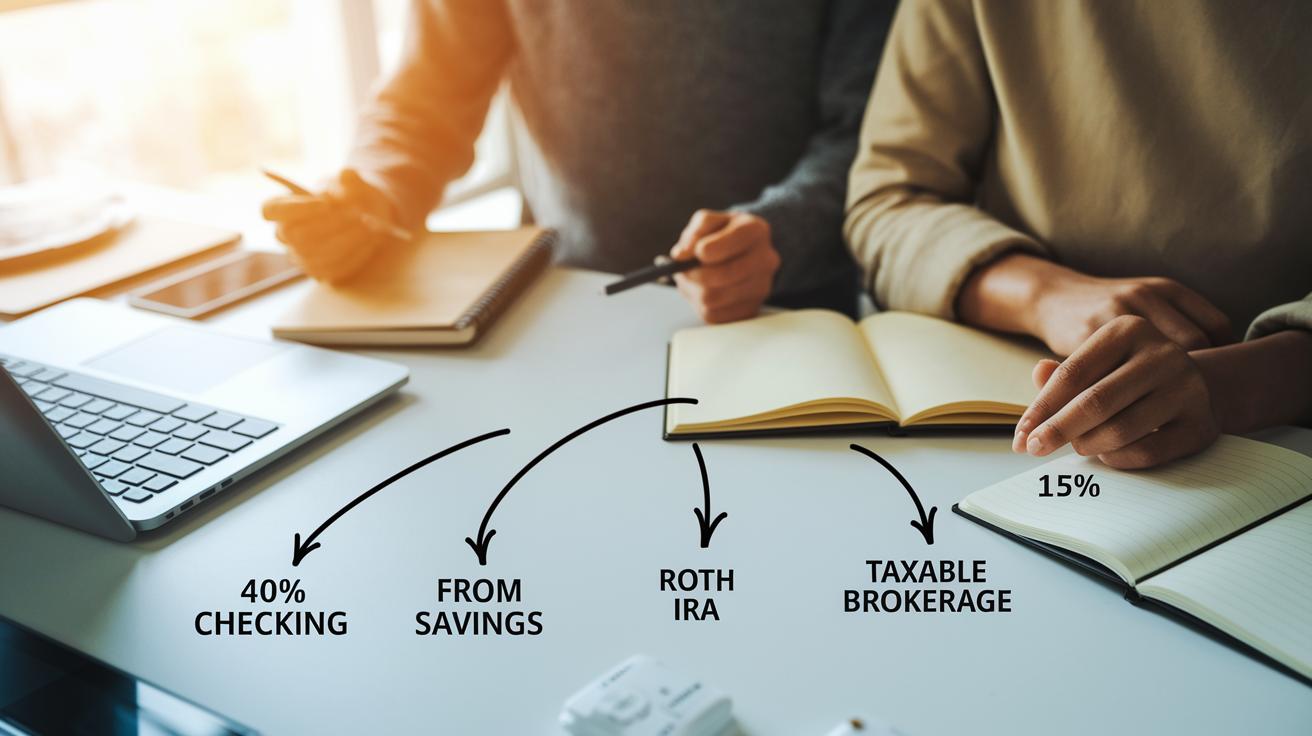


Do you think making fast money is the only way to build wealth? Think again. Long-term investing is a steady path that many miss. It's like planting a seed and watching it grow into a strong tree over time. When you hold quality stocks, ETFs, or bonds, your money can grow steadily and bounce back from market dips.
This guide lays out five simple strategies to help you benefit from compounding gains and build lasting wealth. Your next step: Pick one strategy from our list and work on it today. Small actions now can set you up for a strong financial future.
Proven Long-Term Investing Strategies for Sustainable Wealth Building
Investing for the long term means buying and holding stocks, ETFs, or bonds for many years. The goal is to choose solid investments that grow over time and benefit from compounding. For example, someone who bought AAPL shares at about $3 in 2010 might see them rise to over $180 by 2025. This method focuses on steady growth instead of quick profits and gives your investments time to recover from market ups and downs.
Keeping a consistent plan is key. Long-term assets like dividend growth stocks or low-cost index funds let you earn both capital gains and regular income. Whether you use a buy-and-hold plan or invest a set amount regularly (dollar cost averaging), you take advantage of compound interest while softening the impact of short-term market swings.
Here are some simple strategies to consider:
- Buy-and-hold: Invest in quality companies and give your money time to grow.
- Dividend growth: Choose companies with a track record of increasing dividends.
- Passive index investing: Buy low-cost funds that track the overall market.
- Dollar cost averaging: Invest a fixed sum on a regular schedule, no matter what the market does.
- Thematic investing: Put money into big trends like renewable energy or artificial intelligence.
- Real estate via REITs: Gain property market exposure without owning property directly.
- Bond investments: Include TIPS, municipal bonds, or corporate bonds to add stability.
- Tax-advantaged accounts: Use options like 401(k)s or IRAs to let your investments grow tax-free.
Your next step: Spend 10 minutes today setting up a small, regular investment. It might be as easy as scheduling automatic transfers to a low-cost index fund. You’ll be building a strong foundation for long-term wealth while easing through market ups and downs.
Asset Allocation Methods in Long-Term Investing Strategies

A strong portfolio starts with smart asset allocation. By spreading your money among stocks, bonds, real estate, and commodities, you balance risk with growth. This way, even if some parts falter, others can shine. Breaking your investments into sectors like tech or healthcare, and across regions such as the U.S. or emerging markets, can help reduce risk even further. For example, a risk matrix (see: https://buzdaily.com?p=1131) can show you how well your current mix fits with your comfort level and financial goals.
| Portfolio Type | Stocks | Bonds | Real Estate | Commodities |
|---|---|---|---|---|
| Conservative | 20% | 50% | 20% | 10% |
| Balanced | 50% | 30% | 15% | 5% |
| Aggressive | 70% | 20% | 5% | 5% |
Take a moment to review your asset mix regularly. As your goals change and market conditions shift, you might add new classes like private equity or infrastructure to stay diverse. Moving funds between basic asset types can keep your portfolio ready for both short-term needs and long-term growth.
Your next step: Check your current asset allocation with a simple risk matrix and adjust if needed to meet your goals.
Risk Management Principles for Long-Term Investing Strategies
Start by figuring out your risk tolerance. This means knowing how much fluctuation in value feels okay for you based on your age, money goals, and current situation. A clear idea of your comfort level sets the stage for your plan.
Try this: Decide on a stop-loss level to protect your money. For instance, if a 5% drop feels too risky, set a rule to sell automatically when that happens. This helps keep you on track during market dips.
Next, review your portfolio every few months or at least once a year. If any investment strays 5% or more from your plan, adjust it back. Regular checks make sure your mix of assets still fits your risk comfort and goals.
Keep a cash reserve or invest in stable assets. This buffer can soften losses and give you the chance to buy quality investments when prices drop. Following these steps keeps your long-term plan solid while cutting down big losses.
Your next step: Review your current investments and set clear stop-loss levels today.
Leveraging Compound Interest Benefits in Long-Term Investing Strategies

Compound interest is like a money multiplier. It works by adding earned interest to your original investment so that you earn interest on both parts. Even small, regular deposits can build up a healthy nest egg over time.
Think about it this way: if you put in $1,000 every year at a 7% interest rate, your money could grow to around $61,000 in just 30 years. Reinvesting your earnings and sticking to a plan makes this process even more powerful.
Your next step: set up an automatic contribution plan for your investment account. This simple move lets you harness compound interest and grow your money steadily over the years.
Dividend Reinvestment and Passive Income in Long-Term Investing Strategies
Build a strong portfolio by focusing on companies that have increased their dividend payouts for at least 10 years. These companies usually have solid earnings and a steady performance record. Their regular dividends give you a predictable income stream that you can reinvest to grow your holdings without having to sell assets.
When you pick dividend stocks, check both the dividend yield and the company’s overall health. Look for businesses with stable earnings, strong balance sheets, and a history of raising dividends. Dividend aristocrats, for instance, have a solid track record of growing their payouts. This steady approach helps protect your portfolio during market downturns while boosting long-term growth.
Dividend reinvestment plans (DRIPs) are a smart way to put your money to work. DRIPs use your dividend payments to automatically buy more shares with no extra fees. For example, investing $100 each quarter in a stock with a 6% yield through a DRIP could double your shares over 10 years. This automatic reinvestment leverages the power of compounding, turning small, regular payouts into a significant source of passive income.
Your next step: Review your current dividend stocks to see if they qualify as dividend growers and consider enrolling in a DRIP to help boost your long-term returns.
Portfolio Optimization and Rebalancing in Long-Term Investing Strategies

First, compare your current investments with your target plan. Look at each asset type, like stocks, bonds, and real estate, and note where your holdings do not match your goal. This quick review shows you which areas have grown too big or shrunk too small. Try using a tool like the tvm financial calculator (https://thefreshfinance.com?p=1366) to make the process faster.
Once you find the differences, sell part of the investments that are too large. This means reducing your holdings in areas where you have more than planned. By selling some, you help bring your portfolio back into balance and lock in gains. Stick to clear rules, so market excitement doesn’t sway your choices.
Next, use the funds from these sales or add new money to buy more in the areas where your investment is low. This step puts your portfolio back in line with your long-term plan and boosts your diversification, so you can benefit as each asset class grows over time.
Finally, keep an eye on your portfolio by checking simple metrics like volatility and the Sharpe ratio against benchmarks such as the S&P 500. Regular rebalancing, after big market shifts or at least once a year, ensures your investments stay aligned with your risk tolerance and future goals.
Your next step: Take a few minutes today to review your portfolio and decide which assets need more or less attention.
Adapting Strategies During Market Cycles in Long-Term Investing
There are two kinds of market trends. Cyclical trends follow the ups and downs of the economy, while secular trends come from lasting changes like new technology. Knowing the difference helps you stick to a smart plan and avoid quick, emotional reactions. For example, if consumer confidence drops, it might be smart to hold onto stable sectors and get ready for a rebound.
Long-lasting market changes often go further than short-term ups and downs. These steady, secular trends can boost long-term growth even when the market wavers. This means you can keep your focus on quality investments that support a steady growth plan.
Look at the 2008-2009 crash. Investors who bought solid stocks during that tough time saw gains of over 50% in just two years. Buying stocks at a dip can lead to big rewards once the market recovers.
It’s important to switch your focus between value and growth stocks as the cycles change. When signs of recovery appear, lean towards value stocks with steady earnings. In more dynamic times, growth stocks can lead the way.
Try this: Review your current portfolio and compare it with market signals. Adjust your investments now so your long-term plan stays on track.
Tax-Efficient Retirement Strategies in Long-Term Investing

Using accounts that shield your money from taxes is a smart way to build a solid retirement fund. Many investors choose 401(k)s, Traditional IRAs, and Roth IRAs to help them save. With a 401(k) or Traditional IRA, you pay taxes later when you withdraw funds. A Roth IRA lets your money grow tax-free, which is especially useful if you expect your tax rate to be higher in the future. Adding an HSA (health savings account) gives you three benefits: you can deduct your contributions from your taxable income, enjoy tax-free growth, and take tax-free money out for qualified health costs.
If you earn more, you might consider moving funds from a Traditional IRA to a Roth IRA or using a backdoor IRA. These moves can help your money grow faster by reducing your tax hit. In regular taxable accounts, you can also use a method called tax-loss harvesting to cancel out gains and lower your tax bill. These strategies help keep more of your earnings working for you while matching your long-term goals. For more help on timing these moves, have a look at our retirement income strategies.
Taking advantage of lower long-term capital gains tax rates (0–20%) instead of higher ordinary income rates (up to 37%) can boost your savings even more. This means your investments are taxed at a lower rate, letting more money compound over time. Keeping a smart balance between tax-deferred and tax-free accounts can speed up your wealth-building process.
Try this: Set up automatic contributions to your retirement accounts and schedule regular reviews of your strategy. Also, look into using tax-loss harvesting in your taxable accounts and consider a Roth conversion when your income is lower. These practical steps work together to lower your taxes and increase your retirement savings over the long run.
Fundamental Analysis and Stock Selection in Long-Term Investing Strategies
Start by screening companies with clear, simple numbers. Look for firms that have a strong balance sheet. We suggest a debt-to-equity ratio of less than 0.5, yearly earnings growth of 5% to 10%, and a return on equity above 15%. Also, be cautious with stocks trading at a P/E ratio above 25 unless they show solid growth. For example, a company that consistently increases its profits and uses debt wisely is a safe pick.
Next, consider the company’s unique qualities. Ask if it holds valuable patents, has a name that people trust, or enjoys long-lasting market advantages. A business with a respected brand and a flair for innovation can better weather tough times. For instance, a firm known for advanced technology and reliable products can show that it has a strong competitive advantage.
Finally, make it a habit to review financial statements every quarter. Check the balance sheets and income statements to catch early signs like rising debt or slowing growth. This regular check-up keeps your investments aligned with your long-term goals.
Your next step: Set aside time after each quarter to review your top picks. It could be as simple as downloading the company’s latest report and noting any changes.
Final Words
In the action, we broke down how to build lasting wealth. We reviewed asset mix, managing risk, and using compound growth to boost returns. We outlined dividend reinvestment, tax-friendly accounts, and clear steps to adjust your portfolio along the way. These methods provide a practical framework to stick to a buy-and-hold approach and achieve smoother progress. Use these long-term investing strategies to take control and create a stronger financial future, one small step at a time.
FAQ
What are some long-term investing strategies discussed on Reddit and available in PDFs?
Many platforms highlight strategies like buy-and-hold, dividend growth, passive index investing, and dollar-cost averaging. PDFs often compile these tips into structured guides, making it easier for you to follow actionable steps.
What are some long-term investing strategies for beginners and which ones are considered the best?
Beginners often use buy-and-hold, diversified index funds, and dollar-cost averaging. These methods lower risk, are easy to manage, and steadily build wealth over time with disciplined, repeatable steps.
What are examples of long-term investments, including stocks and companies?
Long-term investments include blue-chip stocks, dividend aristocrats, and ETFs that track major market indexes. These options are chosen for their stability and ability to generate consistent returns over many years.
What is the best strategy for long-term investing?
The best long-term strategy is a disciplined, diversified buy-and-hold approach. It combines regular contributions and portfolio rebalancing to manage risk, allowing compounding growth to work in your favor over time.
What is the 7-year rule for investing?
The 7-year rule suggests holding investments for a minimum of seven years to ride out market volatility and benefit from compounding, encouraging a long-term mindset rather than chasing quick gains.
What happens if I invest $200 a month for 20 years?
Investing $200 monthly for 20 years builds wealth through compound growth. This steady, recurring investment strategy helps smooth market ups and downs while gradually increasing your portfolio’s value.
How much money do I need to invest to generate $3,000 a month?
Generating $3,000 a month typically requires a sizable portfolio built over time with disciplined investing and compounding returns. The exact amount depends on your rate of return, making planning and diversification essential.