

Tired of a budget that seems to waste your hard-earned money? Try zero-based budgeting. With this method, you rebuild every cost from scratch to make sure every dollar has a purpose.
Instead of simply rolling over old expenses, you examine each dollar and decide if it fits your business needs today. For example, review costs like software fees and salaries to cut waste and boost performance.
This approach helps small businesses spend smarter and grow stronger. Ready to trim your spending and support your growth goals? Start by reviewing your budget and make changes that work for you now.
Defining zero based budgeting for small business
Zero based budgeting means you start each new cycle with a blank slate. Instead of carrying over last year’s numbers, you rebuild your budget from scratch and justify each expense. You check every cost, like software licenses, salaries, or subscriptions, to make sure they match your business's current needs. By turning off auto-renewals and avoiding habitual spending, you craft a budget that reflects today's priorities. Quick win: Review your recurring expenses this week to see what truly matters.
Traditional budgeting leans on past numbers with minor updates. That can bring old, outdated costs forward and let inefficient spending slip by. With zero based budgeting, you rebuild every expense anew. This forces you to ask, "Do I really need this cost today?" Instead of boosting an old figure, you evaluate its current value. This approach helps you allocate funds more wisely and promotes mindful spending every cycle.
By matching every expense with strategic goals, zero based budgeting makes sure your small business only spends on activities that drive results. Every dollar is checked to see if it supports growth and efficiency. The result is a leaner budget that spotlights high-impact areas and cuts out waste. Next step: Identify one cost to scrutinize this week and decide if it aligns with your business goals.
Key benefits of zero based budgeting for small business

Zero based budgeting lets you cut costs by 10-20% right from your first cycle. It works by ensuring every expense is needed and justified from scratch. This method helps you spot old or unnecessary spending so you can move funds to areas that matter most. For example, if you review a $500 recurring software fee, you might find a cheaper option that saves money and makes your budget work better for you.
Over time, this careful planning aligns your money with what truly drives your business. Every dollar goes to growth activities, and your investments start working harder for you. As you stick to this disciplined approach, you build a solid financial plan that supports long-term goals and improves your overall return on investment. Your next step: Review your top recurring expenses today and see where you can start trimming costs.
Implementing zero based budgeting in small business: step-by-step guide
Zero-based budgeting forces you to justify every expense each time you plan your budget. This process helps you stay accountable and make smart choices about where your money goes.
-
First, break your business into specific groups like recruiting, customer support, product marketing, or facilities management. Doing this helps you see costs in each area clearly.
-
Next, list all your expenses. For each cost, write down every detail and explain the value it brings. This way, you can review each expense carefully.
-
Then, review your expenses by looking at what drives the costs and considering different options. Look for ways to save money without losing efficiency.
-
After that, rank these expense packages using your current business priorities. This step makes sure you invest in the areas that matter most.
-
Finally, test this system in one department for 3 to 6 months. Keep track of the results and make changes as needed before using it across your whole business. Try this: Download the operating budget spreadsheet and use it to track your expenses against your plans.
By following these steps, you can align your spending with your business goals while keeping costs in check. Give it a try and start making smart, proactive decisions today.
Zero based budgeting versus traditional budgeting for small business
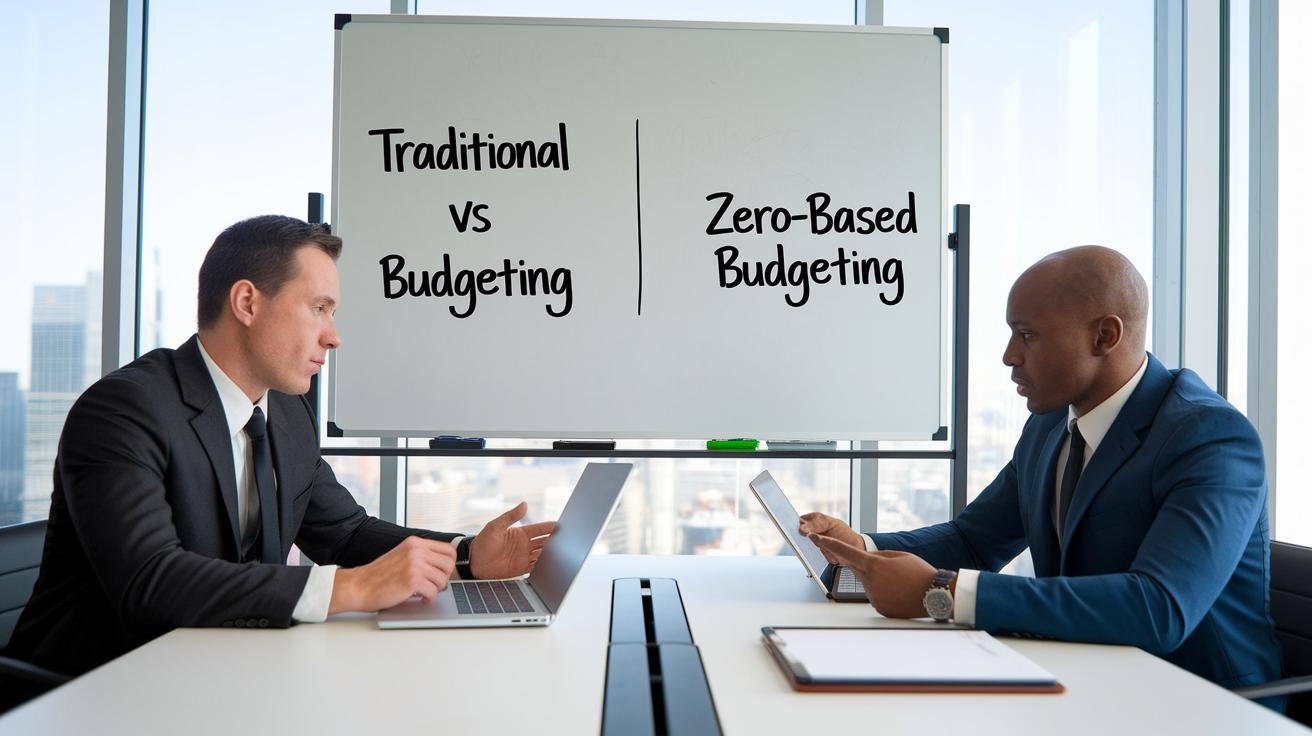
Traditional budgeting uses past spending as a starting point, making small changes over time. This works well when your spending is steady. In zero based budgeting, you start from zero each cycle. You review every cost and decide if it fits your current business goals.
| Feature | Traditional Budgeting | Zero-Based Budgeting |
|---|---|---|
| Baseline Approach | Starts with historical numbers | Starts at zero and requires justifying every expense |
| Change Management | Makes small, steady tweaks | Reevaluates each cost every cycle |
| Use Cases | Best for steady, predictable spending | Great for aligning money with current priorities |
This method pushes you to rethink each expense instead of relying on past habits. It can uncover hidden waste and help direct funds to where they matter most. Your next step: review your current expenses and decide if every cost still supports your business goals.
Real-world case studies of zero based budgeting in small business
Big companies like Unilever and Kraft Heinz have proved that zero based budgeting can cut waste and save up to $1.5 billion a year. They built their budgets from scratch by looking at every cost and only paying for what supports their current goals. This shows that even well-established companies can run their money like a startup.
A local hair salon once spent $30,000 every year on shampoo and conditioner without thinking twice. When the owners applied zero based budgeting, they reviewed that cost from the beginning and asked if it really met today’s client needs. This simple question led them to reexamine all their recurring expenses.
The salon then did a clear cost check. They looked at how often clients visited, negotiated lower prices with suppliers, and measured the products’ impact on customer satisfaction. They found that a less expensive option could work just as well without compromising quality.
After shifting funds from hair product expenses, the salon invested in improving the client experience and boosting their marketing efforts. This move not only cut extra costs but also increased customer engagement and profit.
Your next step: Look at one regular expense in your business today. Ask, “Does this cost match our current needs?” Then, explore if a more cost-effective option exists.
Common pitfalls and best practices for zero based budgeting in small business

Zero based budgeting can really help manage your money, but it also brings some challenges. One common issue is that every expense must be justified from scratch, which can slow down daily work. Heavy analysis and long planning cycles may pull focus from everyday tasks, lowering overall productivity. Also, asking team members to defend all costs can lead to pushback and a reluctance to change tried-and-true methods. These challenges can cause frustration and even delays unless handled carefully.
Here’s how you can overcome these hurdles and improve your budgeting process:
-
Set clear expectations at the start of each budgeting cycle. Explain why every expense needs justification. This helps everyone understand the process and keeps spending in check.
-
Start small by testing zero based budgeting in one department before rolling it out to the entire business. This lets you tweak the process on a smaller scale and builds trust among your team.
-
Run liquidity stress tests to check that your cash flow stays healthy while you review and reassign funds. This step ensures your business remains financially stable during the transition.
Your next step: Pick one of these tips today, like setting clear expectations with your team, and see how it improves your budgeting cycle.
Final Words
In the action, we broke down how to start with every cost on a blank slate, cut legacy spending, and reassign funds where they matter most. We reviewed quantifiable savings, the step-by-step implementation guide, and a clear comparison with traditional budgeting. Real-world examples and practical tips round out the process. Ready to take a step forward? Try applying zero based budgeting for small business today and watch your financial clarity grow.
FAQ
What is a zero-based budgeting template for small businesses?
A zero-based budgeting template for small businesses provides a framework where every expense is justified for each period. It helps you plan costs from scratch and allocate funds based on current business needs.
What is a zero-based budgeting example for business?
A zero-based budgeting example for business demonstrates building your budget from zero. Every expense is reviewed and approved, rather than relying on previous figures, ensuring each cost is necessary.
What are the advantages and disadvantages of zero-based budgeting?
Zero-based budgeting advantages include clearer expense tracking and better alignment with current goals, while disadvantages can include increased time spent on planning and potential strain on operations if not managed well.
How does a zero-based budgeting calculator work?
A zero-based budgeting calculator works by asking you to input each expense individually. It assists in breaking down costs, ensuring every spending item is accounted for and aligned with your strategic financial plan.