

Worried your spending is outpacing your income? A balanced budget ensures every dollar you earn covers your regular bills and groceries, keeping you out of debt. Imagine it as a see-saw where income and spending stay level. This simple method works for families, small businesses, and even local governments. Next, review your expenses and income to see how they align, and start making small changes today.
Understanding the Basics of a Balanced Budget
A balanced budget means your income matches your spending. Every dollar you earn through your job, side gigs, or other sources is planned to cover regular expenses like bills, utilities, and supplies. Think of it like balancing your checkbook, every cent in equals every cent out.
This idea works for everyone, whether it's an individual, a business, or a government. For you, balancing your budget means your earnings pay for groceries, rent, and debt payments. For a business, it means that the money from customers covers costs like payroll and rent. Governments use this approach too, ensuring that public spending doesn’t go over the money collected from taxes and fees.
When your income matches your expenses, you're set to build savings without borrowing. For example, if you bring in $3,000 a month and keep your spending within that amount, you can start to grow your savings steadily.
Try this: Write down your monthly income and list all your regular expenses. Then check to see if each expense fits into your income. This quick review will help you maintain a balanced budget and set you up for long-term financial success.
Key Components That Make Up a Balanced Budget
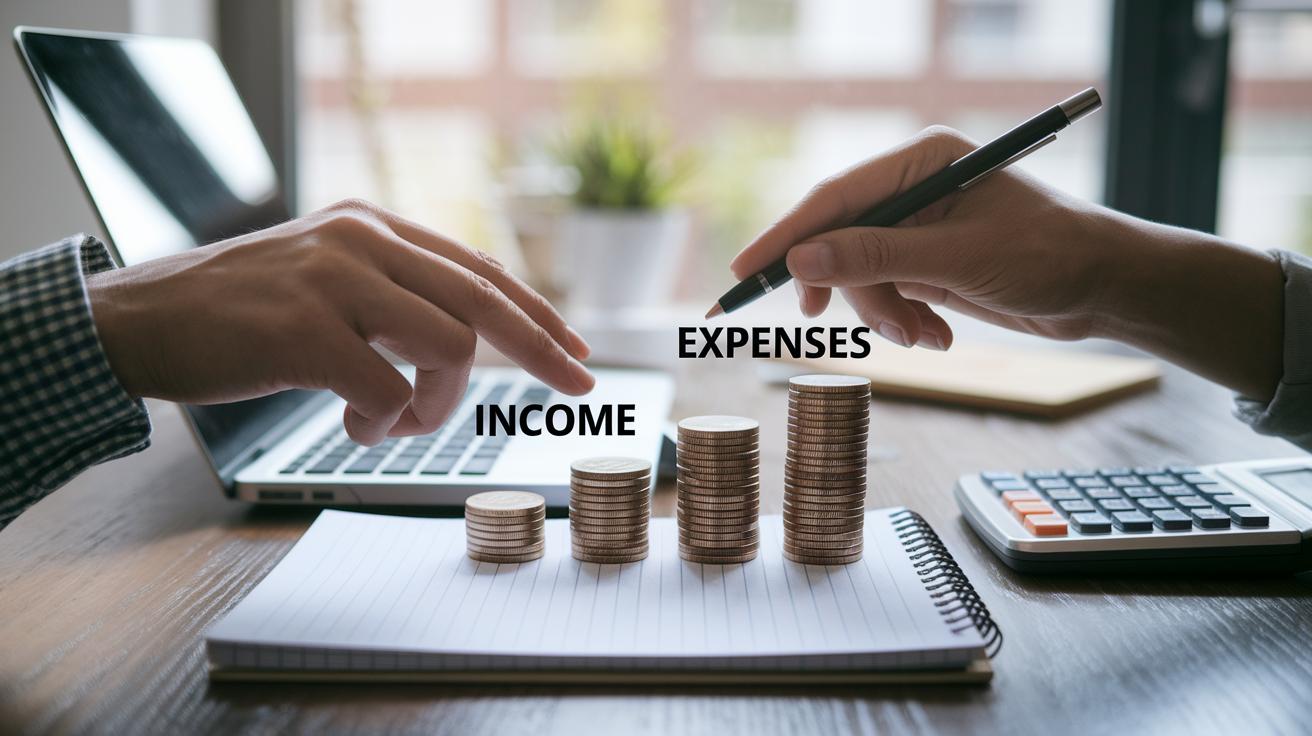
A balanced budget needs two main parts: income and spending. Income is the money you earn from your job, side gigs, or sales. Sometimes, tax receipts or fees also add to the income, especially in a business or public budget. Making sure your income matches your planned spending is key.
Spending covers everyday costs like bills, groceries, and utilities, as well as public services and infrastructure investments. Setting clear limits, like a monthly cap on utility bills or a fixed amount for essentials, helps you stay on track. This way, you avoid overspending and build a strong financial foundation.
These two parts work together to show you a clear picture of your finances. Think of income as the fuel for your daily operations and spending as the engine parts that need regular checking. For example, a small business uses its sales income to pay for payroll and utilities, while a government uses tax money to fund projects like schools or roads.
Your next step: Spend a few minutes listing your main sources of income and organizing your expenses. This simple review will help you identify where you can make adjustments to keep your budget balanced.
Benefits of Maintaining a Balanced Budget
A balanced budget means matching what you earn with what you spend. This simple step helps you avoid falling into debt and makes it easier to save money. When you know exactly where your money goes each month, you can cover your bills and groceries without stressing over extra costs.
Imagine writing down your monthly income and setting aside a fixed amount for essentials like rent, salaries, utilities, and groceries. When every dollar has a job, you cut down on overspending. This approach works for everyone, from a small business managing rent and payroll to a government funding schools, roads, and other important services without borrowing more money.
Using a balanced budget gives you a clear picture of your money and helps you make real choices about spending. Try this: review your finances often, list all your income sources, track your expenses, and adjust your spending if needed. This practical habit sets the stage for long-term financial stability.
| Your Next Step | Action |
|---|---|
| Quick Win | Write down your monthly income and list your fixed costs. It takes less than 10 minutes. |
| Follow-Up | Review your budget every month and adjust as needed to stay on track. |
Common Challenges When Keeping a Budget in Balance

Balancing your budget can be tricky, especially when projects bring in less money than expected or when some expenses slip through the cracks. Overestimating income often leads to a gap where spending exceeds earnings. This shortfall might force you to borrow extra funds, adding to your debt. Comparing your surplus with any deficit can help you spot where your estimates are off.
Unexpected costs, like a surprise medical bill or a sudden rise in utility charges, can derail even the best-planned budget. Fluctuating income from side gigs or unexpected tax changes only adds to that uncertainty. Here's a quick win: review your budget to see how each shortfall affects your overall situation so that you can adjust quickly.
For instance, if you plan for $2,000 in income but spend $2,200, you’ll need to cover a $200 gap right away. This isn’t just a personal finance issue, business and government budgets also struggle with small mismatches that can lead to mounting debt or missed savings opportunities. Keep a close eye on your numbers. Reviewing your income and expenses monthly helps you catch gaps early, making it easier to adjust spending or increase revenue whenever needed.
Real-World Examples: Personal, Business, and Government Budgets
Your personal budget is about giving each dollar a clear purpose. If your take-home pay is $3,000 a month, you might spend $1,250 on housing, $350 on utilities, $450 on groceries, and $200 on transportation. The remaining amount goes to savings. Try this: write down your income and list expenses like rent or food so you know exactly where your money is going.
Small businesses work the same way. For instance, a local store earning $12,000 a month might use $5,000 for inventory, $3,000 for payroll, $2,000 for marketing, and $1,000 for other costs. By breaking down revenue like this, a business can cover everyday expenses and still plan for growth.
Local governments also balance their budgets by matching income from taxes and fees with spending. If a city collects $50M in taxes, that money funds schools, road repairs, public safety, and healthcare. Think of a national park that uses $500,000 from ticket sales to maintain the park and improve visitor services. Every dollar is tracked to ensure public funds are used wisely.
Here’s a quick review:
| Personal | Plan for housing, utilities, groceries, and savings |
|---|---|
| Business | Divide revenue among operating costs, payroll, and growth investments |
| Government | Transform tax and fee collections into public services and infrastructure |
Your next step: Review your own budget or that of your business and assign each dollar a clear role.
How Balanced Budgets Compare to Surplus and Deficit Models

A balanced budget means every dollar you earn is matched by each dollar you spend. When your income and spending are equal, there’s no extra cash left over or missing funds to cover. This simple balance helps households, businesses, and governments run without the need to borrow or sit on idle money.
A surplus occurs when your income exceeds your spending. For a person, that extra cash can boost your savings or cover unexpected costs. In government finance, a surplus builds extra reserves for future projects. For example, if a local government collects $15 million in taxes and spends only $14 million, the extra $1 million can be saved for emergencies.
A deficit is when spending goes beyond your income. This gap might force you to dip into savings or, in the case of governments, borrow money, which can lead to larger debts over time. Even a small shortfall can snowball into more serious borrowing issues if it's not addressed.
Your next step: Review your income and expense entries today. See if your current budget is balanced, has a surplus, or is facing a deficit, and take action accordingly.
Proven Strategies for Maintaining a Balanced Budget
Get started by taking clear, simple steps. Set aside some time each month to review what you earn and spend, and update your plan if needed. One proven method is zero-based budgeting. In this approach, you give every dollar a specific role. For more details on how this works, check out https://thefreshfinance.com?p=1258.
Plan ahead by estimating your income and expenses. Write down what you expect to earn and spend, even if that means using last month’s numbers. These figures will help you set clear spending limits.
Make it a habit to update your budget records. Record every expense and income so that your totals match your bank statements. This regular check can help you catch mistakes early.
Setting spending limits is another smart move. For instance, decide on a maximum amount you can spend on dining out each month. Such limits can help you avoid overspending.
Review your plan often. At the end of the month, compare your budgeted amounts to what you actually spent. If your estimates shift, adjust your plan accordingly.
- List your income sources and expense categories
- Track each expense regularly
- Review your budget every month
Your next step: Choose one of these techniques today and schedule a quick budget review for next week. This steady routine will help you keep your budget balanced and stay in control of your money.
Final Words
In the action, we've broken down how a balanced budget works and why matching income with expenses matters. We covered the core components, challenges, and real-world examples from personal, business, and government contexts. Each section showed how disciplined tracking and realistic forecasting keep finances in check.
Remember, knowing what is balanced budget gives you a clear tip for managing your money day by day. Keep refining your approach and take small steps toward financial stability every day.