


Ever wonder where your money goes each month? Imagine your cash flowing like a river, splitting into streams for bills, savings, and everyday spending. A money map turns those confusing numbers into a clear picture of your income and expenses. This simple guide gives you three easy steps to see where your money works hard, and where it could work better. In just a few minutes, grab a pen and paper, jot down your income and expenses, and sketch out your money flow. Ready to take control of your finances? Try it now.
Money Map Foundations: Building Your Personal Finance Roadmap
Money mapping offers a clear, visual way to track your money. Instead of staring at endless numbers, you create a simple chart that shows where your money comes from and where it goes, covering regular income, fixed bills, extra expenses, savings, and debts. Picture your money as a river that splits into several streams, with one channel for income, another for bills, and separate ones for saving or enjoying yourself.
This method makes it easy to see your cash flow at a glance. You quickly find out where your money comes in and where it flows out, so you can cut back on expenses or boost your savings. It's like having a snapshot of your finances, showing you which areas are running smoothly and which ones need attention.
Money maps are not set in stone, they grow and change as your life does. They adjust when you add a new income source like a side gig or change your spending habits over time. For example, you might notice a 10% bump in freelance earnings or decide to put more money toward your emergency fund.
Your next step: Gather your recent financial information and sketch a basic diagram. Update it regularly to keep your financial plan current and aligned with your goals.
Core Components of Your Money Map: Income, Expenses & Goals
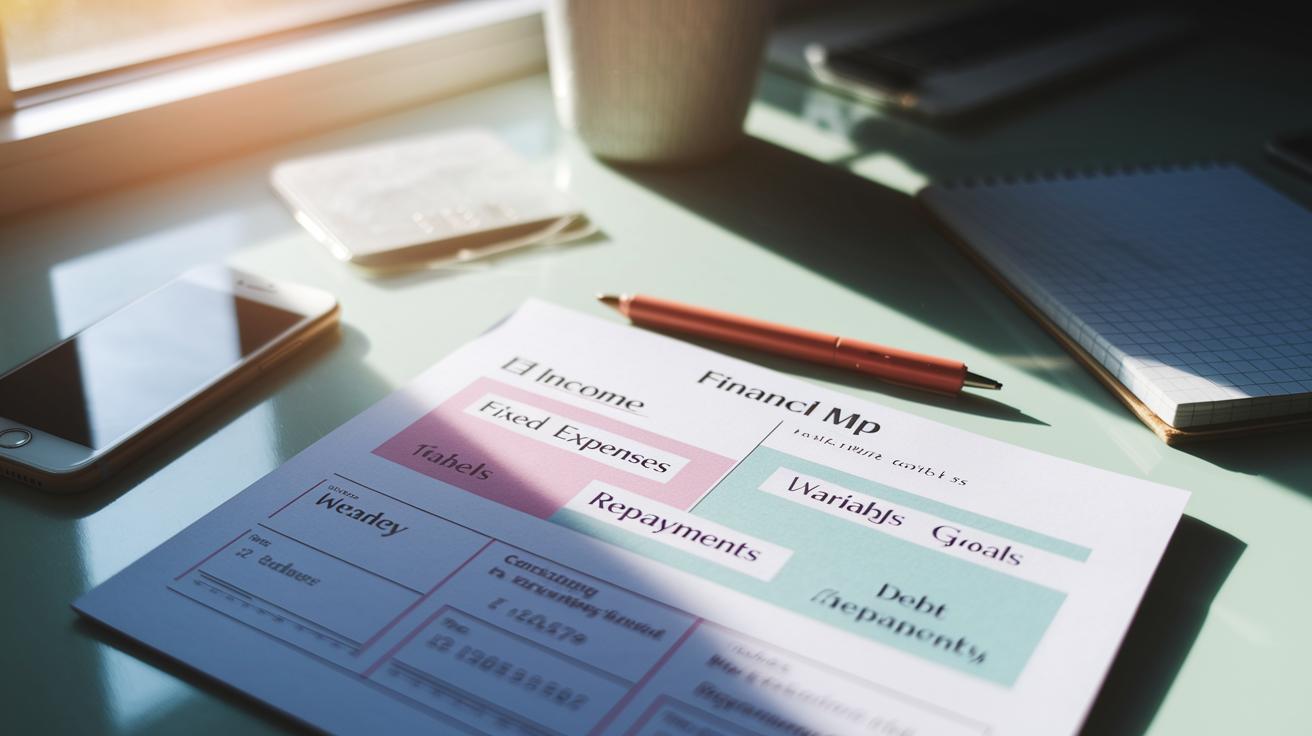
A money map shows you where your cash comes from and where it goes. It lists all your income and spending, making it easier to plan and decide what matters most.
- Income sources (salary, freelance work, side gigs)
- Fixed expenses (rent, utilities, loan payments)
- Variable expenses (groceries, dining out, entertainment)
- Savings goals (emergency fund, retirement contributions, large purchases)
- Debt repayments (credit card balances, student loans)
- Taxes (a regular deduction)
Each part of your map is important. Your income powers the map, showing where your money starts. Fixed expenses remind you of payments you must make every month while variable expenses cover day-to-day costs that can change. Savings goals help you build a safety net or save for a big purchase. Debt repayments highlight spots where you can reduce interest costs. Taxes remind you that some money is automatically set aside.
Next step: Grab a notepad or open a spreadsheet and list these elements. By filling out your own money map, you can see where you might save more or cut back on spending.
Step-by-Step Money Map Guide: From Data Gathering to Visualization
Start by pulling together your money records so you can see where your money comes from and where it goes. This guide gives you five clear steps to create a visual map of your cash flow.
- Collect your records like bank statements, pay stubs, bills, and credit card statements.
- Pick a way to map your money. You can use paper, a whiteboard, or even a digital tool like a money organizer app.
- Draw your map by putting your income in the middle. Then draw branches for your expenses, savings, or debt goals.
- Connect your income to each branch with arrows. Write a percentage next to each arrow to show how much money goes to that spot.
- Make the map your own by adding colors, icons, or a favorite quote to keep you motivated.
Each step builds on the last to give you a clear picture of your financial flow. Once you gather your records, you have a solid base to see where your money is headed. Choosing the right medium lets you update your map when things change, like a new job or a surprise bill. Drawing income in the center with branches for expenses makes it simple to understand your cash paths. Showing percentages gives you a quick look at spending priorities. And adding personal touches makes the whole process more engaging.
Your next step: Collect a month’s worth of records and create your first money map to track spending, saving, and investing.
Budget Strategy Formulation Within Your Money Map

A clear budgeting plan is the core of your money map. It makes sure your money goes to what you need and value, so every dollar works for you.
Start by splitting your income into simple groups. You might use figures like 30% for housing, 15% for transportation, 10% for groceries, and 5% for entertainment. This way, you match your spending with what matters most. For example, if staying healthy is a top priority, you can decide to spend more on nutritious food. These straightforward percentages show you how your money flows and help you spot areas that might need a tweak.
Keep track of your expenses with a spreadsheet or budgeting app. Set clear spending limits for variable costs so you can quickly catch any overspending. It’s also smart to build a small cushion for those months when your income varies. Try this: download a budget planner template, enter your numbers, and watch your progress over time. This tool turns your money map into a living record that grows with you.
A good budgeting plan ties all parts of your money map together, setting you up for steady financial progress.
Integrating a Debt Clearing Schedule into Your Money Map
Start by listing every debt on your money map. Write down each balance and its interest rate so you quickly see where you stand.
Next, choose a method for repaying your debts. You can use the snowball method (tackle the smallest balance first) or the avalanche method (target the highest interest rate first). Draw a timeline on your map and set monthly payment goals. For example, a $500 credit card debt at 22% should be paid off before a $2,000 student loan at 5%. This clear visual helps you know which debt needs immediate action.
Also, add credit score improvement tips directly on your map. Note to pay on time and keep your credit usage under 30%. Drawing a small chart to track your credit utilization over time can be really helpful as a reminder that steady, on-time payments boost your score.
Finally, mark monthly milestones and update your progress regularly. This ongoing review keeps you accountable and lets you adjust your strategy as your debt decreases.
Your next step: Grab a pen and paper or open a spreadsheet now. Start mapping your debts and set up your repayment plan today.
Mapping Investment Setup Outline and Long-Term Saving Plan
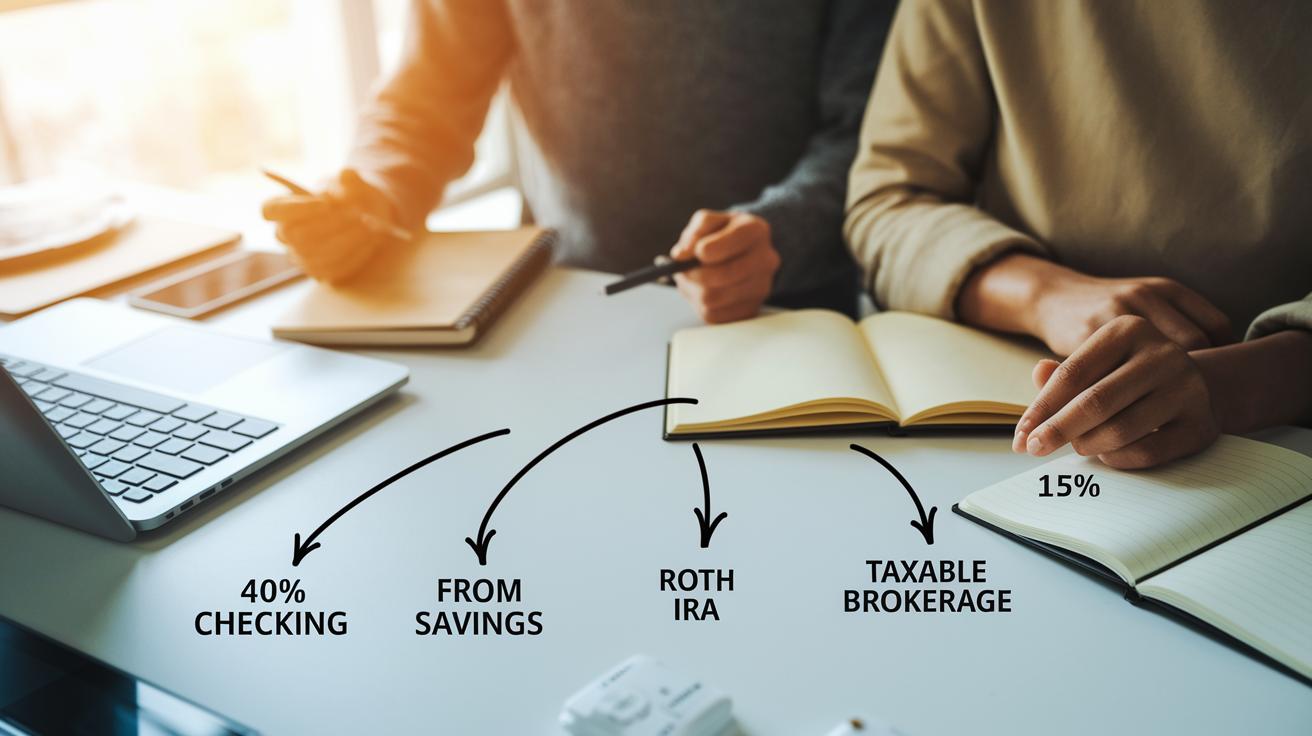
Start by jotting down your savings goals on a simple money map. List targets like creating a 3-6 month emergency fund and setting up your retirement accounts. Then, draw arrows from your checking account to your savings and investment accounts, such as a 401(k), Roth IRA, or taxable brokerage. Label these arrows with clear numbers, for example, 10% of your income for your emergency fund and 15% for retirement. This clear picture helps you follow a steady plan for saving over the long haul.
Next, set up your accounts with regular contributions that match your priorities. Add a step to track how much money moves from your checking to each savings or investment account each month. Mark each account on your map with a specific goal and contribution amount. This turns vague numbers into real, actionable steps and makes it easier to watch your progress.
Finally, complete your map by including growth projections and a mix of investments. For instance, show a split of 60% stocks and 40% bonds, and use simple projections to see how your regular contributions can grow over time.
Your next step: Use your map as a guide to make small, consistent changes to your savings plan and see how your money grows.
Income Optimization Plan & Cash Flow Mapping in Your Money Map
Begin by writing down every source of income you have, from your salary and freelance gigs to any passive earnings. List both the full (gross) amounts and what you actually take home (net) so you can see the true picture. Also, include a tax entry that shows your total yearly taxes. This reminder helps you see how taxes can sometimes take up more of your money than other costs. Your next step: Create a simple list of all your income sources and note the tax impact.
Now, make managing your money easier by setting up automatic transfers for your bills, savings, and investments. Automating your transfers cuts down on manual work and makes sure important payments are always on time. This steady approach helps you keep moving toward your financial goals with less hassle each month. Your next step: Set up one automated transfer for your most critical bill today.
Finally, draw a simple map of your monthly cash flow by charting all your income coming in and your expenses going out across your bank accounts. Connect the dots between where your money comes from and how it is spent or saved. This clear picture helps you spot trends, adjust when surprises hit, and manage your cash flow better every month. Your next step: Use a spreadsheet or a budgeting app to create your cash flow map.
Reviewing and Updating Your Personal Finance Roadmap with Your Money Map

Keep your money map up to date with regular checkups. Every month or quarter, review your emergency fund, debt reduction, and investment contributions to see if you're on track. This simple routine keeps your plan active and ready for any change.
Use clear visuals like progress bar charts and percentage labels to show your progress. If you experience a change, such as starting a new job, facing an unexpected expense, or entering a new relationship, update your money map immediately. Adjusting your figures to match your new situation makes your plan a true reflection of your financial reality.
Try this: Set a calendar reminder to review your money map at least once a month. It takes just a few minutes to fine-tune your goals and keep your strategy clear and practical.
Final Words
In the action, you built a personal finance roadmap by exploring money mapping techniques that simplify budgeting, debt repayment, investments, and income optimization. You saw how to break down income, expenses, savings goals, and debt while keeping your plan flexible for life changes.
Now, take a moment to review your money map: how to create a personal finance roadmap and fine-tune your steps. Small tweaks today lead to measurable progress and a brighter financial tomorrow.
FAQ
Q: How do I create a money map personal finance roadmap template, including free and PDF options?
A: Creating a money map template means designing a visual guide that outlines your income, expenses, debt, and savings. You can use free or PDF templates to organize and update your finances.
Q: What is a personal finance flowchart and where can I find one, such as the 2025 or Reddit versions?
A: A personal finance flowchart displays your cash flows and budgeting steps visually. Look for current versions like the 2025 model or PDF samples shared on Reddit to see how others plan their money.