


Ever wonder why many investors choose a calm, steady plan over high-risk trading? Passive index investing grows your money by tracking major market benchmarks. It cuts out high fees and lets your contributions slowly build over time. Think of it as planting a seed that eventually grows into a sturdy tree. In this guide, we explain how putting aside small amounts regularly can lead to lasting wealth, even if you're just starting out.
Your next step: Consider setting up a passive investment account with a reputable broker and start small to watch your money grow.
Passive Index Fund Investing: Core Principles and Benefits
Passive index fund investing mirrors major market benchmarks like the Dow, S&P 500, and Nasdaq. You invest in funds like the Vanguard Total Stock Market Index Fund and the Vanguard Total International Stock Market Index Fund to build a diverse portfolio. For example, you might put 25% in a U.S. market fund and 15% in an international fund.
This strategy follows a simple buy and hold approach. You buy the funds and let them grow over many years. Small, steady investments can grow into a sizable nest egg with time. Try setting up a regular, automated investment plan to see the benefits for yourself.
One of the biggest advantages is the low fees. Passive funds typically charge between 0.02% and 0.2% compared to active funds, which usually range from 0.5% to 2%. Low fees and a turnover rate around 4% help minimize extra costs like commissions and capital gains. Rebalancing your portfolio can take as little as 15 minutes or up to one hour each year.
Another benefit is that passive investing cuts out the need for constant active management. This approach helps reduce the stress of market timing and limits emotional decision-making. Your next step: Set up a small recurring investment to put this strategy to work in your portfolio.
Comparing Passive Index Fund Investing and Active Management
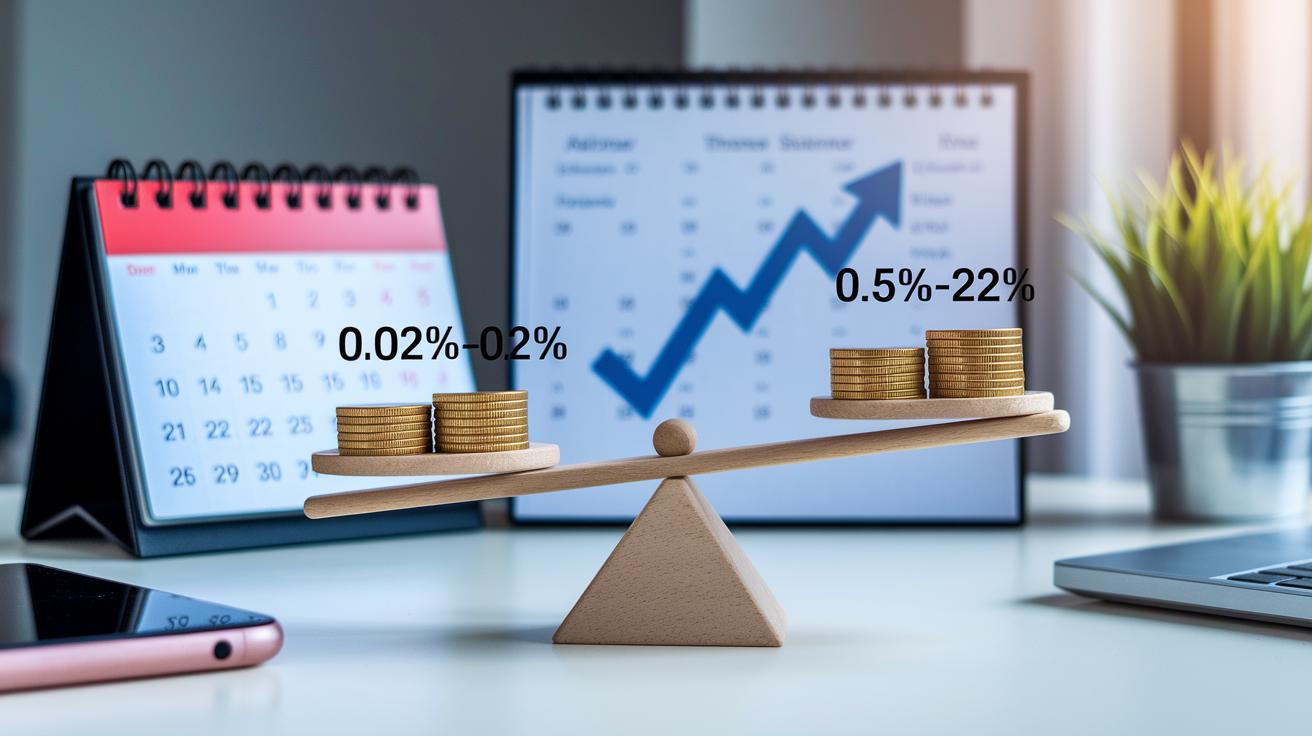
Passive index funds come with very low fees, usually between 0.02% and 0.2%. In contrast, active funds tend to charge higher fees, typically around 0.5% to 2%. For instance, if you invest $5,000, you might pay about $5 a year with an index fund compared to roughly $50 with an active fund.
Active strategies often involve a lot of buying and selling, around an 85% turnover rate. This frequent trading bumps up costs with higher trading fees, wider bid-ask spreads, and more potential tax events. Passive funds, on the other hand, usually maintain a low turnover of about 4%, which keeps costs low and reduces the chance of paying extra taxes.
Over 10, 20, or 30 years, most active managers struggle to beat passive benchmarks once fees come into play. Passive investing gives you direct market exposure and often leads to better risk-adjusted returns, helping your portfolio grow steadily over time.
Think of passive investing like planting a tree that grows steadily with little extra care. Active management is more like a garden that needs constant attention and higher costs. The lower fees, minimal trading, and simplicity of passive funds offer a clear edge for building long-term wealth.
Try this: Take a moment to compare the fee structures of your investment options. Find the one that minimizes costs and supports steady growth for your future.
Historical Performance Insights for Passive Index Fund Investing
Passive index funds have a strong track record over the years. For example, the S&P 500 has averaged about 10% per year over 30 years. In comparison, actively managed U.S. equity funds tend to return around 8% during the same period. This shows that a low-cost, buy-and-hold strategy can really work by taking advantage of compound growth.
Looking closer, data over a 20-year span shows the S&P 500 averaging about 9% per year, while active funds come in around 7%. Over a 10-year period, index funds have brought in roughly 8.5%, compared to active management returning nearly 6.5%. These figures highlight practical benefits for those who choose a passive approach.
Consider what happens when you invest $10,000 in the S&P 500 three decades ago. With an average annual return of 10%, that initial sum could grow to nearly $200,000. This simple example underlines the power of sticking with an index strategy while keeping costs and fees low.
| Time Period | Index Fund Avg Return | Active Fund Avg Return |
|---|---|---|
| 30-year | ~10% | ~8% |
| 20-year | ~9% | ~7% |
| 10-year | ~8.5% | ~6.5% |
These benchmarks tell us that passive indexing often beats many active strategies over long periods. Your next step: review your current investments and consider the potential benefits of adding low-cost index funds to your portfolio.
Cost Structures and Tax Efficiency in Passive Index Fund Investing

Passive index funds help you keep more of your money because they come with very low fees. They usually charge between 0.02% and 0.2%, while active funds often charge 0.5% to 2%. That means if you invest $10,000, lower fees let more of your money grow over time.
These funds also have low turnover, about 4%. Lower turnover means they make fewer trades, which cuts down on capital gains taxes. For example, a fund with 4% turnover will usually surprise you less at tax time than one trading at 85%.
Tax-managed index funds build on these benefits by actively reducing taxable events. They keep dividend payouts steady to boost your overall returns.
Your next step: Review your current investment fees and turnover rates. Compare them with passive and tax-managed index funds to see how you can keep more of your gains.
Passive index fund investing inspires enduring prosperity
Passive index funds let you grow your wealth in a simple, steady way by spreading your money across many assets. Funds like total stock market ETFs hold thousands of U.S. stocks, while international funds cover hundreds of companies worldwide. This method helps you benefit from gains across many companies and reduces the risk of one poor performer dragging you down. For example, you might choose to put 60% in U.S. stocks and 40% in international stocks for a balanced global mix.
A well-diversified portfolio lowers your overall risk. When you include different sectors and regions, a drop in one area won’t hurt your entire portfolio. Many investors also add real estate through REITs and bonds to further control risk. This extra layer helps smooth out returns even when markets fluctuate.
- Investing globally spreads risk across different economies.
- Mixing U.S. stocks, international shares, real estate, and bonds creates multiple layers of protection.
- A balanced mix of assets minimizes the chance of heavy losses during market swings.
Try this: Review your current investments and consider whether adding more diversified funds could help lower your risk.
Implementing Passive Index Fund Investing: A Step-by-Step Beginner Guide
This guide gives you a clear plan to start investing in passive index funds. First, choose an online brokerage or retirement account (like a 401(k) or IRA) that charges low fees. Look for a platform with simple tools that makes managing your investments and automatic rebalancing easy. Usually, this only needs about one hour each year.
Next, set up your account and pick core funds. For example, you might choose the Vanguard Total Stock Market Index Fund or the Vanguard Total International Stock Market Index Fund. If it suits you better, you can go with similar Fidelity ETFs. These funds give you broad market exposure, which is key for long-term growth.
Then, automate your contributions by linking your bank account for regular fixed-dollar investments. Try using dollar-cost averaging. This approach means you buy shares regularly without worrying about market timing. It’s an easy way to steady your investments over time. For more on dollar-cost averaging, check out this link: what is dollar-cost averaging.
Your next steps:
- Open a self-directed brokerage or retirement account.
- Pick the index funds or ETFs that match your goals.
- Set up regular, fixed-dollar contributions.
- Divide your initial deposit according to your target percentages.
- Plan to rebalance your portfolio once or twice a year.
By following these steps, you can build a balanced portfolio with minimal daily effort. Automating contributions and rebalancing helps take the stress out of managing your investments while steadily working toward long-term success.
Selecting Providers: Vanguard, Fidelity, and ETF Insights in Passive Index Fund Investing
When choosing a provider, first check how clear they are about their fees, rules, and minimum investments. Bigger funds usually mean more liquidity and a closer match to the index. These factors can be key when you build a long-term portfolio.
Vanguard is famous for its low-cost index funds. Its VTSAX fund offers broad U.S. market coverage at a 0.04% fee. For international exposure, VTIAX comes in at 0.11%. Both funds follow major market indexes and serve as strong foundations for retirement portfolios. They come with accessible minimum investments and a focus on long-term stability, which helps cushion against short-term market ups and downs.
Fidelity also has strong options, including the zero-fee FZROX for investors who want to keep costs low. Fidelity’s ETFs are known for easy trading, high liquidity, and low tracking error. As you compare providers, look at the details like transparency on holdings and minimum requirements. Matching these elements with low fees and a robust fund size can help you build a steady portfolio that works well with a passive investing strategy.
Your next step: review the fee details and minimum investment rules for these funds to find the one that fits your investing goals.
Final Words
In the action now, we reviewed how passive index fund investing delivers low-cost exposure to major market benchmarks. We covered the buy-and-hold philosophy, clear fee comparisons, and practical steps like setting up automated contributions. Each section broke down complex ideas into approachable tips that fit into your regular routine.
Use these steps to create a simple, effective strategy for long-term gains. Keep refining your approach, and enjoy watching your progress build over time.
FAQ
Passive index fund investing Vanguard
Passive index fund investing Vanguard means using low-cost funds from Vanguard, such as VTSAX or VTIAX, to track major market benchmarks while keeping fees low and simplifying your investment process.
Passive index fund investing for beginners and how to invest in index funds for beginners
Passive index fund investing for beginners involves opening a brokerage or retirement account, selecting broad-market funds like those from Vanguard, and setting up regular contributions to build wealth over time.
Best passive index fund investing
Best passive index fund investing involves choosing funds with low expense ratios and broad diversification. Many investors favor Vanguard funds for their solid historical performance and cost efficiency.
Passively managed index funds when can you buy and sell
Passively managed index funds are bought and sold during regular market hours just like stocks, meaning you can transact whenever the market is open and the order is processed.
Passively managed index funds minimum amount to invest
Passively managed index fund minimum amounts vary by product; some funds like Vanguard funds may require a few thousand dollars, while ETFs can be purchased one share at a time.
Passively managed index funds how do you make money
Passively managed index funds make money by mirroring market performance. Investors profit from the overall growth of the market and reinvested dividends, which compound over time.
Best performing index funds last 10 years
Best performing index funds over the last 10 years have often tracked indices like the S&P 500, offering average annual returns around 8.5%, which consistently outpace many actively managed funds.
Are index funds good for passive income?
Index funds are good for generating passive income because they typically distribute dividends regularly and require minimal trading, providing an enduring income stream alongside market-based growth.
What is passive index fund investing?
Passive index fund investing means buying funds designed to match the performance of a market benchmark, offering low costs, broad diversification, and a long-term, buy-and-hold strategy.
What if I invested $1,000 in the S&P 500 10 years ago?
What a $1,000 investment in the S&P 500 10 years ago could become shows growth through compound returns; historically, such an investment would have appreciated considerably with returns around 8.5% annually.
What is the best passive index fund?
What is considered the best passive index fund depends on your goals, but many investors opt for Vanguard Total Stock Market Index Fund due to its low fees and broad market exposure.